WSJ "China's Measures Unlikely to Effectively Control Commodity Prices"
Possibility of Government Announcing Follow-up Actions Raised
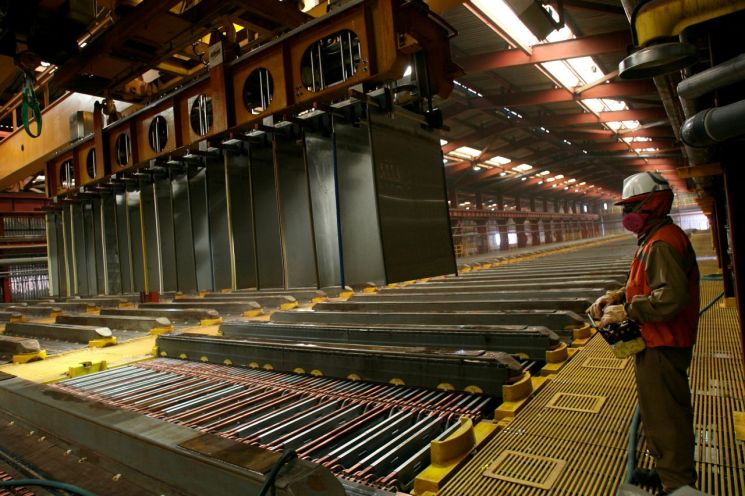
[Asia Economy Reporter Kim Suhwan] Chinese authorities recently announced a plan to release government stockpiles of raw materials into the market in response to the sharp rise in raw material prices. However, there are concerns that this measure will have only a minimal impact on the actual raw material market.
On the 16th (local time), The Wall Street Journal (WSJ) criticized the Chinese government's plan to release stockpiles of various raw materials such as steel, aluminum, and zinc into the market, stating that such measures would be ineffective.
On the same day, the Chinese government announced the release of raw material stockpiles into the market, citing the purpose of controlling the rise in raw material prices.
This move by the Chinese government is interpreted as a response to the recent growing inflationary pressures that have disrupted the government's plans to pursue an economic rebound following COVID-19.
Last month, prices of raw materials such as iron ore, copper, and coal surged to record highs due to a sharp increase in demand. Copper prices have risen 67% over the past 12 months. Analysts attribute this to increased raw material demand as governments worldwide implement large-scale stimulus measures and economic reopening signs emerge with expanded vaccination efforts.
As a result, China's manufacturing industry has faced increased pressure to raise prices due to rising costs, which could lead to higher consumer prices and negatively impact the overall Chinese economy.
Indeed, China's price indices reflect raw material price inflation. As of last month, China's Producer Price Index rose 9% year-on-year, marking the highest level since 2008.
WSJ reported, "Since the beginning of this year, China's manufacturing sector has started raising export prices for domestic products such as furniture and shoes," adding, "There are growing concerns that the impact of rising manufacturing costs will materialize."
Earlier, Chinese Vice Premier Liu He hinted last month that authorities might implement measures to stabilize prices of key commodities including raw materials.
However, despite these measures, there are concerns that the impact on the global raw material market will be minimal.
WSJ forecasted, "Despite China's formidable purchasing power, it is unlikely to have much effect in calming global raw material prices."
Citigroup also released a report earlier this month stating that there is no clear and effective solution to ease raw material-driven inflation.
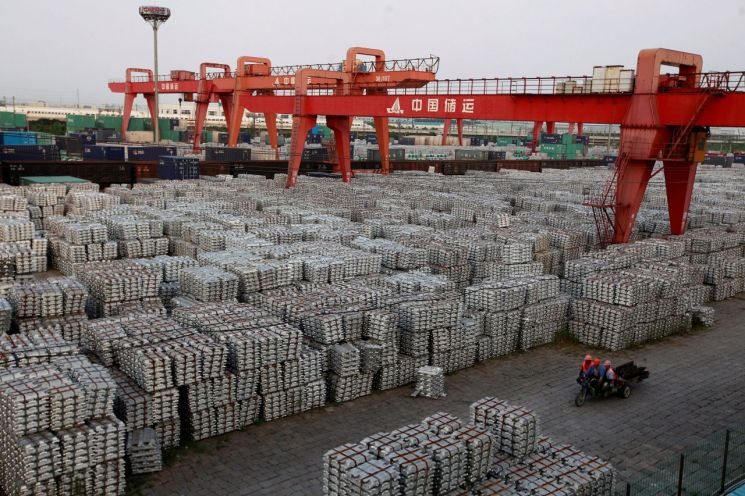
Earlier, the London Metal Exchange (LME) aluminum price rose up to 5% compared to early this month. WSJ noted, "The market had already anticipated that the Chinese government would take strong measures to control raw material prices," but "the prevailing expectation was that the impact would be relatively limited."
Ultimately, experts believe that the key to calming raw material prices lies in how much of the stockpiled raw materials the Chinese government releases into the market.
Warren Patterson, an analyst at ING Group, said, "The market is continuously monitoring the volume of raw materials being distributed," adding, "The key will be what signals the Chinese authorities send to the market in their efforts to control raw material prices."
Currently, the Chinese government has not disclosed the exact volume of stockpiles.
There is also speculation that Chinese authorities may announce additional price control policies. On the 16th, Huatai Futures, a Chinese raw material brokerage firm, released a report stating, "The possibility of the government taking follow-up measures cannot be ruled out."
© The Asia Business Daily(www.asiae.co.kr). All rights reserved.
![Clutching a Stolen Dior Bag, Saying "I Hate Being Poor but Real"... The Grotesque Con of a "Human Knockoff" [Slate]](https://cwcontent.asiae.co.kr/asiaresize/183/2026021902243444107_1771435474.jpg)

















