Priority Implementation for Sewage Pipelines in Nanjicheori Areas Including Yongsan, Mapo, Seodaemun, and Eunpyeong Districts
Comprehensive Inspection Including CCTV Filming, Flow and Water Quality Surveys, Facility Issues, and Improvement Plans
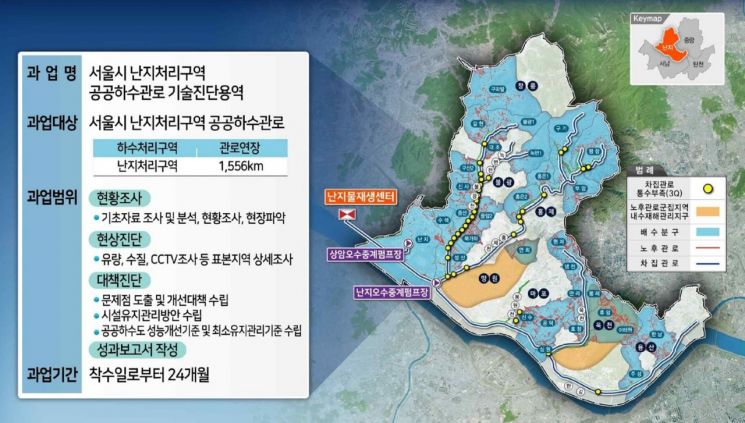
[Asia Economy Reporter Lim Cheol-young] On the 17th, the Seoul Metropolitan Government announced that it will conduct a technical diagnosis of public sewage pipelines to improve the treatment efficiency of public sewage systems, enhance the water quality of discharge areas, and establish a sustainable Seoul-type sewage maintenance management system.
Seoul has decided to prioritize the Nanjicheori area, where the most unidentified water is inflowing due to damage to sewage pipelines, among the four water reclamation centers in Seoul. The target area in the Nanjicheori treatment zone includes the entire districts of Yongsan, Mapo, Seodaemun, and Eunpyeong, as well as parts of Jongno, Jung, and Seongdong districts, with a total sewage pipeline length of 1,556 km. The project period is 24 months, from June this year to June 2023, with a budget of 3.7 billion KRW.
The technical diagnosis of public sewage pipelines will comprehensively inspect and diagnose through pipeline status surveys, flow and water quality investigations, smoke tests, and CCTV filming.
The main inspection items include internal pipeline inspection (visual and CCTV), flow and water quality surveys, smoke tests to identify illicit connections, diagnosis of facility conditions and operations, assessment of sewage pipeline connection status, identification of facility issues and improvement plans, and maintenance and management strategies for the facilities.
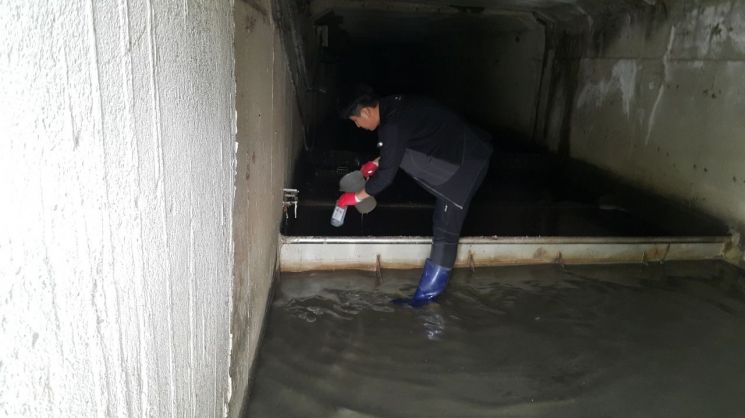
Seoul plans to use this technical diagnosis to identify vulnerable parts and operational issues of the public sewage system and establish improvement measures, thereby creating indicators for proactive facility enhancement.
Choi Jin-seok, Director of the Water Circulation Safety Bureau, stated, "Through this technical diagnosis of public sewage pipelines, we will improve the functions of Seoul’s public sewage system and prevent sewage leakage to build a 'sustainable Seoul-type sewage maintenance management system.' We will strive to create a pleasant urban environment by resolving sewage odor complaints, preventing soil pollution, and improving river water quality."
© The Asia Business Daily(www.asiae.co.kr). All rights reserved.


















