Samsung SDI Eyes Battery Plant Investment in US Within This Year
Top 3 Korean Battery Firms Secure Advantageous Position for US Investment
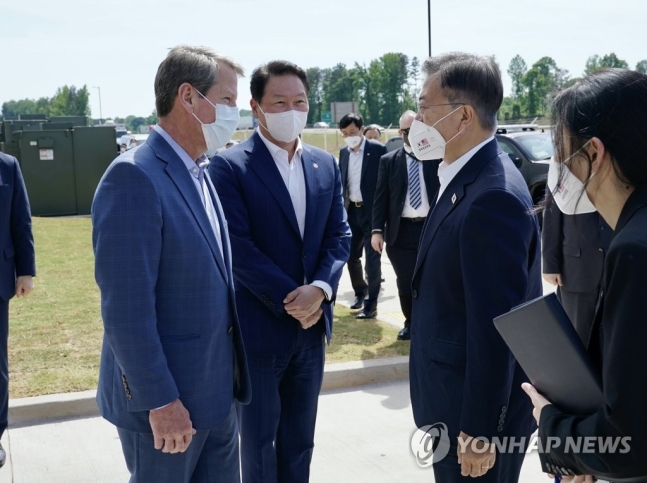
[Asia Economy Reporter Hwang Yoon-joo] Samsung SDI is expected to officially announce its investment in a U.S. electric vehicle battery factory as early as this year. The battery industry interprets Samsung SDI President Jeon Young-hyun's statement at the 'InterBattery 2021' event on the 9th, where he said "We are considering establishing a U.S. factory," as a clear indication of the company's intention to invest in the U.S. U.S. policies such as the United States-Mexico-Canada Agreement (USMCA) are also supporting Samsung SDI's local expansion.
According to the battery industry on the 13th, under the USMCA agreement that came into effect in July last year, automakers must source more than 75% of key materials and parts from the U.S. to receive tariff exemptions. For core components, up to 85% or more must be produced regionally by 2023 to meet tariff exemption requirements. As demand for regional sourcing of major automotive parts increases, vehicle manufacturers (OEMs) and first-tier suppliers (Tier 1) are accelerating localization of sourcing.
Accordingly, the electric vehicle and battery industries are also expanding investments in the U.S. Since the inauguration of the Biden administration, which emphasizes eco-friendly vehicle policies, joint ventures between U.S. automakers and domestic battery companies have continued to be announced. GM, the No. 1 U.S. automaker, has announced plans to establish a joint venture with LG Energy Solution, and Ford, the No. 2 automaker, has revealed plans to form a joint venture with SK Innovation.
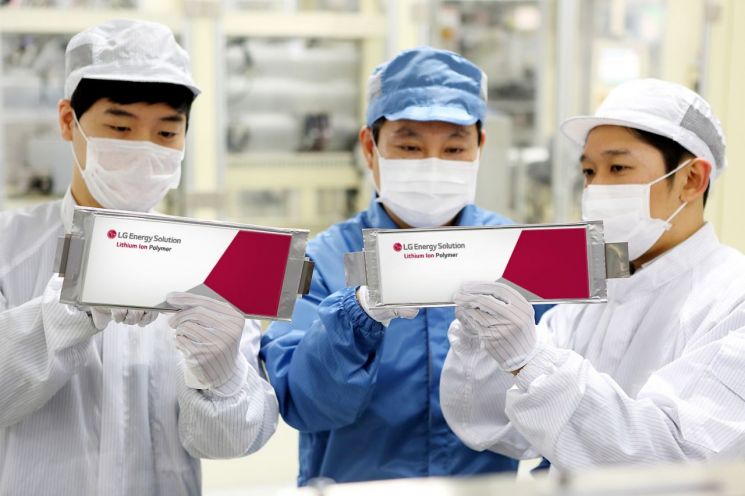
One reason for the growing expectations of Samsung SDI's U.S. investment is the eco-friendly vehicle policy along with the U.S.-China diplomatic situation. Currently, the top 10 battery companies are dominated by Korean (LG Energy Solution, Samsung SDI, SK Innovation), Chinese (CATL, BYD, CALB, AESC, Guoxuan), and Japanese (Panasonic, PEVE) companies.
Among these, four battery companies have entered the U.S. market: LG Energy Solution, SK Innovation, Panasonic, and AESC. In the context of the U.S.-China trade and technology war, Chinese company AESC faces difficulties investing in the U.S., and Panasonic, a major supplier to Tesla, is reluctant to invest. To grow the U.S. electric vehicle market, investment by Korean companies in the U.S. is essentially necessary.
A battery industry official said, "The Biden administration's eco-friendly vehicle policy and U.S.-China conflicts are working favorably for the domestic battery industry," adding, "Samsung SDI's U.S. investment is just a matter of time."
Meanwhile, from January to April this year, the global market share of batteries installed in electric vehicles (EV, PHEV, HEV) was led by China's CATL at 32.5%. This was followed by LG Energy Solution (21.5%), Japan's Panasonic (14.7%), China's BYD (6.9%), Samsung SDI (5.4%), and SK Innovation (5.1%). The combined market share of the three domestic battery companies was 32.0%, lower than China's CATL.
© The Asia Business Daily(www.asiae.co.kr). All rights reserved.
![Clutching a Stolen Dior Bag, Saying "I Hate Being Poor but Real"... The Grotesque Con of a "Human Knockoff" [Slate]](https://cwcontent.asiae.co.kr/asiaresize/183/2026021902243444107_1771435474.jpg)

















