Germany "Next Year's Fiscal Deficit -9% → -3%" etc.
South Korea Preparing Second Supplementary Budget Around 30 Trillion Following First 15 Trillion
Among 32 Trillion Excess Tax Revenue, Central Government's Share Only 19 Trillion
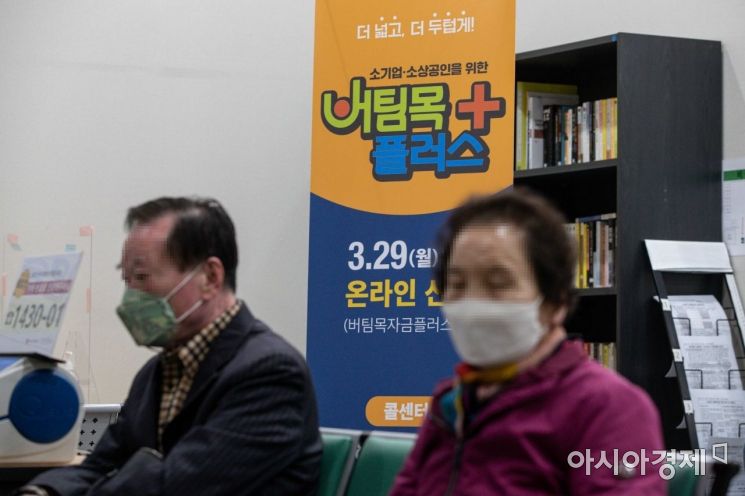 On April 19, when the additional payment of the fourth disaster relief fund, the Betimok Fund Plus, for 511,000 small business owners began, small business owners visiting the Seoul Jungbu Center of the Small Enterprise and Market Service in Jongno-gu, Seoul, were seen waiting to receive consultation regarding the support fund. Photo by Kang Jin-hyung aymsdream@
[Sejong=Asia Economy Reporter Moon Chaeseok] While major advanced countries such as Germany are implementing fiscal normalization programs, South Korea is still adhering to the principle of expansionary fiscal policy, drawing criticism that its commitment to normalization is weak. Despite forecasts of excess tax revenue exceeding 30 trillion won, it is expected that the excess revenue will be difficult to use for national debt repayment due to the second supplementary budget and other factors.
Advanced countries such as Germany, France, UK, Canada, and the US accelerate fiscal normalization
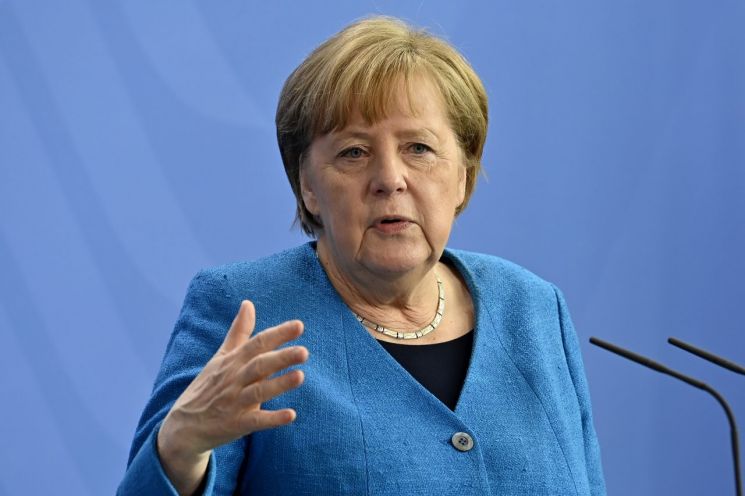
According to the recent report on major countries' budgets and medium-term fiscal management directions contributed by the Fiscal Expenditure Analysis Center of the Korea Institute of Public Finance in June, major advanced countries including Germany, the UK, France, the US, and Canada have begun operating fiscal normalization programs.
The German government set the structural deficit ceiling of the general government at 0.5% of GDP as a medium-term target in the 2021 stabilization program announced last April. The debt brake law provisions will be reapplied in 2023. Through this, the general government fiscal deficit ratio to GDP, which expanded to -9% this year, is planned to be reduced to -3% next year. The government aims to achieve -1.5% in 2023, -0.5% in 2024, and fiscal balance (0%) in 2025.
France presented a plan through the 2021?2027 fiscal stabilization program to reduce the fiscal deficit ratio to GDP from -9% this year to -5.4% next year, -4.4% in 2023, and then to the -3% range over the following three years. The UK has decided to raise the corporate tax rate from 19% to 25% in 2023.
Canada plans to reduce the fiscal deficit ratio to GDP from -16.1% last year to -6.4% this year, and the US aims to reduce the deficit from -16.7% this year to -7.8% next year.
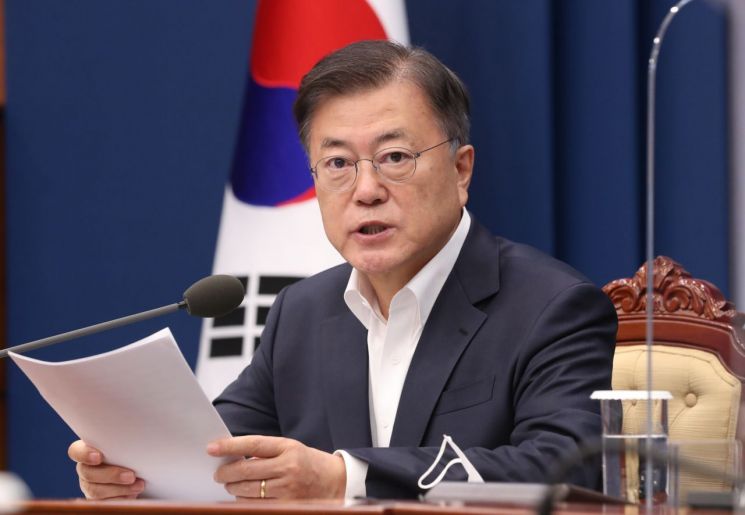 President Moon Jae-in attending and speaking at the National Fiscal Strategy Meeting held at the Blue House on the afternoon of the 27th of last month. (Image source=Yonhap News)
On the other hand, South Korea formed a first supplementary budget of about 15 trillion won at the beginning of the year and is currently reviewing a second supplementary budget of around 30 trillion won. Proposals include simultaneous payments of nationwide disaster relief funds and tailored support funds for vulnerable groups such as small business owners and special employment workers (teukgo). The integrated fiscal balance deficit ratio to GDP is expected to soar to -4.5% by the end of the year and remain similar next year.
With the government expected to announce the 2024 budget and the 2021?2025 medium-term fiscal plan in August, insiders anticipate the total expenditure growth rate of next year's budget to be around 7%. Fiscal rules are expected to be applied only in 2025.
According to the government and the National Assembly on the 13th, the government's internal estimate of this year's excess tax revenue is about 30 trillion won. Excess tax revenue means tax revenue collected beyond the revenue budget of 283 trillion won this year. Although there are claims that repaying debt with excess tax revenue should be prioritized, it is expected to be difficult. Even if the government allocates all the estimated 32 trillion won of excess tax revenue to the second supplementary budget, 40% must be allocated to local allocation tax and local education finance grants, leaving only 60%, or 19.2 trillion won, for the central government to use.
Based on last year's nationwide disaster relief fund, which provided up to 1 million won per four-person household, paying to the bottom 70% income group would cost 9.7 trillion won. If tailored support funds for vulnerable groups such as small business owners and special employment workers are paid as in the first supplementary budget this year, it would cost over 7 trillion won; additional COVID-19 vaccine purchases and vaccination costs would require 2.7 trillion won; and emergency employment measures would cost 2.8 trillion won. Even assuming disaster relief funds are given to the bottom 70% income group, the total exceeds 20 trillion won.
Unless local governments bear part of the funding as they did with last year's nationwide disaster relief fund, not only will debt repayment be impossible, but the government may have to issue deficit bonds.
Despite this situation, President Moon Jae-in stated at the fiscal strategy meeting on the 27th of last month that "at least until next year, the expansionary fiscal stance should be maintained."
© The Asia Business Daily(www.asiae.co.kr). All rights reserved.
![Clutching a Stolen Dior Bag, Saying "I Hate Being Poor but Real"... The Grotesque Con of a "Human Knockoff" [Slate]](https://cwcontent.asiae.co.kr/asiaresize/183/2026021902243444107_1771435474.jpg)


















