May CPI Surge Yet US Capital Markets Breeze
Inflation Spike Seen as Temporary
Fed Early Rate Hike Deemed Unlikely
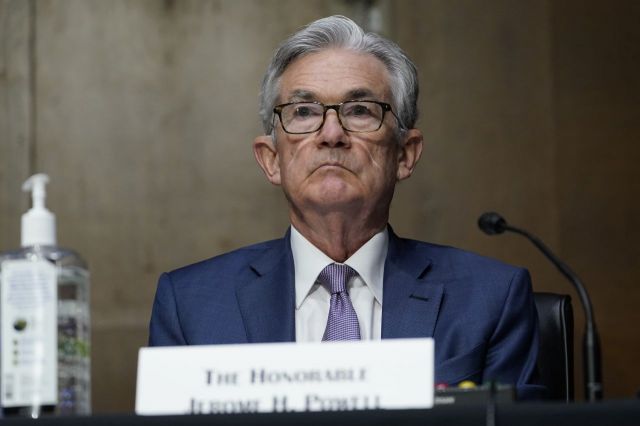
[Asia Economy New York=Correspondent Baek Jong-min] The US Consumer Price Index (CPI) for May rose by as much as 5%. The core CPI, which the Federal Reserve (Fed) closely monitors, also surged by 3.8%, marking the highest increase in 28 years. However, US Treasury yields fell and the stock market rose instead.
This is interpreted as reflecting market consensus with the Fed's stance that inflation is temporary, leading to expectations that there will be no tapering of asset purchases or early interest rate hikes.
Despite the US Labor Department's May CPI announcement on the 10th (local time), the 10-year US Treasury yield widened its decline, falling to 1.44%. The drop was 0.047 percentage points compared to the previous day.
The May CPI rose 5.0% compared to the same month last year, and the core CPI also increased by 3.8%. While the CPI recorded its highest rise in 13 years and the core CPI its highest in 28 years, this instead revived the previously suppressed bond and stock investment sentiment. The CPI announcement, which had been spreading after the May employment data release, turned out to be a "much ado about nothing" analysis that proved accurate.
Immediately after the CPI announcement, Treasury yields rose to the 1.5% range but then fell further than the previous day as bond buying surged. A decline in Treasury yields means a rise in bond prices.
The Wall Street Journal analyzed that excessive inflation concerns, inflows of overseas investors' buying, and the breakdown of US infrastructure investment negotiations contributed to the decline in Treasury yields. US Treasury yields had nearly doubled from 0.9% at the end of last year to 1.7% amid inflation concerns.
Major indices on the New York Stock Exchange also surged simultaneously. The S&P 500 index rose 0.47%, closing at a record high of 4239.24. The Nasdaq index, which is tech-stock focused and tends to rise when yields fall, recovered the 14,000 level. The Nasdaq index recorded a 0.78% increase to 14,020.33. The Dow Jones Industrial Average also rose 0.06%.
Experts evaluated that although the CPI soared, the perception that inflation is temporary spread, and the market's cautious sentiment leading up to the CPI announcement eased, resulting in falling Treasury yields and rising stock prices. They explained that investors began to align with the Fed's stance that inflation is temporary.
John Gran, head of ETF strategy at Allianz, argued, "Betting against the Fed is likely to be wrong." The market adage "Don't fight the Fed" proved true once again.
The sharp rise in used car prices in May, following April, has been highlighted as a case spreading belief that inflation is temporary.
Used car prices surged 7.3% in May as well. CNBC reported that one-third of the inflation increase was due to rising used car prices. It is analyzed that the strong used car prices caused by increased demand from economic reopening and new car supply shortages due to semiconductor shortages cannot be sustained.
Many experts judged that the Fed cannot raise interest rates unless it is confirmed that wages are rising on a trend basis despite rising prices.
Recent wage increases are also attributed to a decrease in job seekers due to expanded unemployment benefits, and it is analyzed that wage growth cannot continue once job seekers return.
The Fed will hold its regular Federal Open Market Committee (FOMC) meeting on June 15-16 to discuss monetary policy direction. Some expect that discussions on tapering may begin at this meeting.
Mark Zandi, chief economist at Moody's, said, "There is evidence that the inflation rise is temporary as the Fed expects, and now everything is normalizing. Once normalization occurs, prices will return to pre-COVID-19 levels," he forecasted.
© The Asia Business Daily(www.asiae.co.kr). All rights reserved.
![Clutching a Stolen Dior Bag, Saying "I Hate Being Poor but Real"... The Grotesque Con of a "Human Knockoff" [Slate]](https://cwcontent.asiae.co.kr/asiaresize/183/2026021902243444107_1771435474.jpg)
















