Small and Medium Business Ombudsman Reports Improvement of 29 Key Regulations at Emergency Economic Meeting on the 9th
[Asia Economy Reporter Kim Jong-hwa] Cashmere knitwear manufacturer Company A, which has a factory in Vietnam, produces garments through the process of 'knitting → cutting → sewing.' However, it was fined 2 billion KRW (13%) in customs duties for knitted garments that only underwent knitting without cutting and sewing processes at the local factory, as their origin could not be recognized.
Even though new technology utilizing computer-aided knitting manufacturing methods was employed to minimize yarn loss in garment production for high-end cashmere, the failure to meet the origin criteria under the Korea-Vietnam Free Trade Agreement (FTA) meant that preferential tariffs could not be applied, turning the technology into a disadvantage.
However, by amending the Korea-Vietnam FTA agreement and the FTA Act, from December onward, knitted garments that only undergo knitting without cutting and sewing processes locally will be recognized as originating products, eliminating customs burdens and allowing full utilization of the new technology.
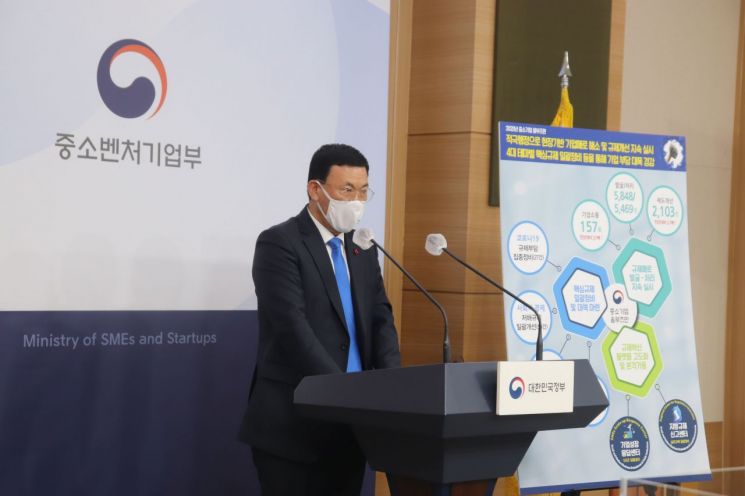
The Ministry of SMEs and Startups and the Small and Medium Business Ombudsman announced this content as part of the '8th Field-Oriented Regulatory Innovation Plan' at the '37th Emergency Economic Central Countermeasures Headquarters Meeting and 3rd Innovation Growth Strategy Meeting' held on the 9th, in cooperation with related ministries.
Since 2018, the Small and Medium Business Ombudsman, together with the Ministry of Economy and Finance, has regularly promoted the 'Field-Oriented Regulatory Innovation' series (7 times), resolving a total of 241 significant regulatory difficulties faced by businesses on the ground. Among these, 124 cases were discovered and improved by the Small and Medium Business Ombudsman, accounting for 51.5% of the total.
This plan pursued improvements in 29 key regulations related to easing business burdens and supporting future readiness based on communication with companies. Among these, 13 cases were discovered and improved by the Small and Medium Business Ombudsman, representing 44.8%.
Park Ju-bong, Deputy Minister-level Small and Medium Business Ombudsman, stated, "The significance of this 8th plan lies in improving small but meaningful regulatory issues in major industries through the establishment of the Field-Oriented Regulatory Innovation Task Force in January, enhancing the sense of regulatory improvement in industries and business sites. We will actively promote the improvements to businesses and continue efforts for field-oriented regulatory innovation."
© The Asia Business Daily(www.asiae.co.kr). All rights reserved.

















