Large Pillars and Flower Beds Restrict Commercial Space
"Developer Did Not Notify in Advance" Contract Cancellation and Compensation Lawsuit
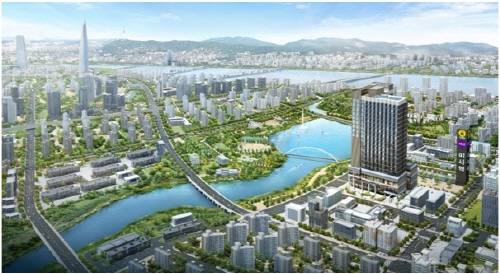 Misa Riverside City
The court ruled that failing to inform buyers in advance about the presence of pillars, air conditioning facilities, flower beds, and other elements that could restrict space utilization when selling commercial spaces constitutes grounds for contract termination.
According to the legal community on the 8th, the 47th Civil Division of the Seoul Central District Court (Presiding Judge Lee Oh-young) recently recognized that all 11 sales contracts claiming cancellation in a lawsuit filed by 19 buyers of commercial spaces in A Shopping Center in Misa Riverside City, Hanam, Gyeonggi Province, were subject to cancellation. The court ordered the developer to pay the full purchase price and statutory interest for over two years to the buyers who claimed cancellation.
The court also recognized approximately 90% of the damages claimed by the remaining eight buyers who sought only compensation and ordered the developer to pay statutory interest for over three years. If the ruling is finalized, the developer will have to pay a total of about 8.3 billion KRW, including interest, to the buyers.
The buyers argued that "the developer did not notify us about the presence of pillars, nor about air conditioning facilities and flower beds that are much larger than usual." On the other hand, the developer countered, "We had the blueprints available at the sales office, installed a model of the shopping center inside the sales office, included notes about the pillars in the sales contract, and obtained confirmation that the blueprints were reviewed, thus fulfilling all notification obligations."
The court sided with the buyers, stating that the developer violated the duty to notify about the presence of pillars, air conditioning facilities, and flower beds. Although the blueprints submitted by the developer had '□' markings, there was no indication that these represented pillars, and considering the damages caused by the pillars, it was difficult to conclude that clear notification was made regarding the pillars.
Furthermore, the court found it hard to view the contract as concluded based on the shopping center model or promotional materials presented by the developer during the sales process. Considering the price difference between spaces with and without pillars, it was also judged that the pricing did not reflect the presence of pillars. The developer is reportedly planning to appeal.
Conflicts between developers and buyers often arise when the actual construction differs from the blueprints or explanations provided by the developer during the sale of commercial spaces. However, it is rare for buyers who file lawsuits to win, and cases where all plaintiffs in a class action win, as in this case, are extremely uncommon.
Like apartments, most commercial space sales are conducted through pre-sales, and buyers can only verify the actual building after completion. This structure makes contract cancellation lawsuits due to exaggerated advertising or other reasons likely to occur.
Attorney Park Geon-ho of Jeonghyang Law Firm, who represented the plaintiffs, said, "In a market centered on pre-sales, developers have often engaged in exaggerated advertising to ensure sales success, but we expect this ruling to provide an appropriate brake." He added, "We believe developers will now provide detailed notifications about pillars and internal facilities."
© The Asia Business Daily(www.asiae.co.kr). All rights reserved.
![Clutching a Stolen Dior Bag, Saying "I Hate Being Poor but Real"... The Grotesque Con of a "Human Knockoff" [Slate]](https://cwcontent.asiae.co.kr/asiaresize/183/2026021902243444107_1771435474.jpg)















