China's National People's Congress Reviews 'Foreign Sanctions Prevention Law' to Counter US Blacklist
Passage Likely on 10th...Details of the Bill Remain Confidential
[Asia Economy Beijing=Special Correspondent Jo Young-shin] China has established a legal basis to respond if it imposes sanctions on its own companies and officials by the United States and other Western countries.
According to China's state-run Xinhua News Agency on the 8th, the Standing Committee of the National People's Congress (NPC) held the 29th plenary session the day before and reviewed the draft of the "Anti-Foreign Sanctions Law." Chinese media are optimistic that this law will pass the NPC on the 10th.
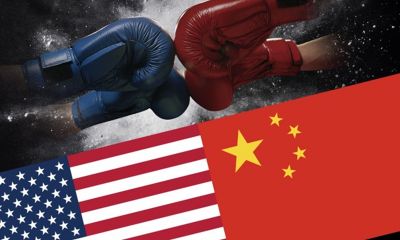
Chinese media explained that the Anti-Foreign Sanctions Law was prepared to counter the hegemony and political power of the United States and other Western countries, and its purpose is to protect China's sovereignty, dignity, and core interests.
Huanqiu Shibao emphasized that the United States imposed sanctions on Chinese advanced companies such as Huawei under its national laws citing security reasons, and imposed mass sanctions on senior Chinese officials related to the Xinjiang Uygur Autonomous Region and the Hong Kong National Security Law. Unlike the Western camp, China currently lacks related laws, so it needs to establish a sophisticated legal firewall to protect Chinese companies and citizens.
Although the specific contents of this bill have not been disclosed, it is expected to codify retaliatory measures corresponding to unfair sanctions from the United States and other Western countries. It is also reported to include provisions for compensating losses caused by sanctions.
The Hong Kong South China Morning Post (SCMP) analyzed that security is in place regarding the details until the bill is finally passed, and the fact that this law has been mentioned in Chinese state media means that the passage of China's Anti-Foreign Sanctions Law is certain.
Wang Jang-yu, a law professor at Hong Kong Shing Sai University, told SCMP, "If we do nothing, we will just sit and be harassed," adding, "If there is something to respond to the United States and other Western countries, they will think twice." Professor Wang added that this law will become a powerful legal weapon for China.
Huanqiu Shibao, citing experts, hinted at the contents of this law by saying that if China's Anti-Foreign Sanctions Law had been in effect, Victoria in Australia, which unilaterally canceled the Belt and Road Initiative Memorandum of Understanding (MOU), would have paid a huge price.
© The Asia Business Daily(www.asiae.co.kr). All rights reserved.

















