Peru Presidential Election: Right-Wing Fujimori vs. Left-Wing Castillo Face Off
Exit Polls Show Tight Race Within ±3% Margin of Error
Mexico Holds Elections for Over 20,000 Federal Deputies
Midterm Evaluation Ahead of Current Government's 6-Year Term Halfway Point
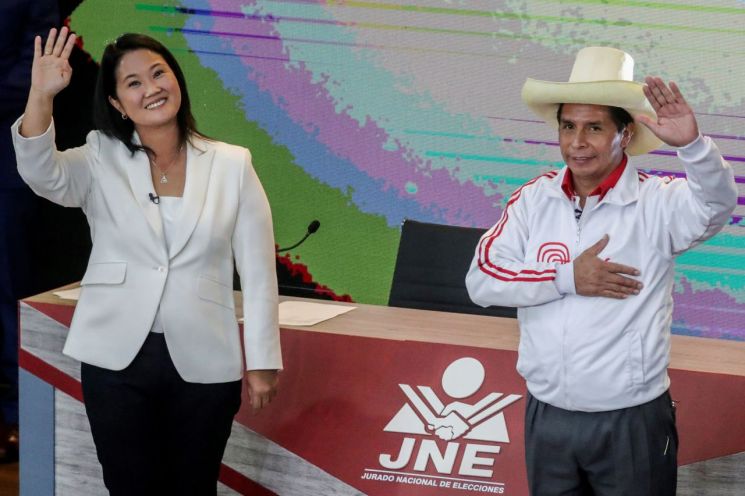
[Asia Economy Reporter Kim Suhwan] The presidential runoff election in Peru and the midterm elections in Mexico were held simultaneously. Currently, Latin American countries are experiencing economic recession due to the COVID-19 crisis, with support for established political parties declining while populism is gaining popularity. It is observed that the election results in these two countries, held at the same time, could also influence the political direction of Latin American nations.
The Peruvian presidential runoff election, which will determine Peru's fate for the next five years, took place on the 6th (local time). According to exit polls released by America TV immediately after voting ended, right-wing Popular Force party candidate Keiko Fujimori received 50.3%, while left-wing Free Peru party candidate Pedro Castillo received 49.7%.
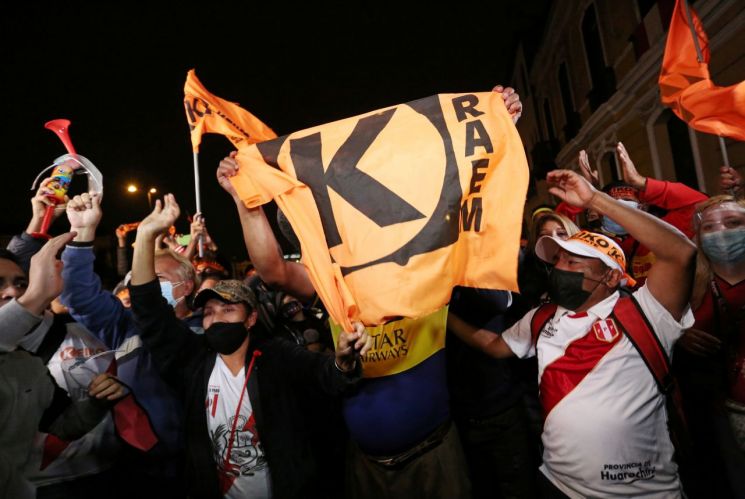 On the evening of the 6th (local time), supporters of presidential candidate Keiko Fujimori gathered in Lima, the capital of Peru, cheered after an exit poll for the runoff election showed Fujimori narrowly leading.
 [Image source=Yonhap News]
The two candidates are engaged in an extremely close race within a margin of error of ±3 percentage points, so it may take several days to finalize the winner depending on the vote counting progress.
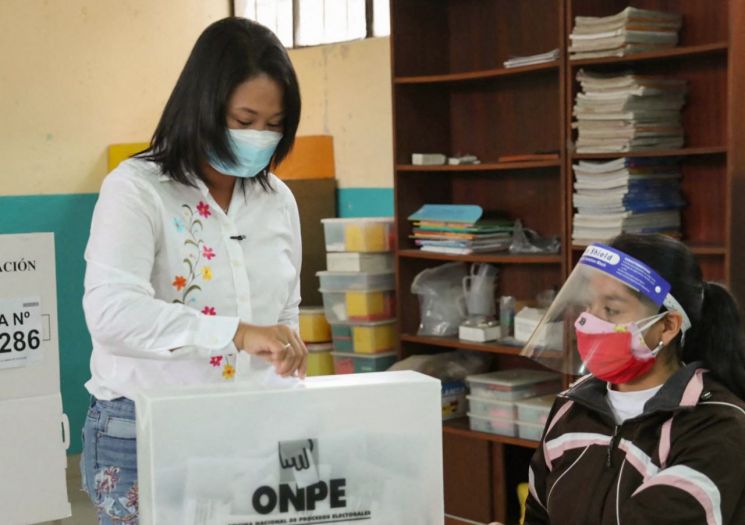 Right-wing Popular Power Party candidate Keiko Fujimori in the Peru presidential runoff election
 [Photo by Yonhap News]
In the exit poll, Fujimori, who led by a narrow margin, is classified as part of the political establishment as the daughter of a former president.
A proponent of free-market economic policies, she has made pro-business policies such as corporate tax cuts a major campaign promise during this election.
Fujimori is nicknamed the "Daughter of the Dictator" due to her father, former President Fujimori's human rights violations and corruption record.
In contrast, Castillo, regarded as a political outsider unlike Fujimori, is a rural elementary school teacher with almost no political experience.
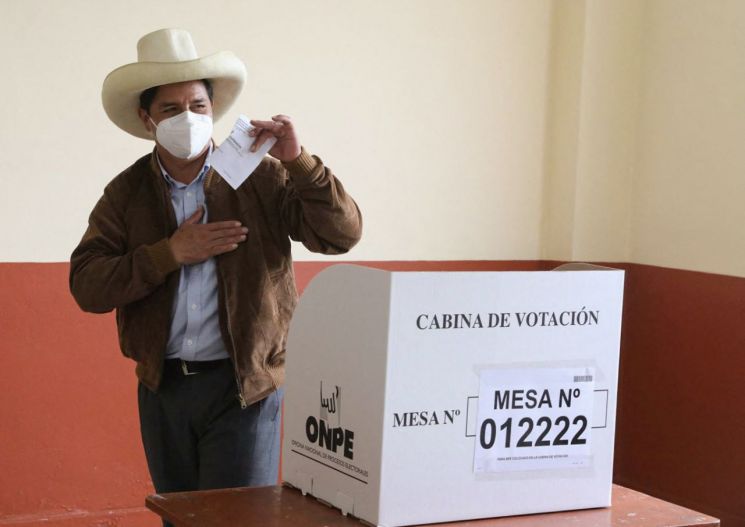 Left-leaning Free Peru Party candidate Pedro Castillo in the Peruvian presidential runoff election
 [Photo by Yonhap News]
Castillo's only political experience was running unsuccessfully for mayor of a small local town in 2002.
Advocating radical leftist policies such as expanding nationalization and large-scale tax increases, Castillo has caused anxiety among conservative forces concerned about his extreme policies.
Both candidates are classified as populists and face significant opposition and controversy. Therefore, Peruvian voters view this election as choosing the "lesser evil." Regardless of who wins, repercussions are expected.
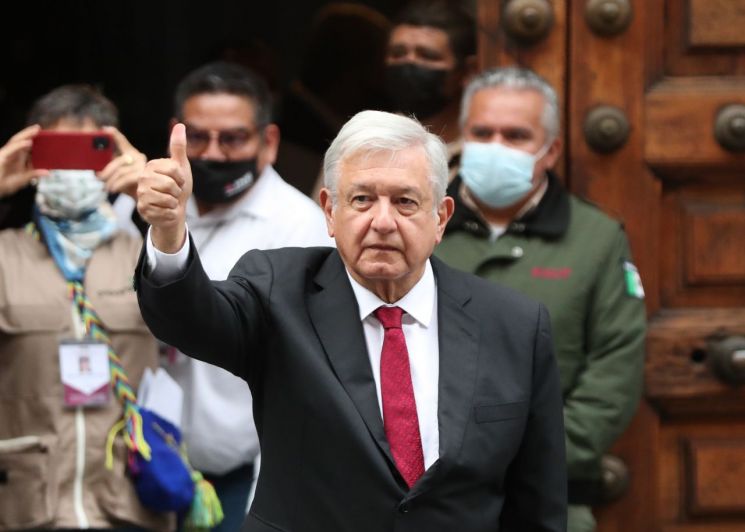 Andr?s Manuel L?pez Obrador, President of Mexico, is raising his hand to supporters as he leaves a polling station in Mexico City after voting on the 6th (local time).
 [Image source=EPA Yonhap News]
Meanwhile, in another Latin American country, Mexico, voting was held to elect all members of the federal Chamber of Deputies, 15 governors, mayors, and local council members totaling about 20,000 officials. This election serves as a midterm evaluation of the administration of Andr?s Manuel L?pez Obrador, who is approaching the halfway point of his six-year term.
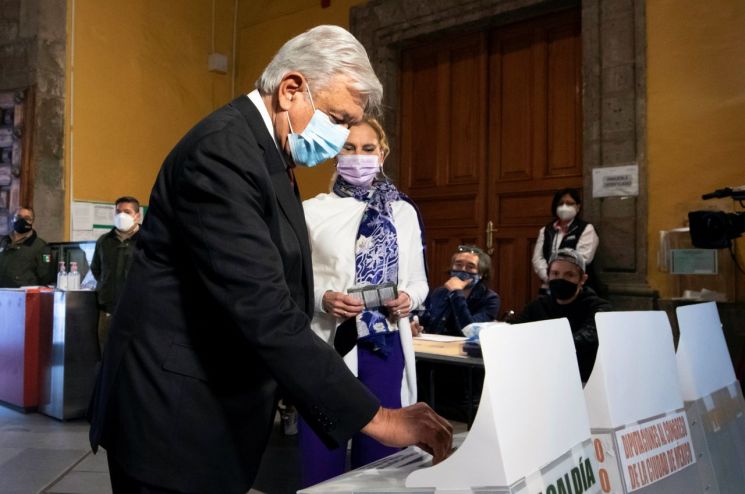 Andres Manuel Lopez Obrador, President of Mexico, voting in the midterm elections
 [Photo by Yonhap News]
Left-wing populist President L?pez Obrador, who achieved a regime change in 2018, has implemented various reform policies aimed at eradicating corruption in Mexico. The National Regeneration Movement (MORENA), led by President L?pez Obrador, emerged like a comet three years ago before the election, securing control of the legislature and winning the presidency.
If the ruling party wins this election, President L?pez Obrador is expected to gain momentum for reforms during the remaining three years of his term.
This election took place amid worsening economic polarization and political turmoil in Latin American countries caused by the COVID-19 pandemic.
Currently, Chile has begun constitutional reform for the first time in 41 years in response to citizens' demands. In last month's constituent assembly election, voters disappointed with the current right-wing establishment appeared to support many left-leaning independent candidates, who are expected to lead the constitutional reform process.
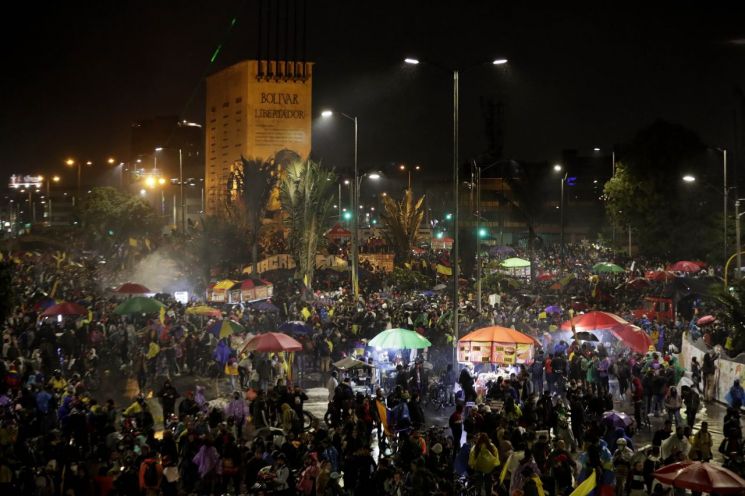 On the 29th of last month (local time), a large-scale anti-government protest took place in Bogot?, the capital of Colombia.
 [Image source=Yonhap News]
In Colombia, which is preparing for a presidential election next May, violent protests erupted against the right-wing government's proposals to increase income and value-added taxes, resulting in at least 26 deaths and 89 missing persons within a month.
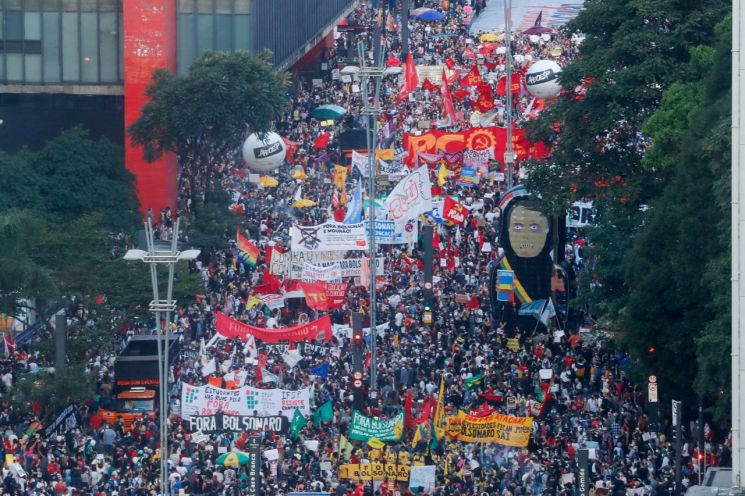 On the 30th of last month (local time), the largest anti-government protest since the COVID-19 pandemic took place in S?o Paulo, Brazil. [Image source=Yonhap News]
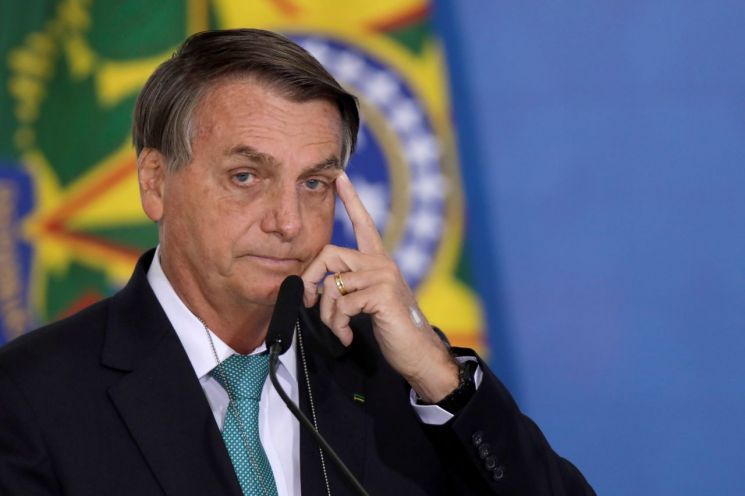
Brazil, also facing a presidential election next year, is currently conducting a Senate investigation into President Jair Bolsonaro's right-wing populist administration's poor response to COVID-19.
© The Asia Business Daily(www.asiae.co.kr). All rights reserved.



















