Jung Eun-kyung "25% of the population completed the first dose in the first half of the year... Recovery of daily life can be accelerated"
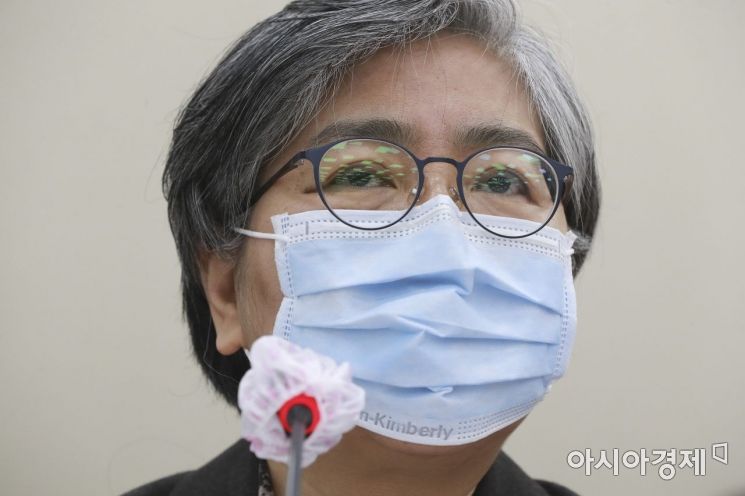
[Asia Economy Reporter Seo So-jeong] As South Korea's COVID-19 vaccination reaches 100 days, 14.5% of the domestic population has completed the first dose. The government expects to achieve the goal of vaccinating '13 million+α' people early this month at the current pace and to advance the timing of herd immunity.
The COVID-19 Vaccination Response Promotion Team (Director Jeong Eun-kyung, Korea Disease Control and Prevention Agency) announced that as of midnight on the 5th, 397,345 people were vaccinated the previous day.
Among them, 367,761 received the first dose, bringing the total number of first-dose vaccinations to 7,455,726, recording a vaccination rate of 14.5% of the population.
Second-dose vaccinations numbered 29,584, with a total of 2,277,137 people completing the second dose, showing a vaccination rate of 4.4% of the population.
With the recent acceleration in vaccinations, the vaccination rate is rising rapidly.
The government began vaccinations on February 26 for workers and residents of nursing hospitals and nursing facilities under 65 years old. Since then, the program has sequentially expanded to COVID-19 treatment hospital workers, first-line quarantine responders, high-risk medical institution workers, elderly aged 75 and above, and those aged 65 to 74. Starting from the 7th, vaccinations for approximately 3.96 million people aged 60 to 64 will begin, further increasing the number of vaccinated individuals.
The government plans to have more than 13 million people complete the first dose this month, achieve the goal of vaccinating 36 million people by September, and establish herd immunity by November.
Government: "Grateful for High Pre-Registration Among Elderly with High Fatality Rate"... Focused Vaccinations Over the Next Two Weeks
In particular, the government is encouraged by the high pre-registration rate among the elderly, who have a high fatality rate. As of midnight on the 4th, among 9.47 million seniors aged 60 to 74, about 7.33 million had completed pre-registration, resulting in an overall registration rate of 80.6%.
Director Jeong Eun-kyung explained at a briefing the previous day, "Pre-registration has continuously surged daily since the announcement of support measures for daily life recovery for those who completed vaccination on the 26th of last month, the launch of a rapid reservation service for leftover vaccines, and the simultaneous start of vaccinations at nationwide entrusted medical institutions."
Director Jeong emphasized, "Considering the pre-registrants for the AstraZeneca vaccine and the Pfizer vaccine recipients, we expect to achieve over 13 million vaccinations in the first half of the year and a vaccination rate exceeding 25% of the entire population. We sincerely thank the elderly who trusted the government and medical community and participated in pre-registration and vaccination."
The government plans to complete the first dose vaccinations for the first half of the year by the 19th. Excluding weekends and holidays, an average of 540,000 to 550,000 people must receive the first dose daily over the next ten days. Director Jeong stated, "Until this week, about 300,000 to 350,000 people are vaccinated daily, and in the following two weeks, vaccinations will be very intensively conducted at around 500,000 people per day."
Nationwide entrusted medical institutions and vaccination centers can theoretically vaccinate more than 1 million people per day. Last year, for influenza vaccines, up to 2.09 million people were vaccinated in a single day. Since vaccinations for the elderly aged 65 to 74 began on the 27th of last month, up to 716,000 people have been vaccinated in a day.
Professor Cheon Eun-mi of the Respiratory Medicine Department at Ewha Mokdong Hospital predicted, "Once messenger RNA (mRNA) vaccines begin to be actively administered at entrusted medical institutions, the maximum daily number of vaccinations can be raised to over 1 million, which will further advance the timing of achieving herd immunity."
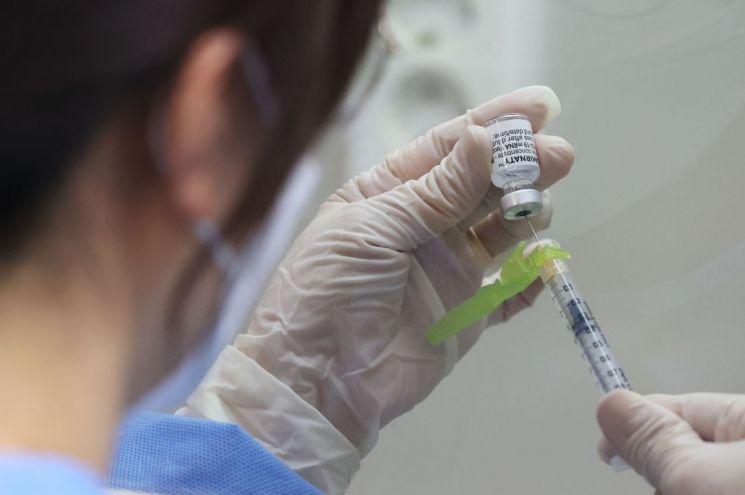
However, with the high pre-registration rate of 80.6% among the elderly aged 60 to 74, some of them are expected to be vaccinated later in July than their originally scheduled dates.
Director Jeong explained, "Because the pre-registration rate is higher than expected, depending on the vaccination situation, some recipients' schedules may need to be adjusted. If vaccination must be rescheduled despite having a reservation, we will thoroughly manage to ensure that those who reserved can receive their vaccinations promptly in early July."
Jeong Eun-kyung: "100 Days of Vaccination... A Time When the Solidarity and Cooperation of the People Shine Again"
Vaccine supply is gradually stabilizing. Although first-dose vaccinations were temporarily suspended last month due to a temporary supply imbalance, the planned quantities have been introduced without disruption recently, and the vaccine types have increased to four with the addition of Moderna and Janssen alongside AstraZeneca and Pfizer.
The initial batch of Moderna vaccines arrived on the 1st, and in the early hours of the same day, 1.01 million doses of Janssen vaccines provided by the U.S. government arrived.
The Janssen vaccine recipients include reservists and civil defense personnel aged 30 to under 60, as well as defense and diplomatic personnel. Among 1,012,800 eligible people, 89% (892,393) have completed pre-registration. They will be vaccinated between the 10th and 20th of this month.
Director Jeong reflected, "The 5th marks the 100th day since the first vaccination began on February 26, a time when the solidarity and cooperation of our people to overcome the crisis shine again. We expect that the quarantine achievements shown through social distancing last year will become visible again this year through vaccinations."
© The Asia Business Daily(www.asiae.co.kr). All rights reserved.


















