WSJ Highlights Women's Conscription Bills and National Petitions
"Growing Public Interest Surrounding Major Reforms to the Conscription System"
Emphasis on Measures to Prevent Sexual Crimes Within Military Before System Implementation
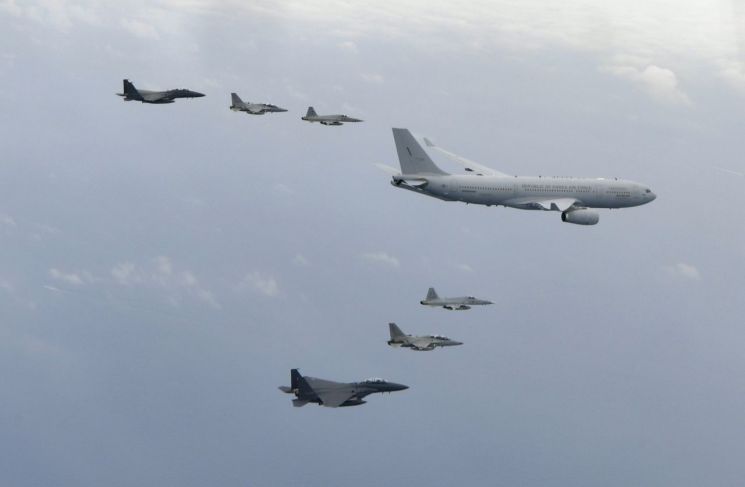
[Asia Economy Reporter Kim Suhwan] Last year, South Korea recorded a historic low total fertility rate of 0.84 (the average number of children a woman is expected to have in her lifetime), raising concerns about the reduction of military personnel and increasing calls for the introduction of a female conscription system, according to foreign media evaluations.
On the 3rd (local time), The Wall Street Journal (WSJ) reported on the recently proposed "Gender Equality Military Service Act" by Park Yongjin of the Democratic Party of Korea, highlighting this trend.
The bill proposed by Representative Park aims to abolish the existing male-only conscription system and transition to a volunteer military system, while mandating up to 100 days of basic military training for both men and women.
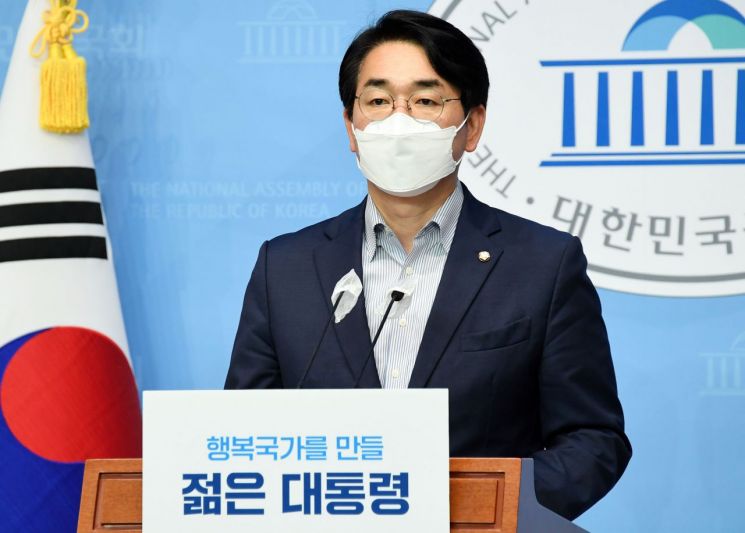
In his book, Park Yongjin's Political Revolution, Park explained, "(The bill) promotes the cultivation of an elite military force centered on training reservists with combat capabilities," adding, "It maintains compulsory military service but drastically reduces the mandatory service period to lessen career disruption for the younger generation and prevent social energy waste."
WSJ noted, "Discussions around the introduction of female conscription have been intensifying recently in South Korea," and "Considering the declining birth rate, the current military personnel numbers are expected to be halved within 20 years," which is fueling calls for female conscription.
The outlet also introduced the case of nearly 300,000 citizens supporting a Blue House petition advocating for female conscription, stating, "There is growing public interest in female conscription, which could trigger a major reform of South Korea's conscription system."
Previously, countries with advanced women's rights such as Sweden and Norway have introduced female conscription under the name of "gender-neutral conscription."
In particular, Sweden reinstated the system in 2018 after abolishing it in 2010, requiring men and women aged 18 and over to serve for 9 to 12 months. In Norway, both men and women serve equally for one year, and the fact that they share the same living quarters has also attracted attention.
Alma Persson, a gender equality expert based in Sweden, analyzed, "The military was an organization perceived as only for men, but since the introduction of gender-neutral conscription in Sweden, such perceptions have disappeared."
South Korea's Ministry of National Defense remains cautious about introducing female conscription. The ministry has stated, "Public consensus is important," emphasizing that public support is crucial before implementing female conscription. It is also pursuing military technological modernization, such as expanding drone deployment, to respond to the decreasing pool of military personnel.
WSJ stressed that in South Korea, the introduction of female conscription will require not only public consensus but also the advancement of military culture regarding gender issues.
The media introduced a recent case of a female non-commissioned officer who took extreme measures after sexual harassment by a superior, reporting that "criticism is spreading over the South Korean government's failure to establish measures to prevent sexual crimes within the military organization."
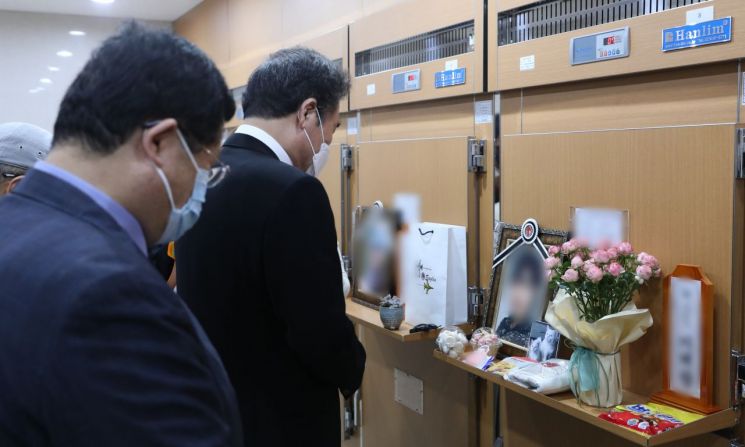 Lee Nak-yeon paying respects to the non-commissioned officer who was a victim of sexual harassment
 [Photo by Yonhap News]
Kim Eunju, director of the Korean Women's Political Research Institute, emphasized in an interview with WSJ, "Before introducing female conscription, measures must be established to protect women in the military from sexual crimes."
The outlet also introduced poll results showing an increasing number of women in their 20s and 30s supporting female conscription, evaluating that public opinion is positive toward the system's introduction.
According to a public opinion poll released in April by the Korea Society Opinion Institute (KSOI), the percentage of women in their 20s (54.9%) and 30s (54.8%) who support female conscription was higher than those who oppose it.
A woman in her 30s interviewed by WSJ said, "The very premise that women cannot serve in the military implies that women are weak," adding, "Excluding women from conscription negatively affects our society."
© The Asia Business Daily(www.asiae.co.kr). All rights reserved.



















