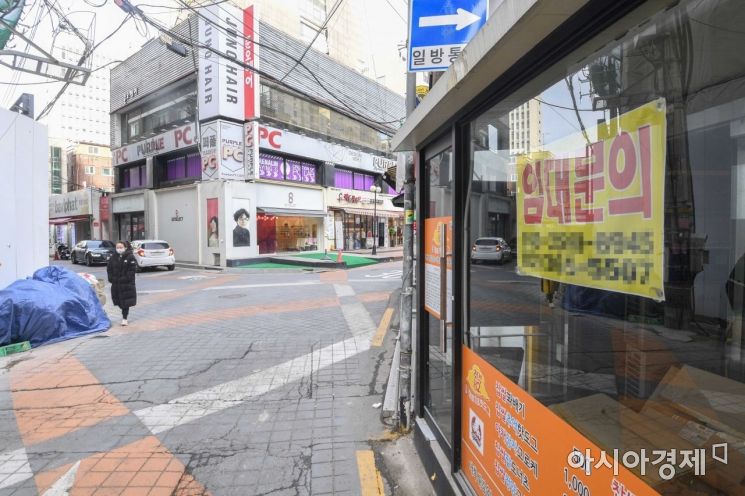
 On January 27, as stringent social distancing measures to prevent the spread of COVID-19 continue, a store located in the commercial area in front of Ewha Womans University in Seodaemun-gu, Seoul, is closing down and posting a notice for lease inquiries. Photo by Jinhyung Kang aymsdream@
[Asia Economy Reporter Seungjin Lee] Despite the economic downturn caused by COVID-19 last year, the number of restaurant closures in South Korea decreased.
According to a report by Senior Researcher Soyoon Jung of the Korea Foodservice Industry Research Institute, who analyzed local administrative licensing data from the Ministry of the Interior and Safety, the annual number of general restaurant closures was 54,437 last year, down 8.6% from 59,530 in 2019. This is the lowest level in four years since 51,377 closures in 2016.
Generally, the closure rate of the restaurant industry (the ratio of closed businesses to operating businesses) is higher than that of other industries. Based on data calculated from National Tax Service statistics, the restaurant closure rate in 2019 was 21.5%, ranking first among 52 industries.
This closure rate is significantly higher compared to wholesale and brokerage businesses at 11.5%, retail at 18.6%, lodging at 13.4%, and transportation at 8.5%.
Researcher Jung explained, "Business owners made efforts to overcome the COVID-19 crisis by starting delivery or takeout services," adding, "Even when considering closure, the high costs of interior demolition and other expenses likely made owners hesitate to close their businesses."
Additionally, the foodservice industry analyzes that the requirement of 'business operation maintenance' to receive disaster relief funds last year also had an impact.
Researcher Jung stated, "Since the entry barrier for restaurant startups is relatively low, repeated openings and closures by less-prepared prospective entrepreneurs can cause significant social costs."
He continued, "When diagnosing businesses, there are more cases than expected where expenses are excessive rather than sales being low, or where the cost structure itself is unfavorable," and emphasized, "It is necessary to develop management diagnostic tools for foodservice businesses to prevent closures of small business owners in the foodservice industry."
© The Asia Business Daily(www.asiae.co.kr). All rights reserved.

















