Soju Air Fresheners, Milk Carton Body Wash... Safety Accident Concerns
Warning Labels Are Present, but May Be Overlooked
11 Cases of Hand Sanitizer in Jelly Containers Being Ingested
Experts Say "If Harm Continues, Sales Suspension Should Be Considered"
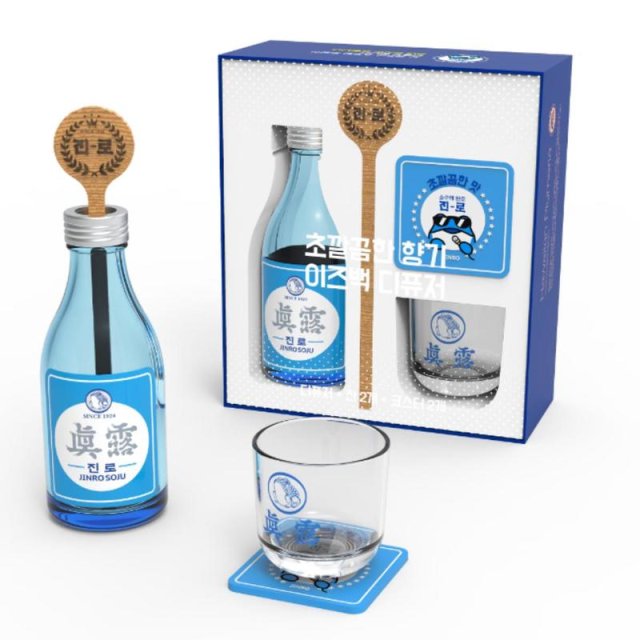
[Asia Economy Reporter Kang Juhee] Soju-shaped diffusers, milk carton-shaped body lotions, hand sanitizers contained in jelly containers...
Recently, as 'fun-sumer (fun+consumer)' marketing that pursues fun when purchasing products has become popular, unique collaboration products are being released. However, voices are growing that some products may cause confusion among consumers. Collaboration products typically involve placing a different type of product inside a familiar product package, but if consumers mistake them, it could potentially lead to safety accidents.
Experts say that while such marketing offers novelty to consumers, if continuous harm occurs, it may be necessary to consider discontinuing sales.
In March, HiteJinro collaborated with a distribution company to release a limited edition 'Dokkaebi Diffuser' as merchandise. This merchandise is a diffuser containing fragrance, designed to look like a miniaturized soju bottle.
While this product received responses from citizens as 'unique and fun,' concerns arose that its packaging, very similar to an actual soju bottle, might cause people to mistakenly consume it as food.
One netizen commented, "Although the size is small and different from regular soju products, since miniature liquors of one or two sips are sold in the market, I thought someone might really think it's soju and drink it," adding, "It's cute, but if someone actually drank it, it would have been very dangerous."
Regarding this, HiteJinro told a media outlet that to prevent mistaken consumption as soju, the product is equipped with a three-stage cap and includes a warning label stating 'Do not drink.'
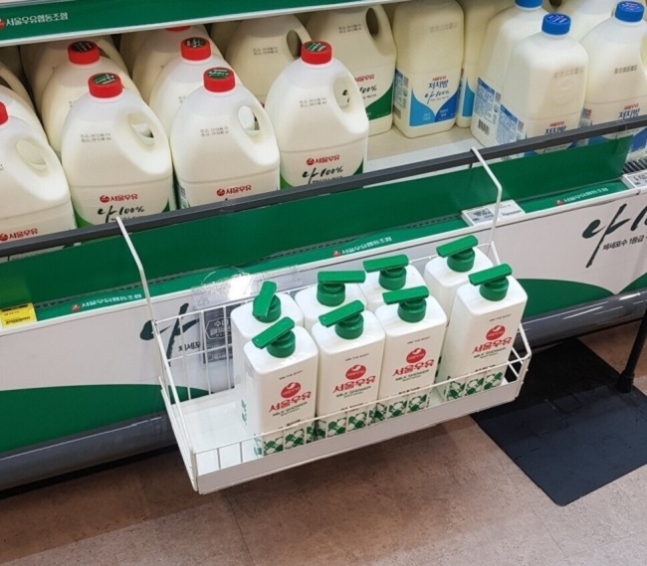 A body wash packaged in a shape similar to a Seoul Milk carton is displayed together in the food section. Photo by Online Community Capture
On the 12th of last month, a body wash packaged similarly to a milk carton was also released. This product attracted attention because it resembled a Seoul Milk carton, but when images of it displayed next to milk at a supermarket in Busan spread on social media, it faced criticism. Since real milk and body wash were displayed together, there was a high risk that people might confuse the body wash for milk and purchase it by mistake.
As the controversy grew, the supermarket moved the body wash to the cosmetics section and added a warning label on the product stating, 'Do not drink. This is body wash.' However, consumers still expressed concerns. It was pointed out that children, the elderly, or intoxicated individuals with reduced cognitive ability might mistake this product for food and ingest it.
Such collaboration products have recently gained popularity mainly among younger generations, often released through partnerships between food companies and distributors. However, as related safety accidents continue to occur, calls to halt sales are growing louder. In particular, warning labels are sometimes overlooked if consumers do not pay close attention, so they are not considered an adequate measure to prevent safety accidents.
In fact, there have been incidents of people mistaking non-food products for food and ingesting them. According to the Korea Consumer Agency, there were 11 reported cases last year of people drinking hand sanitizers packaged in 'jelly container' forms. The packaging featured cartoon characters, which could cause children to mistake them for jelly, raising safety concerns. Consequently, the Ministry of Food and Drug Safety banned the sale of hand sanitizers in jelly container forms starting this August.
As accidents related to collaboration products continue, a bill was recently proposed in the National Assembly to prohibit labeling or advertising on food designs that could be mistaken for non-edible household chemical products.
On March, Representative Yang Geumhee of the People Power Party announced that she had introduced the 'Partial Amendment to the Act on Labeling and Advertising of Food, etc.' containing such provisions. Representative Yang emphasized, "While these products can be seen as marketing for consumer fun and enjoyment, for young children with immature judgment, they can lead to safety accidents, so careful consideration is needed from the product planning stage."
Experts say that while collaboration products offer novelty to consumers, if continuous harm occurs, discontinuing sales should be considered.
Professor Lee Eunhee of Inha University's Department of Consumer Studies stated, "The fact that collaboration products cause confusion among people is problematic," adding, "Especially in situations where cognitive ability is limited, it can lead to safety issues, so companies should establish systems to verify products before release and prepare countermeasures."
She continued, "Currently, there is no way to completely ban the production of such products. However, products that pose potential problems should be modified or withdrawn promptly. Ignoring ongoing issues ultimately harms the company's image as well."
© The Asia Business Daily(www.asiae.co.kr). All rights reserved.


















