Reuse of Old Yongsan Railroad Hospital (Registered Cultural Heritage No. 428) Building... 2 Above-Ground Floors, Total Floor Area 2,275㎡... Exhibition, Landscaping, Office, Storage, and Education Facilities Created... Permanent and Special Exhibitions Presented Under the Theme 'Borderless Yongsan'
[Asia Economy Reporter Jong-il Park] Yongsan-gu (Mayor Seongjanghyun) has begun construction of the Yongsan History Museum (Hangang-daero 14-gil 35-29), aiming to open in the first half of next year.
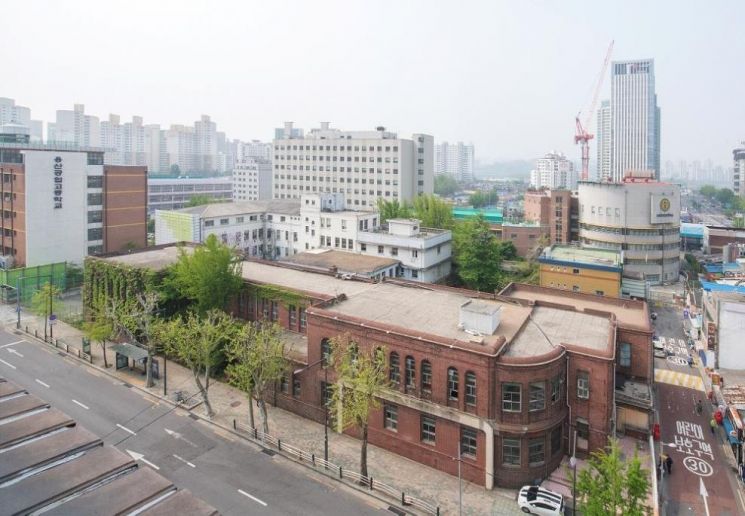
The museum will be a two-story building with a total floor area of 2,275㎡. It will repurpose the old Yongsan Railroad Hospital building (Registered Cultural Heritage No. 428), built in 1928, through restoration, preservation, and renovation works to convert it into a museum.
The restoration and preservation efforts aim to maximize the value of this nearly 100-year-old modern architectural structure. Referring to the building’s original state in 1928 and its designation as a registered cultural heritage in 2008, the project includes restoring the performance of the red exterior bricks, preserving traces inside the railroad hospital, restoring and repairing windows and stained glass, and preserving tiles.
Additionally, the district is carrying out renovation works to enhance the building’s performance by reinforcing the structure, installing heating and cooling systems, disaster and fire safety facilities, and convenience facilities for the elderly and disabled, in line with the building’s new use as a museum.
A district official stated, “Since the existing building is designated as a registered cultural heritage, restoration and regeneration will proceed on a two-track basis,” adding, “We will continue the work carefully with expert advice from the Cultural Heritage Administration’s cultural heritage committee and other specialists.”
The interior and exterior of the building will be arranged to include exhibition, landscaping, common, office, storage, and educational facilities.
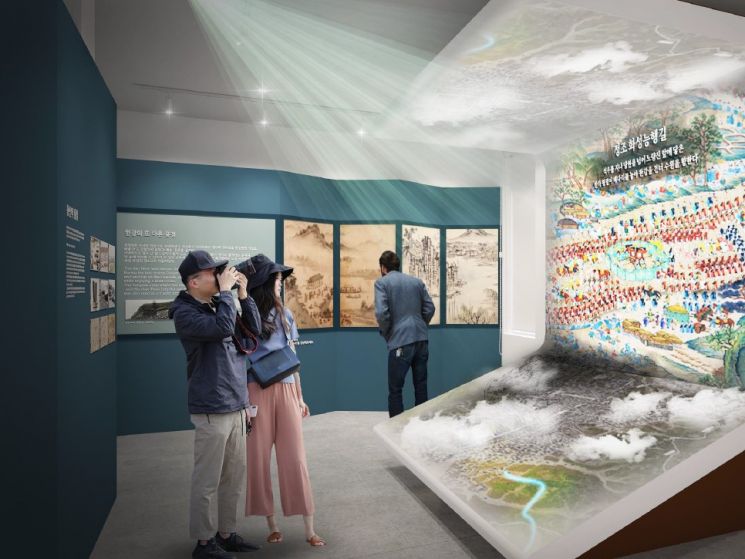
The exhibition space, occupying 40% of the total area, is divided into permanent exhibition halls on the first and second floors and a special exhibition hall on the second floor. Visitors can experience permanent and special exhibitions under the theme “Borderless Yongsan.”
The permanent exhibition is divided into seven detailed themes: ▲ Prologue: Yongsan with a Thousand Faces ▲ Gathering in Yongsan: A Hub City, a Commercial City ▲ Dispersing from Yongsan: A Military City, a Cold War City ▲ Intersection: From Yongsan Base to Park ▲ Connecting to Yongsan: A Railroad City ▲ Becoming One in Yongsan: A City Embracing Diversity ▲ Epilogue: From Space to Empathy.
Various experiential programs will also be offered, such as experiencing the scenic spots along the Han River, carrying ice at Seobinggo, viewing Yongsan through a stereoscope, transporting grain, a day in the life of a railroad crew member, and a day in the life of a chemical worker in Samgakji.
Special exhibitions planned include “Yongsan Railroad Hospital, Reborn (Grand Opening Special Exhibition),” “Collector’s Secret Notes,” “Yongsan Architecture Guide,” and “Memory of Media.”
The rooftop and second-floor terrace, which account for 25% of the total area, will be transformed into green resting spaces for visitors. The rooftop will feature distinct zones such as Eumteum Garden (rock garden, pergola), Yongsan Gaon Ddeul (garden tables, forest beds), Yongsan Grand Yard (rose garden, spinning chairs), and Mokkoji Yard (Yongsan map blue marble, sitting wall).
Other common facilities include a nursing room, caf?, museum shop, and storage lockers, while office facilities will include the director’s office, administrative offices, docent and volunteer rooms, and a pantry.
Storage rooms will be located both inside and outside the building. Most artifacts will be stored in an external storage facility (1,763㎡) constructed underground in a newly built building on the south side of the museum.
The district first planned the museum construction at the end of 2017. Since then, it has proceeded with hiring curators, forming a museum construction advisory group, conducting basic planning studies, acquiring museum materials, and establishing detailed exhibition plans. Last year, before construction began, it passed the Ministry of Culture, Sports and Tourism’s “Preliminary Feasibility Evaluation for Establishing Public Museums and Art Galleries.” Approximately 3,000 exhibition artifacts have been collected so far.
Seongjanghyun, Mayor of Yongsan-gu, said, “The old Yongsan Railroad Hospital will be reborn as the Yongsan History Museum,” adding, “We will comprehensively present the ‘stories of people and the city’ centered on the records and daily lives of Yongsan residents through the turbulent modern and contemporary history that shaped today’s Yongsan.”
He also emphasized, “The old Yongsan Railroad Hospital symbolically represents Yongsan, developed as a military and railroad base during the Japanese colonial period,” and “We will restore and preserve the existing facilities as much as possible while adding new vitality.”
Recently, the Seoul Metropolitan Government held the 9th Urban and Architectural Joint Committee meeting and approved the designation of the Yongsan Railroad Hospital site as a special planning district and revised detailed development plans. A mixed-use residential building with six underground floors and up to 34 floors above ground (685 residential units and neighborhood living facilities) will be constructed on the site at 65-154 Hangangno 3-ga (10,771㎡).
The public contributions generated by this project amount to approximately 66.5 billion KRW, including the construction of the Yongsan History Museum and storage facility, relocation and new construction of a daycare center, introduction of a futsal field, and new road construction. The landowner is Korea Railroad Corporation, and the project developer is HDC Hyundai Development Company. HDC Hyundai Development Company will commission the construction and donate the completed museum and storage facility to the district.
© The Asia Business Daily(www.asiae.co.kr). All rights reserved.


















