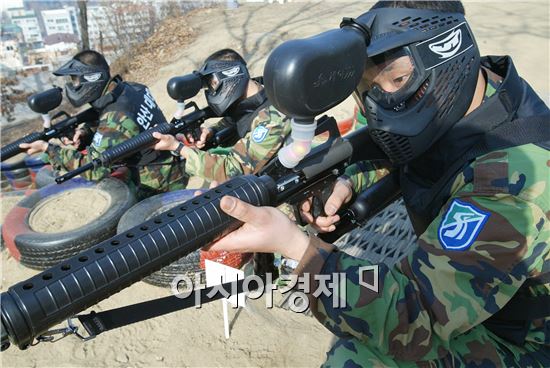
 Reserve Forces Training Scene
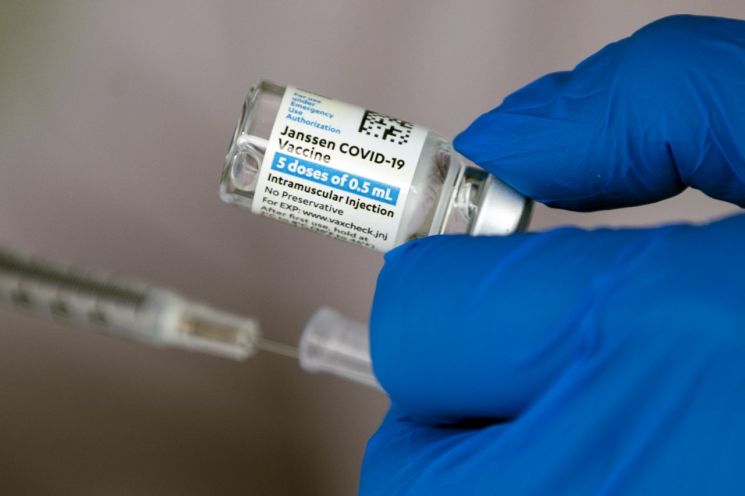
[Asia Economy Reporter Lee Chun-hee] The COVID-19 vaccine that the United States decided to provide to South Korea through the Korea-US summit has been confirmed as the Janssen vaccine (a subsidiary of Johnson & Johnson). The target recipients are reservists and civil defense personnel aged 30 and above, military-related workers, and military families. Their vaccination status will be finalized through a first-come, first-served registration starting on the 1st of next month.
According to the COVID-19 Vaccination Response Promotion Team on the 31st, 1,012,800 doses of the Janssen vaccine, which the US government agreed to support during the Korea-US summit on the 22nd, will be introduced this week. Vaccinations will begin on the 10th of next month. Initially, the US planned to supply vaccines for 550,000 people to South Korea, but in reality, twice that amount is being supplied. Accordingly, from mid-next month, South Korea will have a lineup of four COVID-19 vaccines: AstraZeneca (AZ), Pfizer, Moderna, and Janssen.
The Janssen vaccine registration will start on the 1st of next month on a first-come, first-served basis for reservists and civil defense personnel aged 30 and above, military-related workers, and military families. The biggest advantage of the Janssen vaccine is that it was developed as a single-dose vaccine. Unlike other vaccines that provide incentives separately for the first and second doses, all incentives apply after just one dose. For example, if a person receives the first dose on June 16, Janssen vaccine recipients will be exempt from all private gathering restrictions starting in July. In contrast, AZ vaccine recipients must wait 11 weeks to receive the second dose and then an additional two weeks, so they can only enjoy the incentives for fully vaccinated individuals around mid-September.
The problem is that while the government-selected vaccination group totals 3,715,000 people, the number of vaccines introduced this time is only 1,012,800 doses. Only 27.3% of the eligible recipients can be vaccinated this time.
Considering the shortage of doses, the government’s solution is first-come, first-served registration. Previously, except for leftover vaccine vaccinations, all vaccinations were given to applicants who applied within the designated application period. However, for this Janssen vaccine, if the number of pre-registration applicants starting on the 1st exceeds the number of donated vaccines, reservations will no longer be possible. If one fails to overcome the 3.7 to 1 competition ratio, most of these people, who are not in the priority vaccination group, will only be able to get vaccinated in the third quarter.
Considering that the vaccination target is men in their 30s who are quick to acquire information, if a large number of pre-registrations flood in, there is a possibility of a "vaccine ticketing chaos." Already, the AZ vaccine pre-registration system showed a shortage of leftover vaccines, with only 4,229 people successfully vaccinated through it on the first day of introduction. Reservist Kim Jung-woo (31) said, "I will have to wait in front of the computer like registering for university courses at the start time of pre-registration," adding, "I am also worried that the server might crash."
© The Asia Business Daily(www.asiae.co.kr). All rights reserved.

















