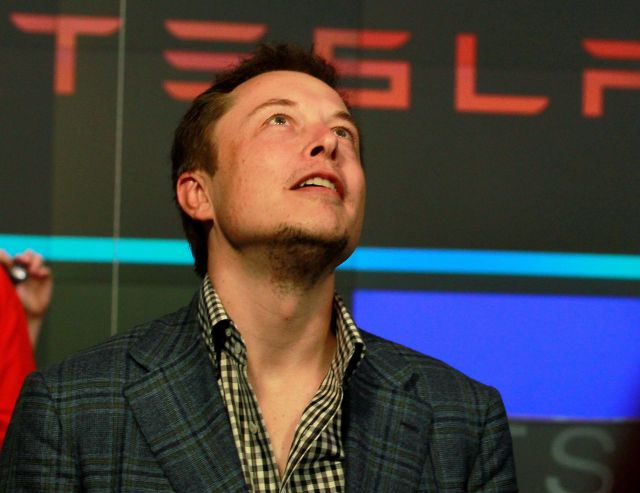
[Asia Economy Reporter Lee Seon-ae] On the 16th (local time), when a Twitter user posted that "Tesla may sell all the Bitcoin it holds next quarter," Tesla's CEO Elon Musk replied with "Indeed." Following this, Bitcoin plummeted by about 12% over the next 10 hours. Considering Bitcoin's total market capitalization of around 100 trillion won, approximately 12 trillion won vanished into thin air. After a wave of criticism, Musk posted on Twitter about 10 hours later, saying, "To clarify the speculation, Tesla has not sold any Bitcoin," and Bitcoin made a surprising rebound.
There is growing criticism of the 'loose talk' by the CEO of Tesla, a global major company that has emerged as a key player in cryptocurrency. After fueling the Bitcoin surge and then being accused of selling off holdings, he was branded a 'traitor,' and his inconsistent remarks continue to influence cryptocurrency prices. Domestic overseas stock investors (Seohak Gaemi) have expressed anger at his 'loose talk' and are turning their backs on Tesla stock.
According to the Korea Securities Depository on the 18th, domestic overseas stock investors have net sold Tesla shares worth $29,668,551 from the beginning of this month through the 17th. The total sell amount was $666,481,698, and the buy amount was $636,813,147. Although there are still trading days left in May, this marks the first time in about a year and a half since December 2019 that Seohak Gaemi have net sold Tesla shares on a monthly basis.
Moreover, Tesla disappeared from the list of the top 50 overseas stocks by net purchase volume, indicating a strong selling offensive. Not only was Tesla dethroned from the number one net purchase spot, but it also became the top stock in net sales. Tesla held the number one position in overseas stock net purchase settlement amount until the first quarter of this year. In particular, on a monthly basis, it recorded the top net purchase spot for seven consecutive months from October last year to last month. However, the situation reversed sharply this month, and the market boldly used the expression "Tesla's fall."
Why did investors turn their backs on Tesla? It is because of the 'Musk risks' causing Tesla's stock price to fall. The price dropped from a high of $900.4 in January to $589.74 on the 14th. Amid issues such as decreased sales this year and delays in production and development, the CEO risk added fuel to the fire. The inflation shock originating from the U.S. caused global stock markets to tread on thin ice, dampening investment sentiment toward growth stocks, which also had an impact.
The securities industry unanimously advises caution in investing in Tesla. Apart from Musk's irresponsible remarks, various negative factors have come to light. Lim Eun-young, a researcher at Samsung Securities, said, "Tesla is currently surrounded by several negative factors, including a decrease in carbon credit sales, intensified U.S.-China trade conflicts raising target concerns, and controversy over cryptocurrency remarks, so investment sentiment is expected to weaken until the momentum confirmation period in the second half of the year." She added, "If Tesla can clearly demonstrate a technological gap with other automakers in areas such as autonomous driving technology or electric pickup trucks and other electric commercial vehicles, a turnaround in sentiment is possible."
© The Asia Business Daily(www.asiae.co.kr). All rights reserved.

![Clutching a Stolen Dior Bag, Saying "I Hate Being Poor but Real"... The Grotesque Con of a "Human Knockoff" [Slate]](https://cwcontent.asiae.co.kr/asiaresize/183/2026021902243444107_1771435474.jpg)















