Following Commercial Banks, Policy Banks Also Warn Employees to 'Refrain from Investing'
Concerns Over Moral Hazard Incidents in Case of Losses
Prohibition of Transactions During Work and Excessive Borrowing Investments
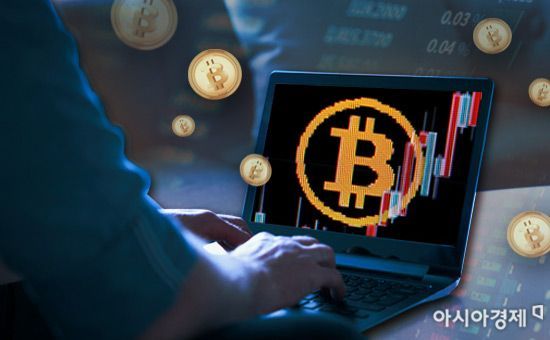
[Asia Economy Reporter Jin-ho Kim] A cryptocurrency warning has been expanded to all banks. As the volatility of the cryptocurrency market has recently surged, national policy banks have actively requested their employees to "refrain from investing," following commercial banks. This is analyzed as an effort to preemptively prevent moral hazard, where employees might misuse customer or bank funds due to investment failures.
According to the financial sector on the 18th, three national policy banks?KDB Industrial Bank, Korea Eximbank, and IBK Industrial Bank?recently distributed a "Notice Regarding Cryptocurrency Transactions" to their employees, focusing on establishing workplace discipline.
Korea Eximbank has strengthened awareness activities for employees regarding cryptocurrency transactions. The notice included warnings about investment scams using cryptocurrencies, prohibition of trading during working hours, and refraining from excessive borrowing beyond repayment capacity.
Additionally, to discourage cryptocurrency trading itself, internal control provisions related to employee conduct codes have been established and implemented. These prohibit trading based on information obtained during job duties and also forbid providing such information to others to assist their investments. This is interpreted as a measure emphasizing that employees should avoid any involvement with cryptocurrency transactions in any form.
IBK Industrial Bank also communicated workplace discipline guidelines to all employees, urging them to "refrain from investing in cryptocurrencies." An IBK official stated, "We informed employees that if cryptocurrency trading is detected during work hours, it could negatively affect their performance evaluations." KDB Industrial Bank is also reported to have disseminated similar guidelines to its employees.
Major commercial banks have already taken steps to enforce internal discipline. KB Kookmin Bank issued a notice last month titled "Work Ethics Reminders Regarding Cryptocurrency and Stock Trading." A KB Kookmin Bank official said, "Usually, we periodically provide reminders only about stock trading, but this time we included cryptocurrency due to the recent increased volatility." Hana Bank and Woori Bank are also regularly advising their employees to be cautious about cryptocurrency investments.
Cryptocurrency Investment Craze Spreads to Banking Sector... "Proactive Prevention of Moral Hazard Needed"
The reason banks have rushed to issue warnings is due to the spreading cryptocurrency investment craze among bank employees, raising concerns that moral hazard might occur if employees resort to using customer or bank funds to cover losses. In fact, in 2019, an IBK employee was caught by the Financial Supervisory Service for embezzling 2.405 billion KRW by prematurely withdrawing customer deposits for cryptocurrency investments.
A bank official said, "Due to the conservative nature of the organization, we urge employees to refrain from investing to prevent incidents in advance," adding, "If financial accidents occur, it could cause significant damage to an organization that demands high moral standards."
However, the lack of legal enforceability of employee conduct codes remains a concern for banks. Most banks prohibit employees in departments related to corporate affairs from trading stocks and require other employees to report their stock trading activities.
But in the case of cryptocurrency investments, there is no other basis to enforce restrictions beyond recommendations through conduct codes. Another bank official pointed out, "Although investing during working hours is prohibited, cryptocurrency trading happens 24/7, so it seems meaningless," adding, "Ultimately, preventing incidents depends not on conduct codes but on the employees' own will."
© The Asia Business Daily(www.asiae.co.kr). All rights reserved.
















