Ministerial Meeting on External Economic Affairs
[Sejong=Asia Economy Reporter Joo Sang-don] The government has decided to start negotiations within this year to join the Digital Economy Partnership Agreement (DEPA), the first plurilateral digital-only agreement. The plan is to initiate accession negotiations based on guidelines that include conditions for additional member countries, which the existing members?Singapore, New Zealand, and Chile?are expected to prepare in the first half of this year. The government is also considering financial, tax, and monetary support for coal power companies that may be adversely affected by the declaration to halt public financial support for overseas coal power projects.
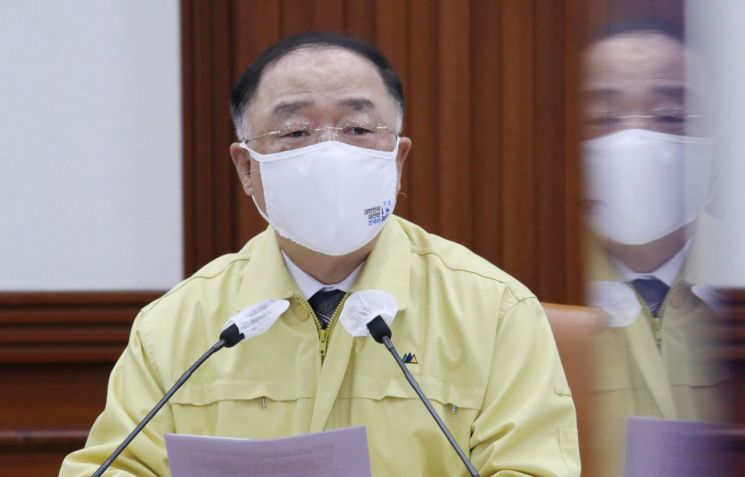
On the 17th, the government held a Foreign Economic Ministers' Meeting at the Government Complex Sejong, chaired by Deputy Prime Minister and Minister of Economy and Finance Hong Nam-ki, where they discussed the DEPA accession promotion plan and the review and response direction to external climate change issues.
Deputy Prime Minister Hong said, "The necessity of joining DEPA is being raised considering the possibility that bilateral and plurilateral digital norms may become global standards in the future and the lock-in effect of the digital industry (strengthening the dominance of market-leading companies). DEPA accession, which focuses on the liberalization of data movement and utilization, facilitation of e-commerce, harmonization of differing national systems, and strengthening cooperation on new digital technologies, will contribute to accelerating the domestic digital economic transition."
First, the government plans to proceed smoothly with external consultations and domestic procedures aiming to start DEPA accession negotiations within this year. The specific timing for the start of accession negotiations is expected to be decided after the accession procedure guidelines, which the existing member countries are anticipated to finalize in the first half of the year, are confirmed.
The government views DEPA accession as having a broad impact on the domestic economy, including systems, technology, industry, and employment. The removal and mitigation of digital trade barriers and the introduction of the latest trade facilitation norms will enable the establishment of advanced domestic systems and expansion of cross-border digital trade. Additionally, it will accelerate the digital economic transition by promoting the development and innovation of new digital technologies and support the overseas expansion of domestic digital companies and models. The government also expects that early establishment of a regional digital cooperation network through DEPA could maximize cooperation synergies if DEPA expands to other countries in the future.
The government has decided to proactively respond to international discussions in preparation for the full-scale implementation of the Carbon Border Adjustment Mechanism (CBAM) and support the strengthening of domestic companies' capabilities. The European Union (EU) Commission plans to submit a bill introducing CBAM by July this year under the Green Deal plan and fully implement it from 2023. The application methods under consideration include ▲carbon tax ▲carbon tariff ▲expansion of the EU Emissions Trading System (ETS). The government expects that the ETS trading method is likely to be favored considering ease of enforcement and issues such as double burden on companies (carbon tax) and concerns about violating World Trade Organization (WTO) norms (carbon tariff).
The government is concerned that the introduction of the EU CBAM will negatively affect exports. This is because Korea's export share to the EU is high at 10.2%, and major export items such as steel and petrochemicals are included in the scope of application. However, if countries already implementing ETS are exempted or given relief from the EU CBAM obligation, Korea may be in a more advantageous position compared to countries not implementing ETS. The government plans to actively raise anticipated issues at each stage of CBAM implementation in the international community to minimize negative impacts on Korea's trade interests, while domestically promoting the refinement of the carbon pricing system and strengthening companies' response capabilities. Regarding the emissions trading market, the government will consider gradually expanding the paid allocation (from 3% to 10%) considering industrial conditions and will also conduct a study on reforming the carbon pricing system. Furthermore, it plans to support costs for carbon reduction facilities and research and development (R&D), and improve the environmental performance label system to reduce administrative costs required for carbon quantity verification.
Alongside this, the government plans to prepare follow-up guidelines in the second half of this year to prevent confusion in the field among industries and financial institutions following the declaration to halt public financial support for new overseas coal power projects. The guidelines will provide detailed instructions on the projects and applicable institutions subject to suspension, including whether to support the improvement of aging facilities at currently operating overseas coal power plants and whether to support overseas coal power plants that have introduced new carbon capture and storage technologies. To facilitate smooth business transitions for coal power participating companies into alternative and promising sectors, the government will consider support through ▲financial support such as M&A funds ▲tax benefits ▲R&D financial investments for coal power plant construction and coal-fired equipment manufacturers in the coal power sector to support renewable power plants and related equipment manufacturing.
© The Asia Business Daily(www.asiae.co.kr). All rights reserved.

















