Over the Past 3 Years, 63 Billion KRW Increased
Unmanned Enforcement Equipment Grows 12% Annually
Public Interest Reports More Than Double
Only 20% Allocated to Emergency Medical Fund
Remaining Usage Unknown
National Assembly Proposes '50% Safety Fund' Bill
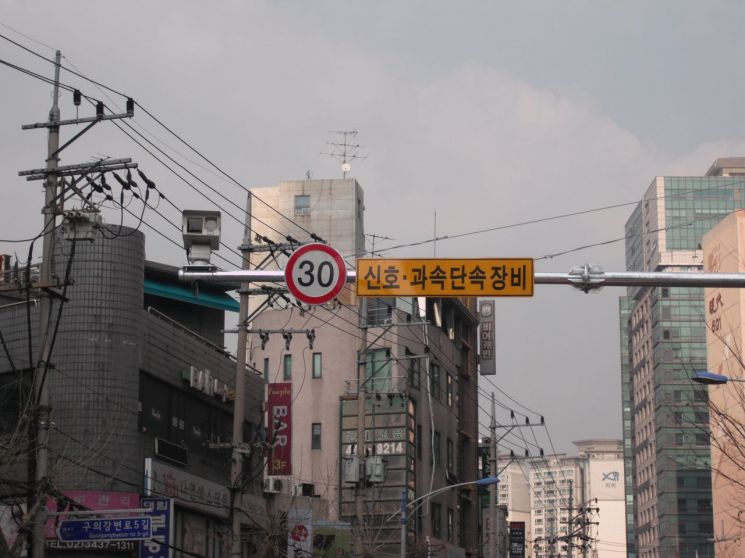
[Asia Economy Reporter Lee Gwan-joo] Although the fines and penalties imposed on drivers and pedestrians amount to nearly 900 billion won annually, controversy over their ‘opaque usage’ remains unresolved.
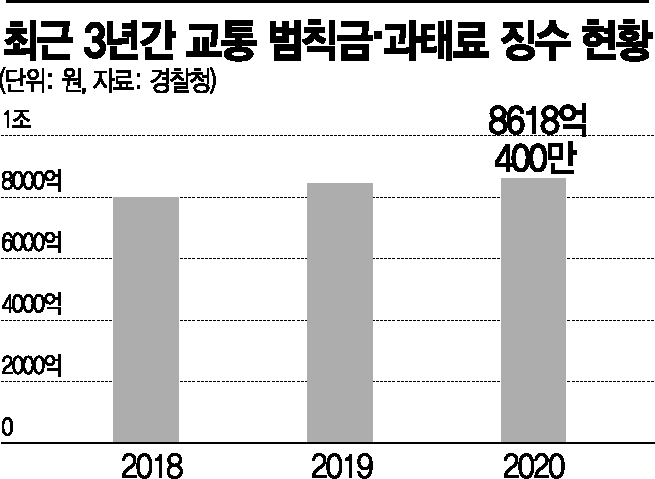
According to the National Police Agency on the 17th, the traffic violation fines and penalties collected by the police over the past three years have been increasing annually: 798.5 billion won in 2018, 845.5 billion won in 2019, and 861.8 billion won last year. This is attributed to the strengthened police crackdowns aimed at reducing traffic accidents and ensuring safety, along with the expansion of unmanned enforcement equipment and an increase in public interest reports.
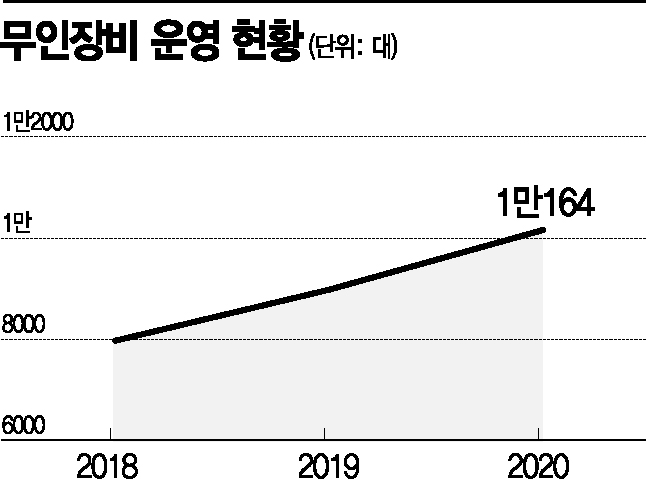
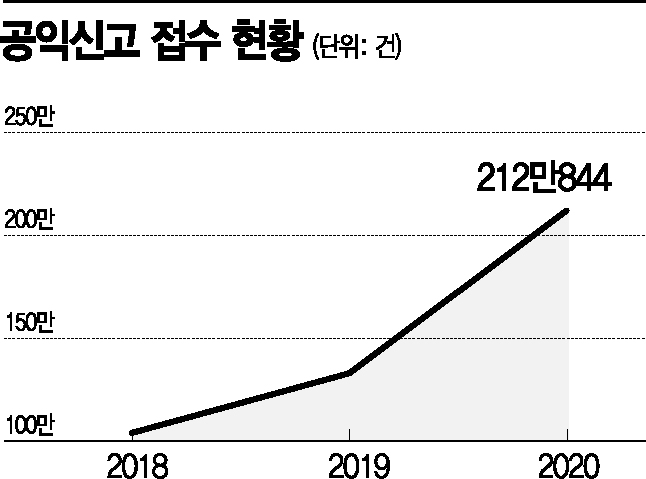
Over the past three years, the number of unmanned enforcement devices has steadily increased by about 12-13% annually, with 7,972 units in 2018, 8,982 units in 2019, and 10,164 units last year. Reports of traffic violations through public interest reporting systems such as ‘Smart National Reporting’ also more than doubled in three years, from 1,040,281 cases in 2018 to 2,128,443 cases last year. A police official explained, "There is a national consensus that traffic violations threaten traffic safety, and the ease of reporting via smartphones and other devices has significantly increased public interest reports, which has greatly influenced the rise in fines and penalties."
Starting this year, with the implementation of ‘Safe Speed 5030’ which lowers speed limits in urban areas, as well as stricter regulations on electric scooter use such as mandatory helmet wearing and prohibition of unlicensed driving, the amount collected from fines and penalties is expected to increase further.
However, there are criticisms that fines and penalties, originally imposed as a punitive measure to ensure traffic safety, are being used in ways that do not align with their original purpose. Only 20% of the money collected by the police is allocated to the Emergency Medical Fund, while the remainder is classified as non-tax revenue in the general account of the national treasury, making it impossible to know where and how it is used. Since it is part of the general account, there is a possibility that it could be used as ‘slush funds’ unrelated to traffic safety, such as for paying government employee salaries or constructing government offices.
Amendment bills requiring a certain percentage of fines and penalties imposed for traffic violations to be used for traffic safety-related projects have been continuously proposed in the National Assembly. In the current 21st National Assembly, a bill led by Democratic Party lawmaker Lim Ho-seon has been submitted to establish a ‘Traffic Safety Fund’ using 50% of fines and penalties as resources, and it is currently pending in a related subcommittee. However, since the Ministry of Strategy and Finance and others have consistently opposed it on the grounds that "traffic safety facilities are the responsibility of local governments," difficulties are expected in passing the bill this time as well.
The police maintain that a certain portion of fines and penalties should be used for traffic safety in accordance with their original purpose. A National Police Agency official said, "Most advanced countries in Europe use traffic violation fines and penalties to expand traffic safety facilities," adding, "Since traffic accidents generate demand for emergency medical services, a certain portion of fines and penalties is allocated to the Emergency Medical Fund, but they should also be used for installing safety facilities to prevent traffic accidents."
© The Asia Business Daily(www.asiae.co.kr). All rights reserved.



















