"First-come, first-served subsidy distribution method raises concerns of reverse discrimination... Improvements needed if necessary"
[Asia Economy Reporter Yu Je-hoon] Although the national subsidy scale for electric vehicles (EVs) this year is at an all-time high, concerns are growing that a subsidy shortage may occur in the second half of the year as the local governments' matching rate of local funds remains at around 68%. However, since the Ministry of Environment and local governments are currently working on securing additional local funds through supplementary budgets and expanding the scale of public offerings, it is expected that the feared shortage of EV subsidies may be alleviated.
The Korea Automobile Manufacturers Association (KAMA) announced on the 17th the "Evaluation Report on Regional EV Public Offering Scale and Subsidy Application Status," which compares the number of public offerings by region and the status of subsidy applications by local governments as of the end of April.
According to the report, the national subsidy scale for EVs this year reached a record high of 101,000 units, a 28.4% increase from the previous year, but the number of public offerings by local governments was about 68,371 units, resulting in a matching rate of 68%.
By vehicle type, passenger cars had 46,521 units offered by local governments, with a matching rate of 61%, while vans had 606 units, with a 60% matching rate. For trucks, the number was 21,244 units, with a matching rate of 85%.
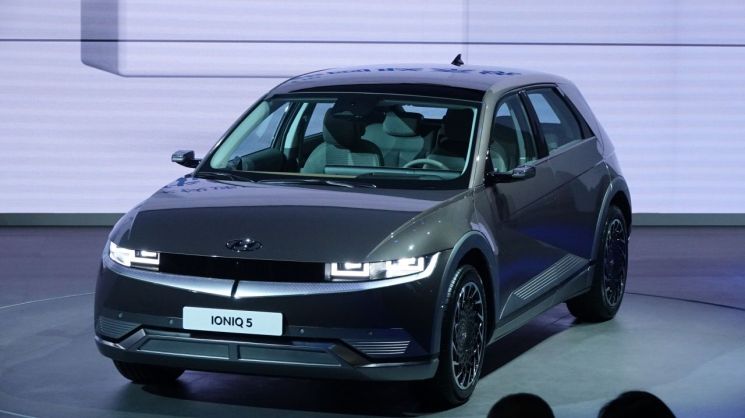
The problem is that with the EV boom led by the Ioniq 5, subsidies are being depleted early, raising concerns about a subsidy shortage in the second half of the year. In the first half, Hyundai released the Ioniq 5, which had pre-orders reaching 43,000 units. Kia also recently surpassed 30,000 pre-orders for the EV6.
Especially in the second half of the year, more EV releases are expected compared to the first half, increasing concerns about early depletion of subsidies. Domestic automakers plan to launch EV models such as the Genesis eG80, JW (project name), Kia EV6, Korea GM Bolt EUV, and Korando e-Motion in the second half of this year alone.
By local government, Seoul's application rate has reached 99.1%, indicating that depletion is imminent, while Busan (67%), Sejong (52%), and Jeonbuk (50.7%) have also surpassed 50% application rates. Even if metropolitan local governments have application rates below 50%, some subordinate basic local governments have exceeded 50%, raising concerns that subsidy shortages may become a reality at the basic local government level.
However, the government and local governments are currently working on securing additional local funds through supplementary budgets and expanding the scale of public offerings. Incheon, Daejeon, and Gwangju have already secured additional local funds through supplementary budgets, and Chungbuk recently increased the EV passenger car public offering scale from 1,829 to 2,719 units. Seoul, which has the highest application rate, is also working on securing local funds through a supplementary budget starting in June.
Jung Man-ki, chairman of KAMA, said, "The Ministry of Environment and local governments' efforts to secure additional subsidies through supplementary budgets will dispel concerns about subsidies in the second half of the year," adding, "However, we need to continuously monitor whether the current subsidy execution method, such as first-come-first-served payments, causes reverse discrimination between domestic and imported cars, and if necessary, pursue system improvements."
© The Asia Business Daily(www.asiae.co.kr). All rights reserved.

















