[Asia Economy Reporter Yujin Cho] Operations of the largest oil pipeline in the United States have resumed after being halted due to hacking, but it is expected to take several more weeks for the supply chain to fully recover.
GasBuddy, a company providing real-time gas station information, stated that the supply chain recovery is slow as panic buying continues in the Southeast region where supply disruptions occurred, and it is expected to take several more weeks for full normalization.
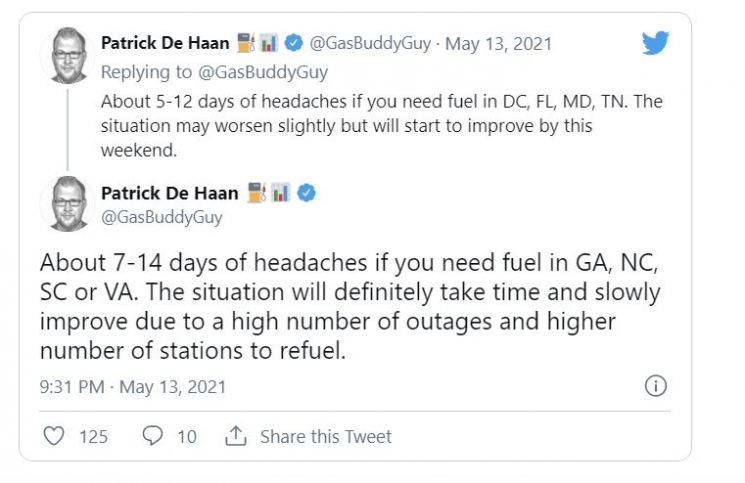
Patrick De Haan, head of the oil sector at GasBuddy, tweeted on the 13th (local time), "The number of gas stations running out of inventory due to panic buying is increasing, delaying the full recovery of the supply chain," adding, "It may take at least one week and up to two more weeks."
The largest U.S. pipeline operator, Colonial Pipeline, resumed operations after the pipeline was shut down due to hacking, but disruptions continue in several areas including the U.S. Southeast.
According to GasBuddy, the percentage of gas stations in Washington DC that have halted supply due to gasoline shortages remains in the 80% range. North Carolina, Maryland, Virginia, and Georgia, which were directly hit by this incident, also have more than half of their gas stations out of gasoline stock.
The nationwide panic buying situation has entered a mitigation phase. Gasoline demand in the U.S. has decreased by 15% compared to the previous week as drivers stopped stockpiling fuel. Andy Lipow of Lipow Consulting in Houston said, "The supply shortage in the U.S. East Coast region, where panic buying demand was prominent, is gradually being resolved."
Colonial has started operating some transportation lines to regions including Maryland, Georgia, and New Jersey. To support Colonial's transportation difficulties and speed up oil supply, federal authorities and four Southeastern states have eased regulations on fuel transport trucks, and the U.S. government has exempted regulations allowing refineries to use foreign-flagged vessels to transport gasoline and diesel from the Gulf of Mexico to the East Coast.
Colonial announced on the 12th that it had begun restarting the pipeline but expected it would take several more days for full normalization. The company stated, "We will transport as much gasoline, diesel, and jet fuel as possible under safe conditions," and "We will continue to work until the market returns to normal."
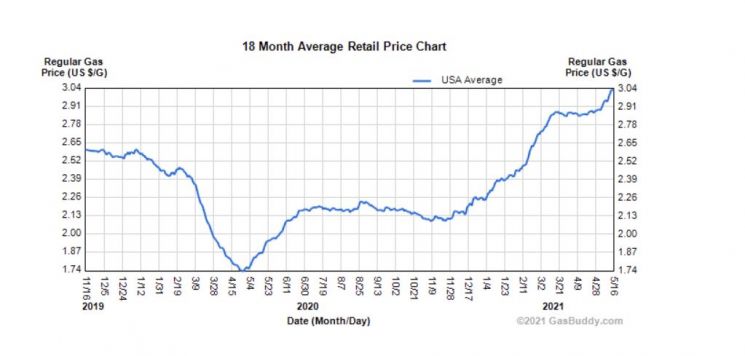
According to the American Automobile Association (AAA), the average gasoline price nationwide rose to $3.04 per gallon as of the 16th, marking the highest level since October 2014.
© The Asia Business Daily(www.asiae.co.kr). All rights reserved.


















