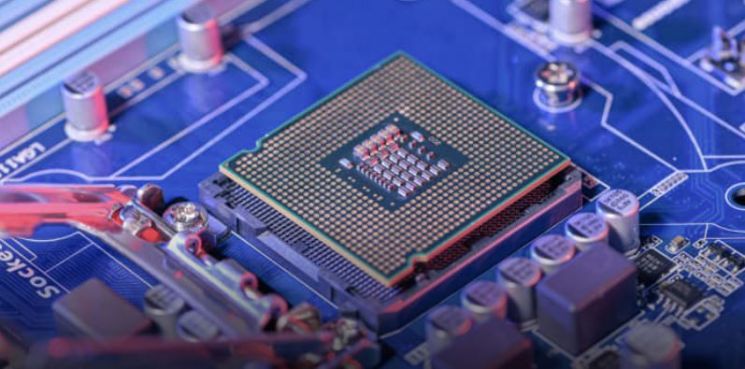
[Asia Economy Reporter Yujin Cho] The supply crisis of automotive semiconductors is worsening. Following mass-market car brands, luxury car brands have also begun a series of production halts, spreading the impact of the semiconductor shortage and causing the expected scale of damage to grow steadily.
Global consulting firm AlixPartners forecasted on the 14th (local time) that the global automotive industry will experience a revenue loss of $110 billion (approximately 124 trillion KRW) this year. This represents about an 82% increase in the damage scale compared to the January forecast of $60.6 billion.
Mark Wakefield, Global Co-Head of AlixPartners’ Automotive Practice, said, "The supply shortage is worsening due to multiple factors, including semiconductor production halts caused by the unusual cold wave in Texas, USA, and a factory fire at Japan’s Renesas." He added, "In the long term, efforts should focus on improving supply chain resilience to resolve the issue."
AlixPartners estimated that the expected production shortfall this year will be about 3.9 million vehicles, which is approximately a 77% increase from the early-year forecast of 2.2 million units.
As the semiconductor shortage prolongs, automakers are resorting to desperate measures by releasing vehicles without high-end optional features that require semiconductors, and those struggling even with this are repeatedly shutting down or reducing production.
German automaker Daimler, which produces Mercedes-Benz, has put 18,500 employees on reduced working hours, and Jaguar Land Rover has decided to temporarily halt production lines at its Castle Bromwich and Halewood plants in the UK.
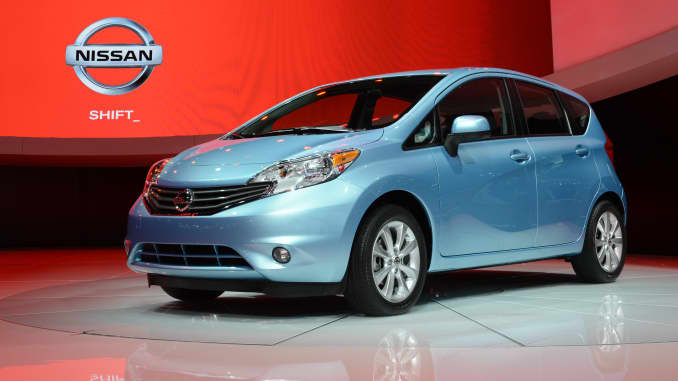
Japanese automaker Nissan expects a production shortfall of 500,000 units this year due to shutdowns and production cuts. This 500,000 units represent about 12.5% of last year’s total sales volume (4 million units).
This crisis originated from supply-demand imbalances. At the beginning of last year’s COVID-19 outbreak, most US automakers kept parts inventories low fearing a drop in consumption, while demand for IT-related semiconductor products surged, leading semiconductor manufacturers to focus production capacity on IT products. However, contrary to expectations, new car demand rebounded quickly.
Amid this, semiconductor production at a factory in Austin, Texas, was halted in March due to the unusual cold wave, and on the 19th of last month, a fire occurred at Japan’s Renesas, one of the top three automotive semiconductor companies, further deepening the supply chain crisis. This is why the damage scale, initially expected to "end soon" at the start of the year, has been growing over time.
The industry expects some relief in the supply shortage in the second half of the year. Mark Liu, Chairman of TSMC, recently told CBS in an interview that they expect to meet customer orders by June.
However, market experts commonly agree that full normalization is still far off. As demand for technology increases, the semiconductor shortage is spreading beyond automotive to computers, home appliances, and other sectors, while semiconductor manufacturing infrastructure remains severely insufficient.
Building semiconductor manufacturing facilities (so-called fabs) requires billions of dollars in capital investment and over two years of construction time. The prolonged crisis has also increased lead times (the time from order to delivery), which is another source of concern. According to the Semiconductor Industry Association in the US, lead times have increased from the industry average of 3 months to 7 months due to the worsening supply shortage.
US automotive media TTAC stated, "The normalization of chip manufacturers’ supply is not proceeding as planned," and predicted that "the situation may not stabilize until the end of next year."
© The Asia Business Daily(www.asiae.co.kr). All rights reserved.
![Clutching a Stolen Dior Bag, Saying "I Hate Being Poor but Real"... The Grotesque Con of a "Human Knockoff" [Slate]](https://cwcontent.asiae.co.kr/asiaresize/183/2026021902243444107_1771435474.jpg)

















