Sojugseong-Based Hakyeon School
Harsh Criticism of Excessive Real Estate Policies
"Market Must Stabilize Through Supply Expansion"
"Pinpoint Regulations Were Impossible from the Start"
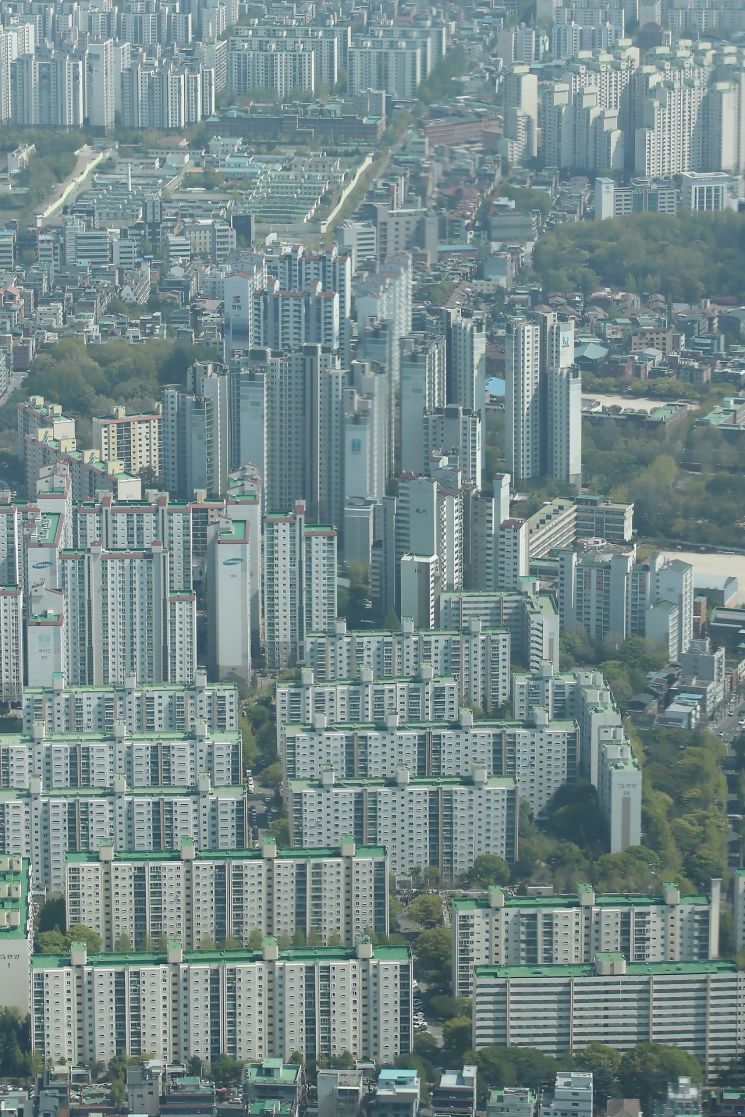
[Asia Economy Reporter Jang Sehee] The Hakhyun School, which provided the theoretical foundation for the Moon Jae-in administration's core economic policy of ‘income-led growth,’ strongly criticized the current government's real estate policy.
The Hakhyun School is a group of progressive scholars who emphasize distribution, following Byun Hyeong-yoon, Honorary Director of the Seoul Social Economy Research Institute. They evaluated that the government ignored the market's receptiveness to real estate and pushed forward reckless policies, leading to market side effects and ultimately losing trust in the overall policy.
This criticism emerged at a symposium held on the 14th by the Seoul Social Economy Research Institute and the Korea Economic Development Association under the theme ‘Korean Economy: Asking the Present and Answering the Future.’
Professor Won Seung-yeon of Myongji University’s Department of Business Administration said in a phone interview with Asia Economy, "Everywhere real estate prices rise, regulations are imposed, but eventually a balloon effect appears elsewhere," pointing out, "They overestimated the effects of their policies." He emphasized, "When policies are artificially applied, their effectiveness diminishes." Professor Won also co-participated in drafting the presentation titled ‘A Paradigm Shift in Policy for Future Generations,’ which contained critical voices from scholars.
According to KB Real Estate Housing Price Trends, the average apartment sale price per square meter nationwide surged 50.9% from 3,789,000 KRW in April 2017, just before the administration took office, to 5,717,000 KRW in April this year. Despite releasing real estate policies 25 times under the current government, the ‘stopgap’ side effects are becoming apparent.
Professor Won stressed that a long-term plan should be prepared to ensure housing welfare even if prices rise. He said, "Even if prices rise in certain areas, the supply of public rental housing should be expanded so that people can secure housing," adding, "Market stabilization should be achieved through supply expansion, not by suppressing demand through regulations."
Professors Ryu Deok-hyun of Chung-Ang University’s Department of Economics and Woo Seok-jin of Myongji University’s Department of Economics also criticized in their presentation, "Although they declared an intention to micro-adjust the real estate market through pinpoint regulations, it was an unattainable goal from the start," and "They expanded the designation of regulated areas under pressure without considering the balloon effect."
Before the Moon Jae-in administration took office, regulated areas were limited to four metropolitan local governments: Seoul, Busan, Sejong, and Gyeonggi. Currently, they have expanded to 15 metropolitan local governments excluding Gangwon and Jeju. As a result, the number of regulated areas has increased to 111, with 49 designated as speculative overheating zones.
They also raised critical voices regarding not only real estate but also the minimum wage increase, exemption from preliminary feasibility studies, and the collapse of Tada, once hailed as an icon of innovation.
President Moon acknowledged the policy failure unusually at a press conference marking his 4th anniversary in office on the 10th, saying, "When it comes to real estate, the government is really in a position where it has nothing to say."
© The Asia Business Daily(www.asiae.co.kr). All rights reserved.

















