19 NPE Lawsuits Filed Against Domestic Companies Until April This Year
Samsung Electronics 13 Cases · LG Electronics 6 Cases
Increasing Trend in Semiconductor Sector Lawsuits
"Concerns Over Astronomical Litigation Costs and R&D Delays"
[Asia Economy Reporter Su-yeon Woo] As the global powers intensify their battles over semiconductors, which hold the fate of future security and industry, patent trolls (global patent management companies·NPEs) active in the US and Europe have begun targeting semiconductor technology. NPE lawsuits, which primarily targeted electrical and electronic, computer communication, and information communication technologies, are now spreading to the semiconductor sector, putting domestic electronics companies such as Samsung Electronics, which were major targets of NPEs, in a precarious position.
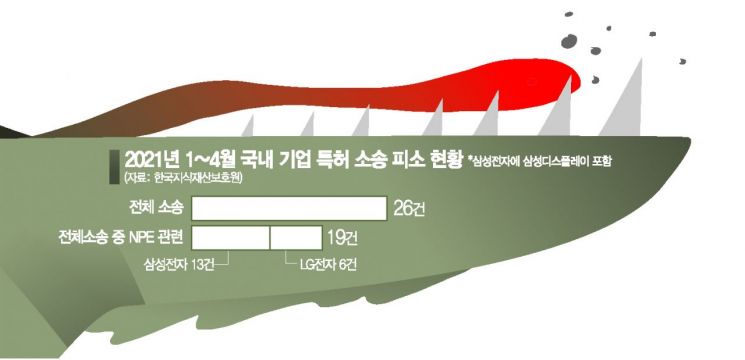
According to an analysis of the Korean Intellectual Property Protection Agency's dispute reports by this outlet on the 12th, there were 26 patent lawsuits filed against domestic companies up to April this year. Among them, 19 cases (73%) were filed by NPEs that acquire royalties for profit. Samsung Electronics was the target in 13 cases (including one involving Samsung Display), and LG Electronics was involved in 6 cases.
The lawsuits mainly involved digital and mobile communication technologies and computer technologies, but recently, lawsuits in the semiconductor field have been increasing. A representative case is the lawsuit filed in March by the US NPE LED Wafer Solutions against Samsung Electronics in the US Western District Court of Texas, alleging infringement of patents related to LED packaging and manufacturing methods. LED is a type of semiconductor that emits light when current flows, and the patents in question cover core technologies used in Samsung Galaxy S8 smartphones and Samsung LED chip LM101A series.
Earlier this year, a lawsuit was also filed targeting Samsung Electronics' system semiconductor technology. In January, the US NPE Trenchant Blade Technology (TBT) filed a patent infringement lawsuit in the Western District Court of Texas against four Samsung entities: Samsung Electronics headquarters, its Americas subsidiary (SEA), foundry production subsidiary Samsung Austin Semiconductor (SAS), and semiconductor Americas headquarters Samsung Semiconductor Incorporated (SSI). The patents involved relate to semiconductor manufacturing technology used in Samsung's Exynos 7 and 9 series system semiconductors for smartphones and tablets, applied in products such as the Galaxy Tab S2 tablet and Galaxy Note 8 and 9 smartphones.
TBT is a subsidiary of Longhorn IP, which previously engaged in a patent lawsuit with Samsung in 2019. In July last year, Samsung Electronics and Longhorn IP withdrew the lawsuit and signed an agreement stating that they would not file patent infringement lawsuits against each other in the future. However, Longhorn IP subsequently transferred three patents from Taiwanese foundry company TSMC to its subsidiary TBT, which then filed the current lawsuit based on those patents.
Samsung Electronics argues that since TBT is a subsidiary of Longhorn IP, the lawsuit violates the non-aggression agreement. In response, Samsung has filed a counterclaim seeking a declaration of non-infringement. A Samsung Electronics official stated, "The lawsuit is still ongoing, and we will sincerely participate in the legal process."
An Ki-hyun, Executive Director of the Korea Semiconductor Industry Association, said, "Patent attacks by profit-driven NPEs on the Korean semiconductor industry will intensify further," adding, "It is concerning not only because there is no clear way to respond to the increasing lawsuits but also because the astronomical litigation costs could cause delays in research and development (R&D)."
© The Asia Business Daily(www.asiae.co.kr). All rights reserved.