Holiday Regulations by Law: "So That All Citizens Can Rest Fairly"
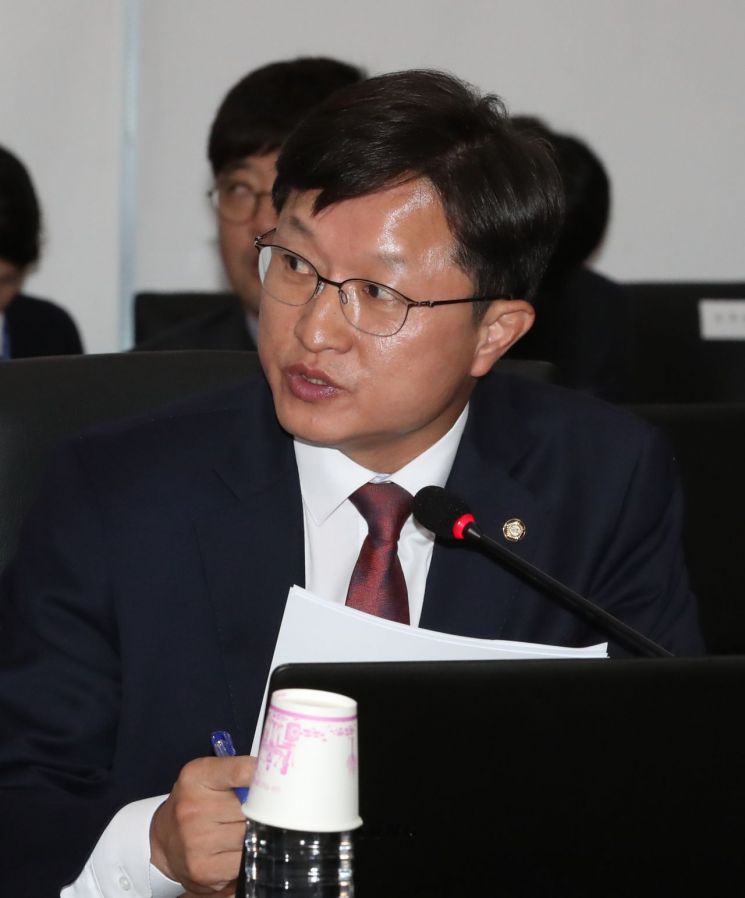
[Asia Economy Reporter Park Cheol-eung] Kang Byung-won, a member of the Democratic Party of Korea, has proposed a bill to apply the substitute holiday system to all public holidays.
On the 10th, Kang proposed an amendment to the Public Holiday Act stating, "Public holidays, excluding Sundays, election days, and other days designated occasionally by the Cabinet meeting, shall be observed on the first non-holiday following the public holiday if it coincides with a Saturday or another public holiday."
He also defined public holidays as "Sundays, national holidays, January 1st, the day before Seollal, Seollal, the day after Seollal, Buddha’s Birthday, Children’s Day, Memorial Day, the day before Chuseok, Chuseok, the day after Chuseok, Christmas, other days designated occasionally by the Cabinet meeting, and election days."
Currently, matters related to public holidays are regulated not by law but by a presidential decree called the "Regulations on Public Holidays of Government Offices." Kang explained, "Not all citizens are covered by this," adding, "This leads to avoidance of small and medium-sized enterprises, causing labor shortages and damaging growth potential. It is necessary to establish matters related to public holidays by law to guarantee the right to rest equally to all citizens."
He further explained, "The substitute holiday system, which is currently limited to Seollal, Chuseok, and Children’s Day, will be expanded to all public holidays except election days and Sundays, and will be applied equally to private-sector workers whose work conditions include Saturdays and Sundays, thereby ensuring fair application of public holidays to all citizens."
The background of the bill’s proposal is the need to reduce working hours in line with the changing paradigm. Kang said, "With the advent of the Fourth Industrial Revolution era, the paradigm of economic growth is changing," adding, "The existing input-factor growth model has reached its limit, and the endogenous growth theory, which emphasizes economic growth driven by creativity through continuous education and self-development, is gaining attention. In fact, global leading companies such as Google and Amazon enhance work productivity by reducing working hours and actively guaranteeing rest for workers."
He also pointed out, "The annual working hours per worker in Korea is 1,967 hours (as of 2019), ranking second among OECD countries," and added, "Long working hours worsen workers’ rest conditions and undermine their self-development capabilities. This ultimately acts as a factor weakening the driving force of economic growth."
© The Asia Business Daily(www.asiae.co.kr). All rights reserved.












