[Asia Economy Yang Nak-gyu, Military Specialist Reporter] Our military began considering the introduction of helicopters in the 1970s after observing the United States' use of helicopters during the Vietnam War. Helicopters played a key role in mobility by rapidly assembling troops at the battlefield, engaging in combat, and relocating to other areas. Considering the budget, our military selected the small helicopter 500MD, which could be used for various purposes such as reconnaissance and transport. Since then, Korea Aerospace Industries (KAI) has started developing helicopters with domestic technology tailored for various purposes. To see the current status of military helicopters, we visited KAI located in Sacheon, Gyeongnam Province on the 19th of last month.
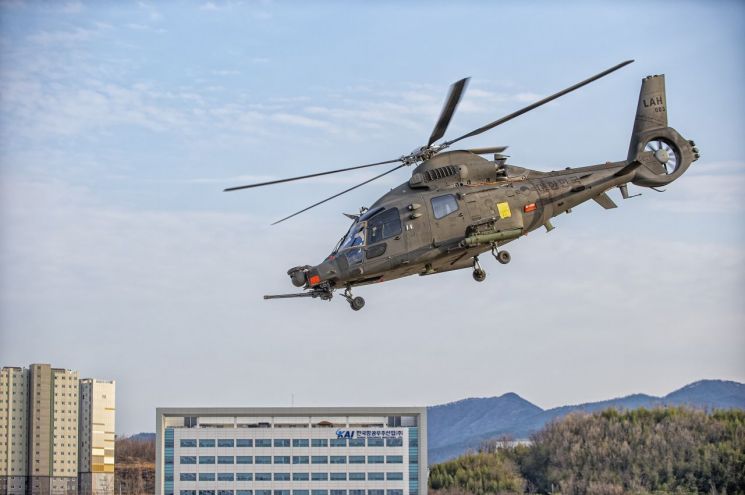
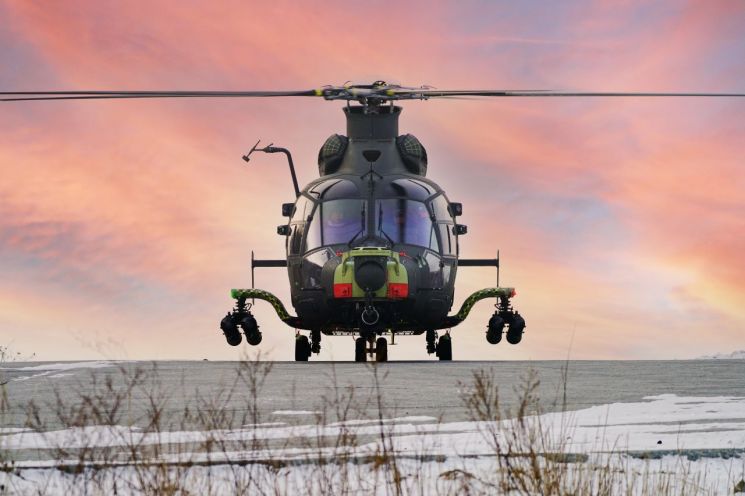
As we entered the main gate of KAI, where the spring breeze was blowing, the KT-1 basic trainer aircraft roared through the sky to welcome us. Upon going up to the four-story rotary wing building, newly opened in February last year with an area of about 17,851㎡ (5,400 pyeong), a briefing for the test flight of the Light Armed Helicopter (LAH) was underway. The LAH is the second domestically produced helicopter developed to replace the Army’s aging attack helicopters, the 500MD and AH-1S. Approximately 664.3 billion KRW was invested in research and development, and 6 trillion KRW in mass production. Since KAI started development in June 2015, the first prototype was unveiled in December 2018 after about three years, and the initial flight was successfully conducted in July last year.
On that day, two development test pilots and about ten researchers were busy preparing for the test flight. They shared information on the flight route of the second LAH to be tested by displaying a map in the briefing room, along with the status of measuring equipment, fuel, and weather. The LAH has not yet been delivered to the military. From July 2019 to June next year, it must undergo 2,000 hours of test flights over three years and pass 8,000 test items. While the usual helicopter test flight period is five years, Korea shortened it to three years due to the urgent need to replace aging helicopters. The development test pilots fly about 300 hours annually, which is roughly twice as much as pilots in other countries.
After the briefing, the development test pilot left the conference room carrying a flight pack containing navigation and test data, along with a helmet. A solemn expression was visible on the pilot’s face. There are only about ten qualified development test pilots in Korea who have completed one year of training in six countries including the United States. On this day, the LAH test flight was conducted by Pilot Cho Jong-hyuk, who flew the domestically developed Surion helicopter for 3,500 hours during its test flights.
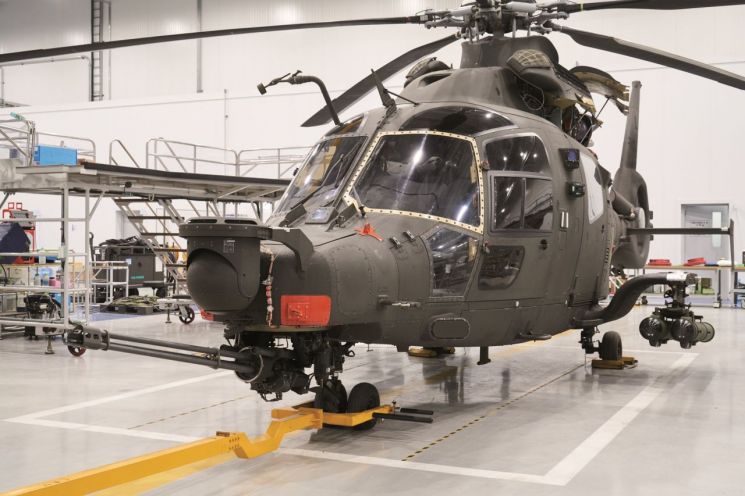
Pilot Cho moved to the rotary wing building where the LAH was waiting and began inspecting the exterior before the flight. There were roughly more than 50 items to check before the test flight. As the co-pilot read the checklist, the main pilot meticulously examined even inside the engine. A single overlooked mistake could lead to a major accident. The LAH’s auxiliary propeller (blade), which helps with direction, is installed inside the aircraft. Using the Fenestron method, it reduces the chance of collision with external objects and lowers noise. At the front of the helicopter was a long nose boom, resembling a nose, which is a device that compares the accuracy of altitude and wind data displayed on the helicopter’s instrument panel.
Pilot Cho said, “Although maintenance personnel thoroughly check before the flight, the pilot must perform the final inspection. Especially, maintenance before test flights is more demanding as it can affect the test results.”
The LAH was towed out of the rotary wing building and waited inside a 10-meter diameter circle marked with the number 2. Soon, the engine started, and the pilots’ movements became busier as they seemed to check the instrument panel readings. After the checks were completed, the wooden blocks on the LAH’s wheels were removed, and the engine roared louder. Even a reporter standing 20 meters away struggled to keep balance due to the strong wind. The LAH began to move slowly and took off lightly as if jumping in place. It moved the aircraft left and right, up and down, as if warming up, then accelerated down the runway like a swift leopard. In an instant, the LAH disappeared from sight.
After watching the takeoff, we returned to the rotary wing building, where various Surion derivative helicopters were lined up, as if they were siblings of the Surion. The Marine Corps helicopter, Marineon, in bright gray color, bore the nameplate ‘001’ indicating the first prototype. Next to it stood a medical helicopter with the Ministry of Health and Welfare logo and a small civilian helicopter (LCH) to be delivered for official use.
Among the Surion derivatives, there are concerns that official-use helicopters are struggling to find their place due to low bids and inconsistent bidding regulations. Foreign-made helicopter models used by domestic public institutions also vary. However, after watching the LAH test flight that day, I gained confidence that the ‘001’ derivative helicopters standing in the rotary wing building will soon dominate the domestic market.
© The Asia Business Daily(www.asiae.co.kr). All rights reserved.



















