[Asia Economy Reporter Seongpil Cho] A court ruling has stated that even if working hours do not meet the standards set by the Ministry of Employment and Labor, if death occurs due to excessive work-related stress, it should be recognized as an industrial accident.
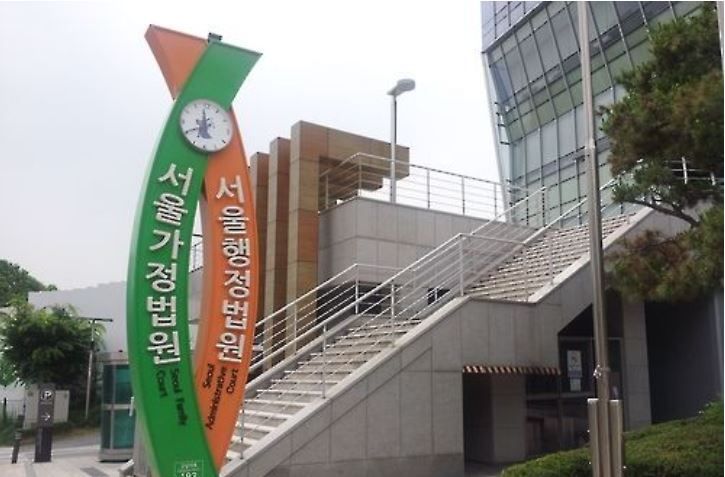
According to the legal community on the 10th, the Seoul Administrative Court, Administrative Division 8 (Chief Judge Jonghwan Lee) ruled in favor of the plaintiff in a lawsuit filed by the bereaved family of the deceased Mr. A against the Korea Workers' Compensation and Welfare Service, seeking cancellation of the denial of survivor benefits and funeral expenses.
The court stated, "Mr. A's work, starting 10 months before his death, included various unfamiliar administrative tasks, and the volume and scope were extensive," adding, "It likely caused significant work burden and stress, which probably had a considerable impact on Mr. A's acute myocardial infarction." The court further explained, "Although Mr. A's working hours did not meet the Ministry of Employment and Labor's notification standards for recognizing heart disease as an industrial accident, the notification merely stipulates considerations for interpreting and applying the standards and cannot be regarded as a legally binding regulation externally."
Previously, Mr. A had worked in research and development at the Defense Science Research Institute for 23 years before being appointed as a team leader overseeing budget, personnel, and security tasks at the research headquarters in June 2018. Ten months after his appointment, in April 2019, Mr. A was found collapsed on a mountain trail near the company and died from acute myocardial infarction. The bereaved family claimed that considering Mr. A's appointment as team leader 10 months prior and the stress he endured, his death should be regarded as work-related, requesting survivor benefits and funeral expenses. However, the Korea Workers' Compensation and Welfare Service rejected the claim, citing that Mr. A's working hours did not meet the Ministry of Employment and Labor's notification standards for recognizing cerebro-cardiovascular disease as an industrial accident.
The Ministry of Employment and Labor's notification evaluates a strong correlation between work and disease if the average weekly working hours exceed 60 hours during the 12 weeks prior to onset, and 64 hours during the 4 weeks prior to onset. In Mr. A's case, the average weekly working hours were 41 hours and 22 minutes over the 12 weeks before death, and 46 hours and 56 minutes over the 4 weeks.
© The Asia Business Daily(www.asiae.co.kr). All rights reserved.

















