From This Month to June, 71 Welfare Officers at Each Dong Community Center Conduct Home Visits... Surveying 72 Questions for Seniors and 57 for Disabled on Income, Jobs, Health Care, Social Activities, and Education
[Asia Economy Reporter Jongil Park] Dongjak-gu (Mayor Changwoo Lee) is conducting the "2021 Welfare Sector Resident Awareness Survey" from this month until July.
This survey is being promoted to strengthen on-site administrative capabilities, secure policy execution power, and establish demand-centered welfare policies that reflect regional characteristics and residents' needs.
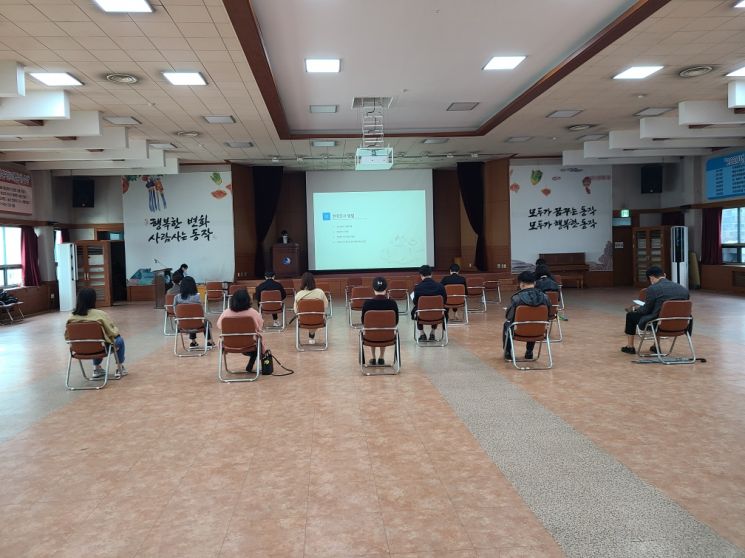
Before the full-scale survey, the district formed a T/F team for designing the awareness survey questionnaire, overseeing each field survey, analyzing results, and proposing policies. From March 29 to April 16, a pilot survey was conducted targeting 17 residents of Noryangjin 1 and 2-dong, through which the questionnaire was thoroughly checked to minimize survey errors.
In particular, based on the questionnaire directly written with expert advice, the survey will be conducted by visiting the survey subjects in person along with health checks from May 10 to June 30.
The survey targets a total of 1,500 people residing in the area: ▲ 1,000 seniors aged 60 and over (born before 1961) and their caregiving families ▲ 500 disabled persons under 65 and their caregiving families. Children and adolescents aged 6 to 18 will be surveyed later through a separate survey service.
The detailed survey contents for seniors include basic information such as gender, birth year, and economic level, and cover four areas with 72 questions: ▲ income and employment (income amount and sources, willingness to work) ▲ health care (chronic diseases and treatment, health and dementia screening) ▲ housing and living environment (current housing status and ownership type) ▲ leisure and cultural activities (use of senior centers and welfare centers).
Additionally, for disabled persons, the survey covers four areas with 57 questions: ▲ income and employment (benefit amounts and necessary policies for disabled persons' vocational life) ▲ health care (demand for care services) ▲ social activities and education (demand for disability-specialized lifelong education programs) ▲ housing and living environment (housing support and living environment improvement for disabled persons).
After completing the survey, analysis of the awareness survey results and report preparation will be conducted in July together with a professional institution experienced in government welfare sector social surveys.
The district plans to regularize the welfare sector awareness survey every two years to appropriately respond to changes in residents' welfare awareness and utilize the results in establishing future welfare policies.
Meanwhile, to prevent COVID-19 infection, strict compliance with quarantine rules such as temperature checks and hand sanitization during face-to-face surveys will be ensured.
Park Miyoung, Director of the Welfare Policy Division, said, "Through the welfare sector resident awareness survey, we will strengthen the on-site administration of welfare officials, secure policy execution power, and accurately grasp and analyze residents' welfare needs to establish customized welfare policies for residents."
© The Asia Business Daily(www.asiae.co.kr). All rights reserved.
![User Who Sold Erroneously Deposited Bitcoins to Repay Debt and Fund Entertainment... What Did the Supreme Court Decide in 2021? [Legal Issue Check]](https://cwcontent.asiae.co.kr/asiaresize/183/2026020910431234020_1770601391.png)