Legal Dispute Continues for 2 Years Over Odor Emission from Medical Waste Incineration Site in Jeonggwan-eup
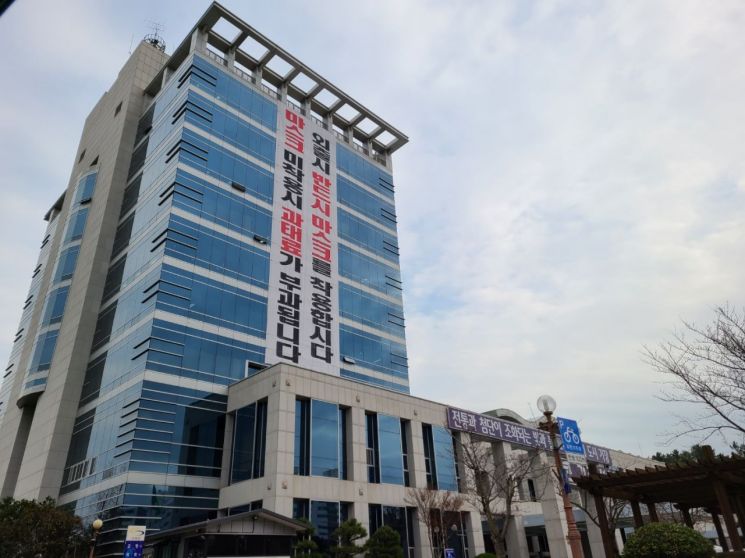
[Asia Economy Yeongnam Reporting Headquarters Reporter Kim Yong-woo] In the odor lawsuit battle over Jeonggwan New Town in Gijang-gun, Busan, Gijang-gun has made a "comeback." Why has this back-and-forth, relentless legal battle between the company and the local government occurred?
In the lawsuit lasting over two years between the local government and the medical waste incineration company, the first trial favored Gijang-gun, the second trial favored the incineration company, and the Supreme Court again ruled in favor of Gijang-gun, leaving only the final retrial at the High Court.
On the 8th, Gijang-gun announced that on the 7th, the Supreme Court overturned the lower court's ruling and remanded the case to the Busan High Court in the cancellation lawsuit against medical waste incineration company A in Jeonggwan New Town regarding the designation and public notice of odor emission facilities as reportable facilities.
In October 2018, Gijang-gun designated and publicly notified company A’s odor emission facility as a reportable facility, recommending improvements to the business site, citing that odor complaints had persisted for over a year and that complex odors exceeded the emission limit more than three times.
Company A opposed this. They argued, "The method Gijang-gun used to measure is not objective, and the odor may have originated from other businesses or factories," thus beginning the lawsuit.
Company A filed a lawsuit against Gijang-gun in April 2019.
In August 2019, the first trial court ruled, "The method Gijang-gun used to measure odor substances is objective, and there is no evidence that the odor from surrounding businesses or factories moved to company A," siding with Gijang-gun.
In November 2020, the second trial court ruled in favor of company A, stating, "Due to procedural defects in odor sample collection, the test results cannot be used as objective evidence," resulting in a reversal.
The Supreme Court ruling on the 7th was different. The Supreme Court judged, "It is difficult to conclude that Gijang-gun’s sample collection method violated procedures, and the lower court did not sufficiently investigate factors such as weather conditions at the time of sample collection, weather conditions in the target area, and the influence of surrounding companies."
The second trial ruling was overturned, and the case was remanded to the Busan High Court with a ruling in favor of Gijang-gun.
Gijang-gun and company A will present their final arguments in the retrial at the High Court regarding the designation and public notice cancellation.
Amid the prolonged legal battle between Gijang-gun and company A, company A has applied to the Nakdong River Basin Environmental Office for a permit to increase incineration capacity, engaging in another "off-court fight."
On April 1 and May 7, Gijang-gun Mayor Oh Gyu-seok held solo protests at the Nakdong River Basin Environmental Office, vocally opposing the incineration capacity increase.
Mayor Oh said, "I will continue solo protests once a month with strong determination until the permit for increasing incineration capacity is rejected, and I will devote all my efforts to protecting the residential environment of Jeonggwan-eup residents."
© The Asia Business Daily(www.asiae.co.kr). All rights reserved.
![From Bar Hostess to Organ Seller to High Society... The Grotesque Con of a "Human Counterfeit" [Slate]](https://cwcontent.asiae.co.kr/asiaresize/183/2026021902243444107_1771435474.jpg)
















