President Rivlin Transfers Coalition Formation Right to 'Anti-Netanyahu' Rapid Member of Parliament
[Asia Economy Reporter Kim Suhwan] Israeli Prime Minister Benjamin Netanyahu has failed to form a coalition government, resulting in the mandate to form a government being handed over to the opposition anti-Netanyahu faction. This has placed Netanyahu, who has been in power for 15 years, in his greatest crisis yet.
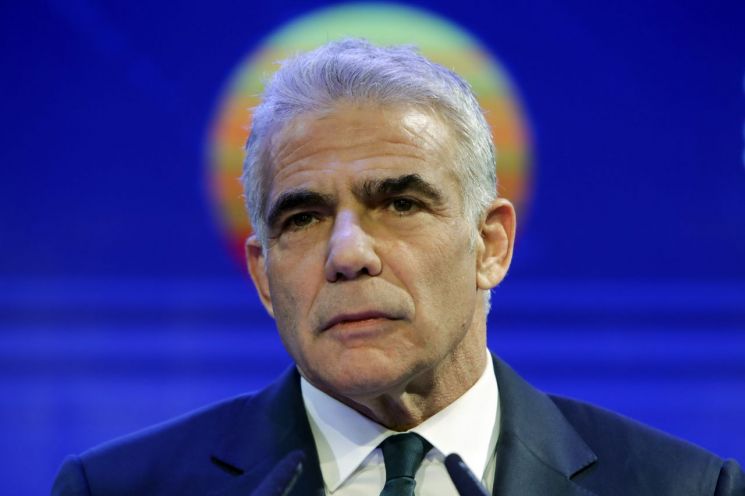
On the 5th (local time), Israeli President Reuven Rivlin announced that he had granted the mandate to form a government to Yair Lapid, leader of the Yesh Atid party, the second-largest party and a secular centrist opposition party. This was due to Netanyahu exceeding the deadline of the 28th to form a coalition, and Lapid now has 28 days to form a government as well.
Previously, Netanyahu's party, Likud, secured 30 out of 120 seats in the March general election, maintaining its position as the largest party. Following President Rivlin's designation, Netanyahu, who received the mandate to form a government, focused on coalition negotiations with right-wing forces. However, he only managed to secure the support of 52 lawmakers, failing to reach the majority of 61 seats required to form a government.
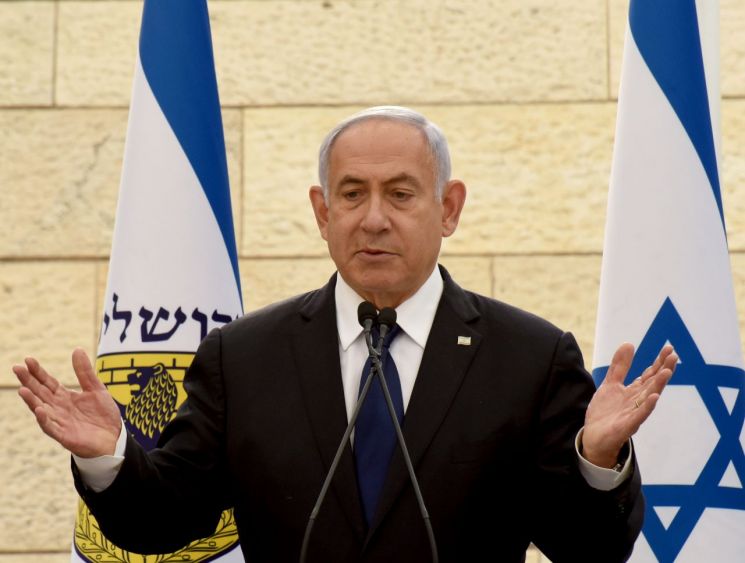
Netanyahu, who failed to form a coalition, is currently facing trials on charges of bribery and breach of trust, which is expected to further intensify his political crisis. The Wall Street Journal (WSJ) reported, "One reason for the failure to form a coalition is that many lawmakers have a strong aversion to Netanyahu, who is currently on trial for corruption charges," adding, "The possibility of Netanyahu extending his rule is continuously diminishing."
Currently, no single faction holds a majority in the Israeli parliament, making alliances among multiple parties inevitable. Yair Lapid's Yesh Atid party, which received the mandate to form a government, holds only 17 seats, far short of the majority needed. Therefore, Lapid is advocating for the establishment of a so-called 'unity government' that transcends political orientations by forming a coalition with various parties. In a statement, Lapid said, "Our government must be a collaboration of left, right, and centrist forces to jointly address the challenges our society currently faces."
Notably, Israel has experienced political turmoil with four general elections over two years since 2019. Voices from various sectors within Israel are growing louder, urging agreement on coalition formation rather than holding another election. Lapid also stated, "Our society is facing a crisis due to the political turmoil of the past two years," and added, "What we need is a unity government."
Foreign media have suggested the most likely scenario for coalition formation is Lapid joining forces with Naftali Bennett, leader of the right-wing Yamina party. According to this, it is expected that Lapid and Bennett will form a so-called 'rotating prime minister' government, taking turns serving as prime minister.
Bennett said on the same day, "If we hold a fifth or sixth election, it will bring destructive consequences to our country," and emphasized, "It is necessary to form a government involving various stakeholders," indicating his willingness to participate in coalition talks with Lapid.
The Guardian reported, "Bennett will effectively play the role of kingmaker in this coalition formation."
If Lapid fails to meet the deadline to form a government, President Rivlin will either transfer the mandate to another lawmaker or order a new election.
© The Asia Business Daily(www.asiae.co.kr). All rights reserved.


















