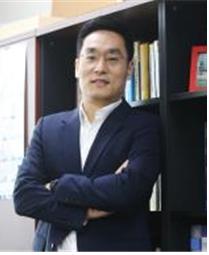
 Professor Shin Byungha, Department of Materials Science and Engineering, Korea Advanced Institute of Science and Technology (KAIST)
[Asia Economy Reporter Kim Bong-su] Professor Shin Byung-ha of the Department of Materials Science and Engineering at the Korea Advanced Institute of Science and Technology (KAIST), who developed the world's highest-efficiency next-generation solar cell material, has been selected as the recipient of the "Scientist of the Month" award for May, chosen by the government.
The Ministry of Science and ICT, together with the National Research Foundation of Korea, selects one researcher each month who has contributed to the advancement of science and technology through outstanding research and development achievements, awarding the Minister of Science and ICT Award and a prize of 10 million won.
Professor Shin was recognized for his contribution to elevating the status of Korean science and technology in next-generation solar cell development by developing a high-efficiency, high-stability large band gap perovskite solar cell optimized for heterojunction with silicon in March last year, achieving the world's highest photoelectric conversion efficiency of 26.7%.
Perovskite solar cells are next-generation solar cell materials that are cheaper and have higher photoelectric conversion efficiency compared to conventional solar cells. However, they are sensitive to external environments such as light and moisture, which has limited the synthesis of highly stable devices.
Professor Shin theoretically demonstrated that by introducing a new anion additive, the electrical and structural properties of the two-dimensional passivation layer formed inside the perovskite thin film can be controlled, and confirmed this through high-resolution transmission electron microscopy analysis. In particular, by producing perovskite solar cells with world-class photoelectric conversion efficiency, he achieved a high photoelectric conversion efficiency of 26.7% through the development of tandem devices combined with silicon solar cells. Moreover, by adjusting the anion of the additive, the light stability, which was a weakness of the existing large band gap, was maintained at over 80% of the initial value during continuous irradiation for 1,000 hours. These research results were published in the international journal Science in March last year.
© The Asia Business Daily(www.asiae.co.kr). All rights reserved.
















