Expectations for redevelopment and reconstruction have been rising since the Seoul mayoral by-election. Given that the previous administration showed great interest in developing the Han River waterfront, including projects like Saebit Floating Island, the Han River waterfront real estate is predicted to be the biggest beneficiary.
Real estate prices in areas along the Han River, where redevelopment and reconstruction are anticipated, are reflecting market optimism with significant price increases. Recently, a 245㎡ unit in Apgujeong Hyundai Apartment 7th complex was sold at a record high of 8 billion KRW, drawing attention. Moreover, even small villas in Seongsu-dong have been traded at 2 billion KRW, indicating that expectations for redevelopment and reconstruction are driving up property prices along the Han River.
Interest in Han River waterfront real estate is expected to continue unabated for the time being. Real estate experts predict that various types of properties, including apartments, villas, and officetels, will experience simultaneous price increases along the Han River line.
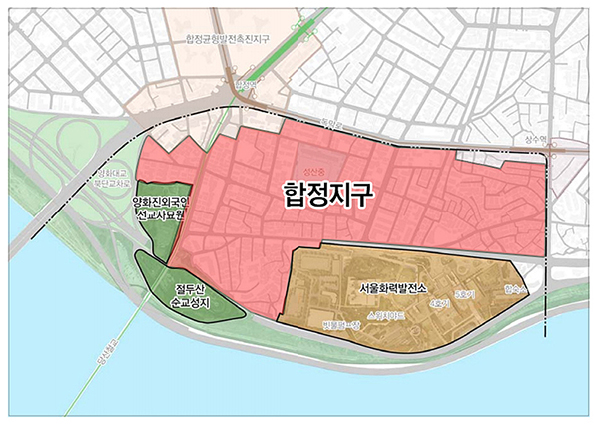
Experts are focusing on relatively undervalued strategic redevelopment zones along the Han River, such as Hapjeong-Mangwon Redevelopment Zone, Hapjeong Strategic Redevelopment Zone, and Seongsu Strategic Redevelopment Zone. The Hapjeong Strategic Redevelopment Zone around the Dangin-ri Power Plant in Hapjeong-dong attracts attention due to its affordability for small-scale investors, the formation of a business-dense district, and abundant rental demand from office workers owing to its proximity to the city center.
According to real estate experts, the Hapjeong-dong area has realized urban regeneration and secured urban competitiveness. Various development benefits continue, raising expectations for future value appreciation. The area is rapidly transforming through Seoul’s customized urban planning, balanced commercial, cultural, and residential development around Hapjeong Station, and the review of a district unit plan for the northern end of Yanghwa Bridge.
Additionally, Hapjeong-dong was selected by Seoul City as a ‘2020 Seoul-type Urban Regeneration Activation Area (Residential Regeneration Type).’ Mapo-gu plans to actively develop cultural tourism infrastructure connecting the Hongdae Gyeongui Line Forest Road to the Han River, including creating the railway-themed street ‘Danginmunhwaro’ near Dangin-dong, close to the Seoul Combined Heat and Power Plant.
The first phase of remodeling the Dangin-ri Seoul Combined Heat and Power Plant has already been completed, including undergrounding and creating a park on the surface. In the second phase scheduled for 2023, the decommissioned units 4 and 5 will be transformed into cultural creation spaces such as an industrial heritage experience area, a 500-seat performance hall, and an exhibition hall. On the site adjacent to the Han River, community convenience facilities including a swimming pool, futsal field, and a comprehensive gymnasium will be established.
A local real estate official stated, “According to plans announced by Seoul City and Mapo-gu, the green axis connecting Dangin-ri Power Plant and Yanghwajin Park in Hapjeong-dong will be completed by converting adjacent areas into parks and designating residential maintenance zones, providing ample room for improving living conditions in the future.” He predicted, “Real estate in Hapjeong-dong can achieve a premium price increase comparable to Han River waterfront reconstruction.”
© The Asia Business Daily(www.asiae.co.kr). All rights reserved.

















