GS25 Male Discrimination Controversy... Store Owners File Class Action Lawsuit
Last Month, 'Non-Feminists' Stirred Up Trouble
Neologisms Like Ojooek and Heobeoheobeo Also Controversial
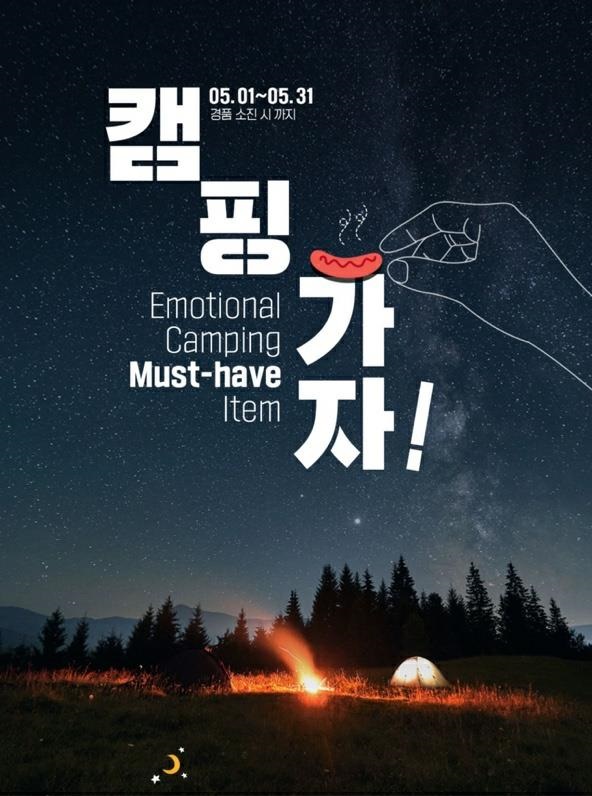
[Asia Economy Reporter Lim Chun-han] The convenience store GS25's event promotional poster has become embroiled in a controversy over misogyny, placing the distribution industry at the center of gender conflict.
According to an online community on the 4th, GS25 franchise owners are filing a class-action lawsuit against the headquarters to hold them accountable for sales declines caused by the boycott. They have appointed the law firm Munjang as their legal representative and plan to proceed with the first lawsuit once 200 participants have gathered. The compensation amount per person is 1 million KRW, and additional lawsuits will be pursued depending on future developments.
On the 1st, GS25 posted a poster on its dedicated mobile app to promote a prize giveaway event for buyers of camping food products. Online communities claimed that the hand gesture in the poster resembled images intended to demean men, and that the moon and star design at the bottom of the poster was the emblem of a university feminist society. There was also criticism that the English phrase on the poster, "Emotional Camping Must-have Item," hinted at the male-hating community Megalia by combining the last letters of each word to form "megal." As the controversy grew, GS25 deleted the poster and issued an apology.
Earlier, GS25 faced a misogyny controversy when a franchise owner in Seoul posted a part-time job recruitment notice stating they would hire only those who are "not feminists." The owner also requested that "passive and 'ottoke ottoke' types" refrain from applying. This term is a derogatory expression used to imply that women cannot properly respond in urgent situations.
Newly coined words such as "Ojo-eok" and "Heobeo-heobeo" have also sparked backlash. Words that were previously used without issue have recently been distorted to carry derogatory meanings toward men and women. "Ojo-eok" originally meant "a very large number," but nowadays it is used as a term to demean men. For example, Dongwon F&B used the expression "Ojo-eok" in a YouTube advertisement in 2019 without any problems at the time. However, recently Daiso released a product containing the phrase "Ojo-eok," faced protests, and halted sales.
The distribution industry is shrinking back amid the ongoing hate controversies. There is concern that expressions or images used without malice could become contentious. An industry insider said, "We will thoroughly monitor content that could cause controversy in the future and exercise more careful review and caution."
© The Asia Business Daily(www.asiae.co.kr). All rights reserved.

















