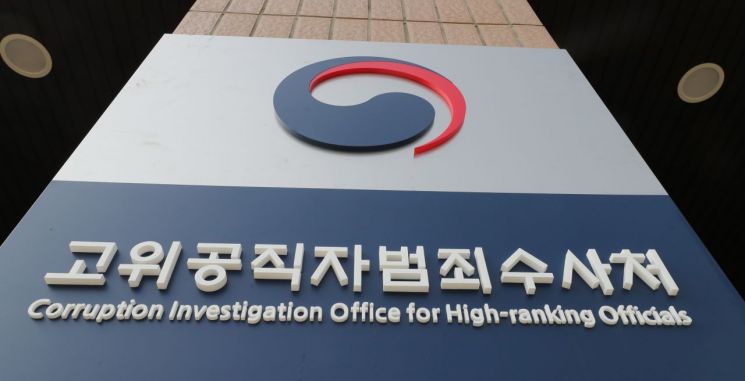
[Asia Economy Reporter Kim Hyung-min] The High-ranking Officials' Crime Investigation Agency (HCIA) is expected to face considerable controversy after formalizing 'conditional transfer' and 'transfer request rights'?which could cause conflicts with the prosecution?when establishing its case handling regulations on the 3rd.
On the same day, the HCIA announced the enactment and promulgation of case handling regulations covering all aspects of case reception, investigation, processing, and trial execution.
An HCIA official explained, "We focused on implementing a dignified and restrained advanced investigation system," adding, "A foundation has been laid to practice fair investigations while thoroughly maintaining political neutrality and independence."
The regulations consist of a total of 35 articles. According to them, the HCIA classifies cases into ▲registration ▲simple transfer ▲non-registration for processing.
First, cases directly investigated by the HCIA and those transferred to other agencies for investigation but requested to be transferred back to the HCIA for further action are classified as 'conditional transfer' cases. Cases notified to the HCIA by other investigative agencies and for which the HCIA has initiated an investigation are classified as 'registered.'
Cases transferred to other investigative agencies due to the HCIA lacking investigative authority are categorized as 'simple transfer,' while the remaining cases are treated as 'non-registration subjects.'
Regarding the 'transfer request rights,' which allow the HCIA to receive cases under investigation by other agencies, factors such as fairness, seriousness, and statute of limitations are stipulated as considerations, and the relevant agency is required to submit materials for evaluation.
If the HCIA deems it appropriate to exercise the transfer request right, it must request the transfer within 14 days. However, this period can be extended in special circumstances such as urgent arrests.
The 'conditional transfer,' which surfaced when the HCIA returned the case of former Deputy Minister of Justice Kim Hak-ui's illegal travel ban to the Suwon District Prosecutors' Office with the caveat "please send it back after investigation," was included in the regulations despite opposition from the prosecution.
When the investigative capacity is overloaded or there are significant concerns about 'protecting one's own,' the case is initially investigated by the relevant agency, and the HCIA subsequently verifies whether the investigation was properly conducted before deciding whether to prosecute.
Additionally, when the police investigate judges or prosecutors, warrants for coercive measures such as arrest, detention, or search and seizure must be applied for not to the prosecution but to the HCIA. To this end, the HCIA plans to establish a warrant review committee.
When summoning suspects or witnesses, consultations will be held not only with the individuals concerned but also with their lawyers, and unless there are special circumstances, investigations will be conducted in interrogation rooms equipped with video recording devices to minimize restrictions on fundamental rights.
After completing an investigation at the HCIA, the investigation and prosecution will be separated by having a prosecutor in charge of prosecution, appointed separately from the investigating prosecutor, review whether to prosecute.
For cases involving the President, members of the National Assembly, and others over whom the HCIA has investigative authority but no prosecutorial authority, the HCIA will decide whether to request prosecution or non-prosecution upon concluding the investigation and send the case records to the Seoul Central District Prosecutors' Office.
Furthermore, the regulations include provisions for establishing an investigation review committee, prosecution review committee, and investigation advisory group to gather public opinions on the HCIA's investigations and prosecutions.
For HCIA tasks not stipulated in the case handling regulations, the 'Prosecution Case Handling Regulations' will apply.
The HCIA plans to discuss potential confusion in interpreting and applying the regulations through a consultative body composed of investigative agencies such as the prosecution, police, and coast guard.
© The Asia Business Daily(www.asiae.co.kr). All rights reserved.

















