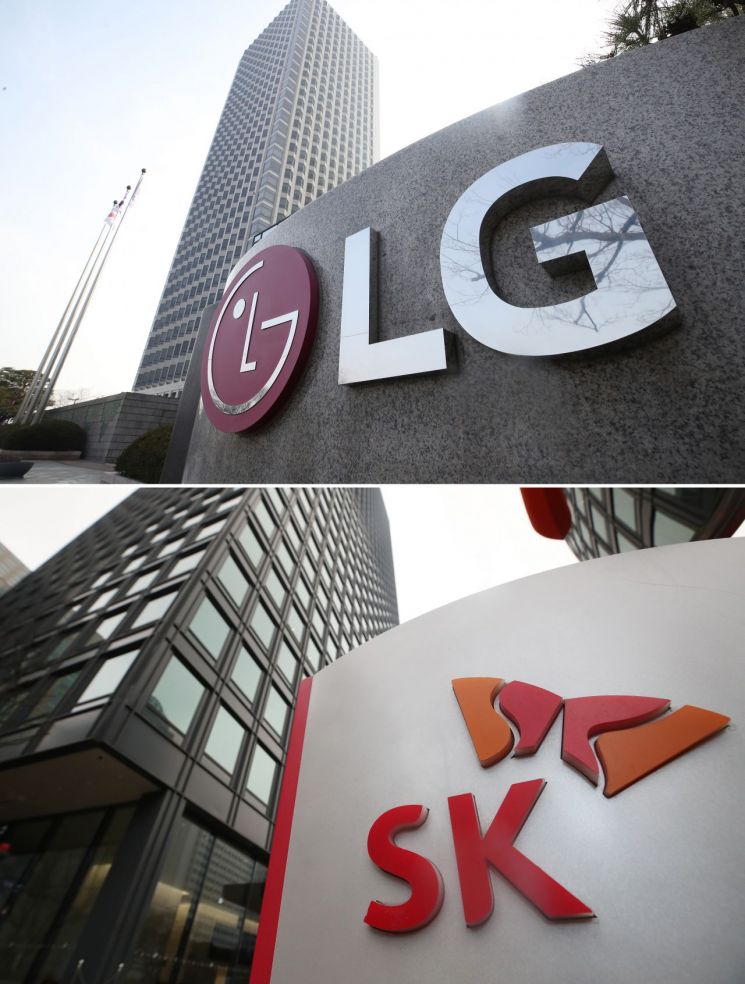
[Asia Economy Reporter Hwang Yoon-joo] Competition in battery subscription services is intensifying. Electric vehicle battery companies are expanding the 'BaaS (Battery As A Service)' business, which covers the entire battery lifecycle service from manufacturing to utilization and reuse.
According to the industry on the 2nd, LG Energy Solution (LG EnSol), the number one electric vehicle battery company, is collaborating with Lotte Rent-a-Car, the leading rental car company, on the 'BaaS' business, including continuous diagnosis and evaluation certification services for electric vehicles. LG EnSol provides real-time information on the current battery capacity and safety status, as well as predictions of future degradation, and issues battery evaluation certificates based on this data. The two companies plan to jointly pursue electric vehicle battery rental services and the reuse of aged electric vehicle battery ESS (Energy Storage System) in the future.
SK Innovation has also established a system to analyze real-time usage data of batteries in collaboration with SK Rent-a-Car. Through this solution, battery usage data is analyzed in real time to predict battery lifespan and detect abnormal signs such as overheating. The two companies will pilot this solution in long-term rental electric vehicles operated by SK Rent-a-Car. SK Innovation plans to provide the established management system to rental car operators, delivery businesses, and commercial vehicle operators such as taxi and bus companies in the future.
The BaaS business essentially refers to the replacement and recycling of used batteries. Generally, electric vehicle batteries need to be replaced after driving 150,000 to 200,000 km, as performance deteriorates with reduced driving range about 5 to 10 years after battery use. Additionally, batteries account for 40% of the production cost of electric vehicles, so recycling batteries has the advantage of lowering costs. For this reason, not only battery companies but also automakers are paying close attention to the BaaS business.
According to the Korea Energy Economics Institute, the number of used batteries generated domestically is expected to increase from 4,700 units in 2020 to 13,000 units in 2025 and 80,000 units in 2030. Although the current market size is small, it is expected to grow explosively along with the rapid growth of the electric vehicle market.
An industry insider said, "Lithium-ion batteries have a remaining capacity of about 70-80%, making reuse or recycling possible, which will expand related industries such as battery leasing, repair, and recycling," adding, "Competition in the BaaS business is expected to intensify as companies strive to secure the used battery value chain."
© The Asia Business Daily(www.asiae.co.kr). All rights reserved.

















