Purpose of Raw Material Circularity and Carbon Reduction for High-Voltage Batteries, Key Components of EVs
Reuse of Used Batteries as ESS... Recovery and Recycling of Metal Resources such as Lithium, Nickel, and Cobalt
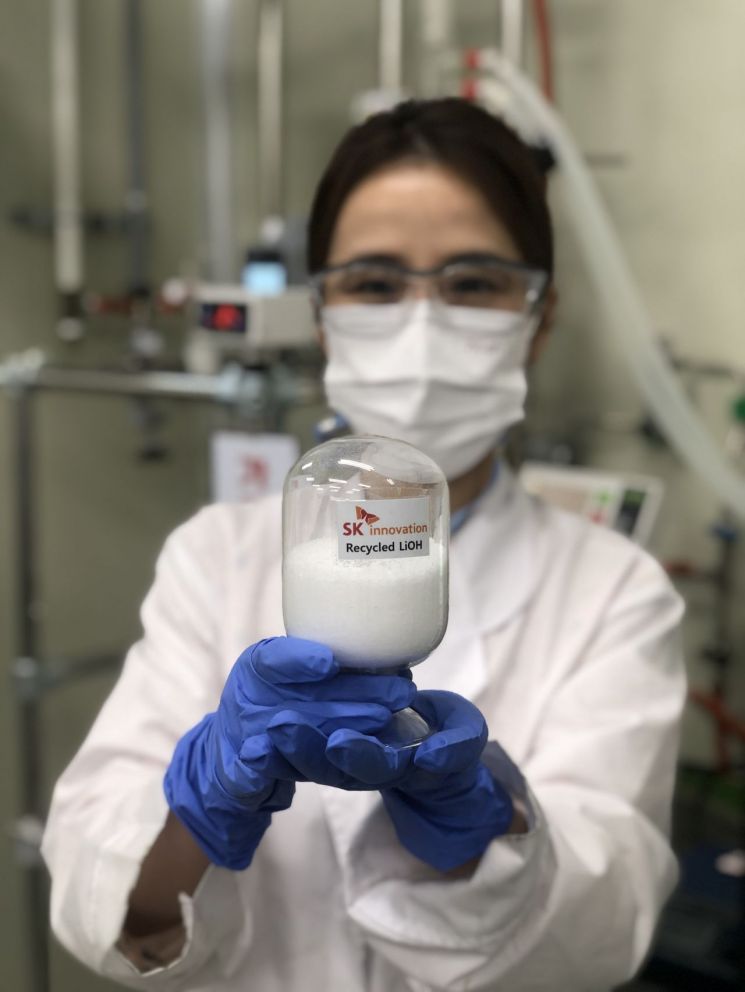
[Asia Economy Reporter Hwang Yoon-joo] Kia and SK Innovation have officially launched efforts toward a circular economy for electric vehicle (EV) batteries. The goal is to create a virtuous cycle of raw materials and reduce carbon emissions through the reuse or recycling of high-voltage EV batteries after use.
On the 29th, Kia and SK Innovation announced that they have secured the possibility and technological foundation for creating an industrial ecosystem that enables eco-friendly processing of EV batteries by recovering metals including lithium from used batteries.
As part of strengthening ESG (Environmental, Social, and Governance) management, the two companies signed a business agreement in March last year to build an EV battery industry ecosystem. Over the past year, they have conducted a pilot project for recycling used batteries, evaluating the feasibility, effectiveness, and efficiency of metal recovery from batteries.
Kia, on a Hyundai Motor Group level, evaluates used batteries through a battery performance evaluation system. Batteries with excellent residual performance are divided into modules or packs and reused as energy storage systems (ESS). If residual performance is low, the batteries are disassembled into cells and metals are recovered through recycling. Used batteries contain lithium electrolyte inside, requiring more advanced technology than recovering lithium from waste cathode materials generated during battery manufacturing.
SK Innovation utilizes its independently developed lithium recovery technology to extract lithium hydroxide and metal resources such as nickel and cobalt from used batteries, which are then reused in manufacturing cathode materials for batteries.
The two companies plan to establish an EV battery circular ecosystem covering ▲pre-treatment (battery disassembly) ▲metal resource recovery ▲cathode material utilization ▲battery manufacturing ▲vehicle installation. They also aim to contribute to expanding ESG management by creating various management models for eco-friendly processing of used batteries.
Kwon Hyuk-ho, Head of Kia’s Domestic Business Division, stated, "Kia and SK Innovation will jointly establish a system for using used batteries to strengthen manufacturers’ social responsibility and sustainable management in line with the popularization of EVs. This process will also be applied to Kia’s first dedicated EV, the EV6, scheduled for release in the second half of this year, enhancing our position as an eco-friendly mobility brand."
Kim Cheol-jung, Head of SK Innovation’s Strategy Division, said, "Recycling used batteries is one way to respond to the increased demand for metal resources due to the global popularization of EVs, and it can reduce greenhouse gas emissions and environmental burdens on the land caused by production. Based on this collaboration, we will contribute to expanding the established system for using used batteries in Korea to a global scale."
© The Asia Business Daily(www.asiae.co.kr). All rights reserved.

















