Choi Young-a, Director of the Seobuk Hospital Medical Cooperation Center
Over 20 Years of Care for the Homeless... Also Providing Housing and Self-Reliance Support
Establishing a System for People Excluded from Medical Benefits
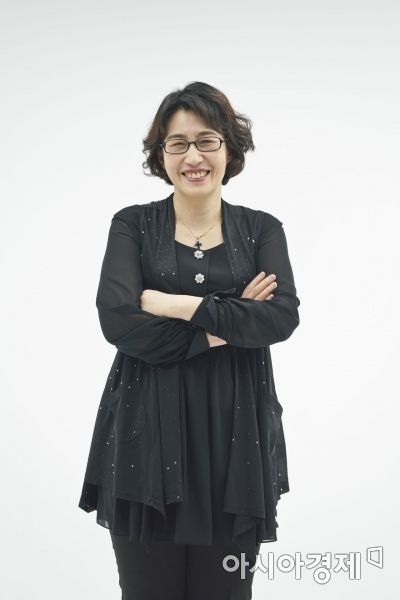
[Asia Economy Reporter Han Jinju] "If you can't avoid it, you have to live with it. Once I saw that kind of life, I couldn't turn away. As a doctor and as a human being, I actually learned a lot more."
Choi Young-ah, head of the Medical Cooperation Center at Seoul Seobuk Hospital, is nicknamed the "Doctor on the Road." Eighty percent of the outpatients she cares for are homeless. Choi provides prescriptions that help the homeless take new paths. She does not stop at diagnosing illnesses and prescribing medicine but opens the way for them to receive government care and achieve self-reliance. Now, she is a mother of two children who complain about their breakfast side dishes, a wife who contemplates life with her doctor husband, and a 21-year veteran doctor who treats homeless people and guides them toward a better life. The wall of her office desk was covered with printed papers stuck disorderly, and a folding cot was tucked away in a corner of the office.
The reason Choi began treating homeless people dates back to her medical student days when she saw a homeless person at Cheongnyangni Station not being treated as a patient. Choi said, "At that time, there was no diagnosis code for homelessness, and homeless people could only receive treatment at hospitals if accompanied by 112 or 119 emergency services." She added, "In my first year of medical school, I saw homeless patients being treated like animals in the emergency room, and I wanted to create a hospital where they could be treated as patients." The places she has worked for the past 20 years have all been medical facilities dedicated to treating homeless people.
Choi obtained her internal medicine specialist certification in 2001 and immediately opened Dail Angel Hospital. She opened the hospital in her 30s and lived there for about three years. From 2004, she worked for five years at Joseph Clinic, which provided medical care and rehabilitation to homeless people. Through her mentor, the late Sunwoo Kyung-sik, director of Joseph Clinic, she was able to lay the foundation for medical institutions serving vulnerable groups. From 2009, she worked for five years at Seoul Station Dasiseogi Medical Clinic, then at Doty Memorial Hospital in 2014, and moved to Seobuk Hospital in 2017. On the 23rd, Choi received the LINA 50+ Awards in the social contribution category from the LINA Foundation, and last year she was awarded the Seoul City Ha Jeong Cheongbaekri Award, among others.
Choi not only treats homeless patients but also supports disability diagnosis and, through the nonprofit organization Recovery Sharing Network, provides temporary housing such as group homes and housing cost support for the homeless. Choi said, "I came to Seobuk Hospital to meet patients and connect them to group homes. Creating an address and obtaining 'Medical Protection Type 1' status makes them eligible for social care." She added, "Providing housing is better than hospitalization because homeless people need to quit drinking and have a home to become healthy." Even if homeless people are hospitalized and treated, once they leave the hospital, they often relapse into drinking, worsening their health and frequently returning to the hospital.
Through 20 years of dedicated treatment of homeless people, Choi realized that the root cause of the problem is "human relationships." She said, "Homeless people experience diseases or family breakdowns in an accelerated and condensed way. The environment, meaning family and human relationships, is the cause." She added, "What I can do is to continuously care well for the people they relate to and live together in a positive direction."
She is also running projects to provide jobs for people who have regained their daily lives after wandering the streets. A representative example is the restaurant "Smile Box," operated by the Trinity Family Cooperative, which includes the Recovery Sharing Network. Recently, they also funded "Kito Uni Jjajang" through Wadiz. Choi explained, "People don't change quickly. It takes years to change. You have to be prepared to watch over them for 5 to 10 years." She added, "I created the Recovery Sharing Network to accompany even one or two people in the long term."
© The Asia Business Daily(www.asiae.co.kr). All rights reserved.


















