Virus Vector-Based Vaccines and Thrombotic Side Effects? Authorities Say "Still at Hypothesis Stage"
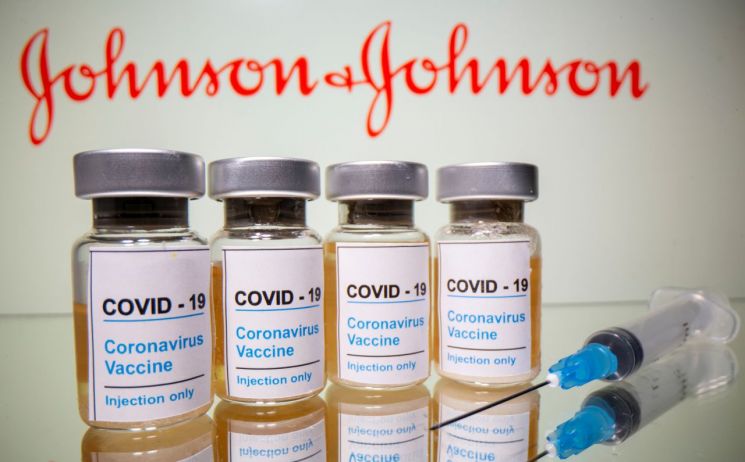
[Asia Economy Reporter Kim Ji-hee] The government has decided to proceed with the planned import of Janssen's COVID-19 vaccine, which has been embroiled in blood clot controversies. This decision follows the European Medicines Agency (EMA) concluding that the rare thrombosis accompanied by thrombocytopenia is extremely rare and that the benefits of vaccination outweigh the risks.
At the COVID-19 Vaccination Response Promotion Team's regular briefing on the 22nd, it was stated, "The EMA's Safety Evaluation Committee on the 20th classified the rare thrombosis accompanied by thrombocytopenia as a very rare side effect of the Janssen vaccine and decided to include it in the product information." It added, "Accordingly, European countries have decided to proceed with Janssen vaccine vaccinations, and South Korea is also preparing to import the scheduled quantities." Janssen vaccines are expected to be sequentially imported into the country starting from the second quarter, with 6 million doses planned. However, specific import timing, schedules, and quantities are still under negotiation.
Although authorities have expressed their intention to import the Janssen vaccine as planned, distrust remains considerable as blood clot controversies continue with viral vector-based vaccines following AstraZeneca (AZ). Park Young-jun, head of the Adverse Reaction Investigation Support Team at the Promotion Team, explained, "Experts abroad and the WHO have hypothesized that a 'platform effect' might be at play, as similar issues have appeared with vaccines based on certain viral vectors, but this hypothesis has not yet been confirmed." He added, "Further research and monitoring will be necessary going forward."
He continued, "The current concern is the rare thrombosis accompanied by thrombocytopenia, and such cases are very rare both abroad and domestically." He further explained, "We are conducting situation assessments by comparing and analyzing whether similar evaluation results based on overseas occurrences and trends are appearing domestically."
Regarding measures such as age restrictions on vaccination targets, similar to the earlier AZ vaccine, he said, "Domestically, as abroad, we are approaching this by comparing the benefit-to-risk ratio by age group and recommending vaccination in age groups where the risk is considered significantly higher." He added, "By reviewing the incidence rates of diseases by age group and domestic occurrence situations, we can compare benefits and risks to explain which direction to take."
Recently, as the global vaccine supply shortage intensifies, the possibility of introducing Russia's Sputnik V vaccine has been raised domestically. However, this vaccine also uses a viral vector method similar to Janssen's and has been controversial. Yang Dong-kyo, head of the Resource Management Division at the Promotion Team, said, "Regarding the Sputnik V vaccine, the Ministry of Food and Drug Safety and the Ministry of Foreign Affairs are continuously collecting and monitoring data on safety, overseas approvals, and vaccination status." He added, "However, as far as I know, the company is not currently submitting an approval application to the Ministry of Food and Drug Safety."
© The Asia Business Daily(www.asiae.co.kr). All rights reserved.

















