Seoul National University Research Team Confirms Specific Gene Causes Fatty Liver Disease
[Asia Economy Reporter Kim Bong-su] Domestic researchers have paved the way for the development of new drugs to treat non-alcoholic fatty liver disease (NAFLD), for which no definitive treatment has been developed to date.
Seoul National University College of Medicine and Seoul Metropolitan Boramae Hospital recently announced on the 22nd that through joint research, they have developed an innovative method related to the development of patient-tailored precision medicine drugs for non-alcoholic fatty liver disease.
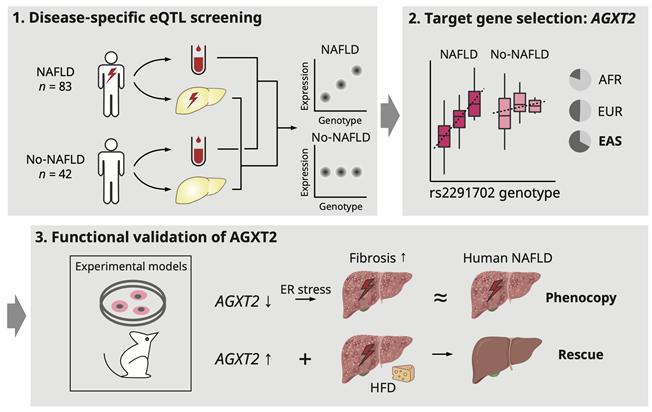
Professor Kim Won of Seoul National University College of Medicine and the joint research team comprehensively integrated and analyzed liver tissue gene expression information and blood genomic information from liver biopsy tissues and blood samples of 125 patients with non-alcoholic fatty liver disease. As a result, they devised a patient-specific, disease-specific eQTL (expression quantitative trait loci) algorithm that selects key genes related to fatty liver fibrosis, enabling the discovery of candidate genes for new drugs targeting non-alcoholic steatohepatitis.
This disease is a major metabolic disorder that manifests in about 25% of the entire Korean population. It has a high likelihood of progressing to severe end-stage liver diseases such as steatohepatitis, cirrhosis, and liver cancer, and is also known to significantly increase the risk of other related metabolic diseases (diabetes, hypertension, cardiovascular disease, chronic kidney disease, etc.).
However, no drugs have been approved in clinical practice for fatty liver disease so far, with the cause attributed to the failure to consider the clinical and genetic diversity of patients during clinical trials.
The research team’s developed algorithm proved the hypothesis that patients with specific genotypes regulate the expression of certain liver-derived genes in fatty liver disease tissues. Furthermore, they discovered about 200 combinations of new genes and their regulating genotypes that can induce fatty liver disease in Koreans. In particular, the team focused on the gene AGXT2 as an important factor in causing fatty liver disease and validated this in cell and animal models as well as human data.
The researchers explained, "If patients with fatty liver disease who carry specific genetic variants regulating AGXT2 expression are identified and subsequently treated with AGXT2 expression-modulating drugs developed in the future, showing anti-fibrotic effects, it would establish a groundbreaking breakthrough in the world’s first patient-tailored precision diagnosis and targeted therapy for fatty liver disease."
The results of this study were published in the international journal in the field of gastroenterology, Journal of Hepatology (Impact factor 20.582).
© The Asia Business Daily(www.asiae.co.kr). All rights reserved.

















