MFDS Detects 1,131 Cases of False Advertising Including COVID-19 Prevention
Experts Emphasize Importance of Carefully Checking Certification Marks and Wording Before Purchase
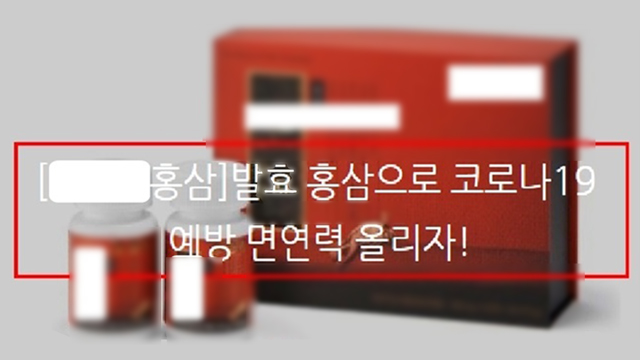 Cases of False Advertising Related to COVID-19 Prevention Immunity. Photo by Ministry of Food and Drug Safety
[Asia Economy Reporter Kim Soyoung] A large number of websites falsely or exaggeratedly advertising COVID-19 prevention effects have been detected, requiring caution. Amid the hardships caused by COVID-19, criticism is pouring in that this is a kind of fraud exploiting the situation for unfair profits.
The Ministry of Food and Drug Safety inspected food and health functional food websites from January last year to last month and found 1,131 cases of false or exaggerated advertisements claiming COVID-19 prevention or treatment effects.
The majority of detected sites were open markets with 477 cases (46.3%), followed by ▲portal company blogs and cafes with 442 cases (42.9%) ▲social networking services (SNS) with 65 cases (6.3%) ▲general shopping malls with 47 cases (4.5%), and others.
By content, false or exaggerated advertisements claiming COVID-19 prevention or treatment accounted for 1,004 cases (97.4%), the majority. For example, products like 'hongsam' or 'sikcho' were claimed to boost immunity and prevent COVID-19, or 'probiotics and krill oil' were said to be effective in enhancing immunity and preventing infection.
Additionally, ▲consumer deception 24 cases (2.3%) ▲misleading or confusing as health functional foods 2 cases (0.2%) ▲violation of voluntary review 1 case (0.1%) were detected.
Citizens expressed disbelief. Kim, a worker in his 40s, said, "Everyone is struggling due to COVID-19, but this is practically fraud using COVID-19," expressing frustration.
Another worker in his 30s, Lee, said, "I hope the government imposes strong penalties," raising his voice, "It’s like making money by deceiving people who are struggling."
The Ministry of Food and Drug Safety has requested the Korea Communications Standards Commission and others to block the relevant sites. It also asked the Online Shopping Mall Association, open markets, and others for voluntary management and self-purification cooperation. A ministry official said, "Online consumption is increasing due to the prolonged COVID-19 pandemic," and urged, "Do not be misled by unfair advertisements and report them to the National Sinmungo if discovered."
Among the 1,131 detected cases, 711 were food sales sites and 320 were health functional food sales sites. The most common cases, 1,004 (97.4%), involved false labeling or unfair advertising claiming that products like hongsam, sikcho, and health functional foods could prevent or treat respiratory infections and COVID-19.
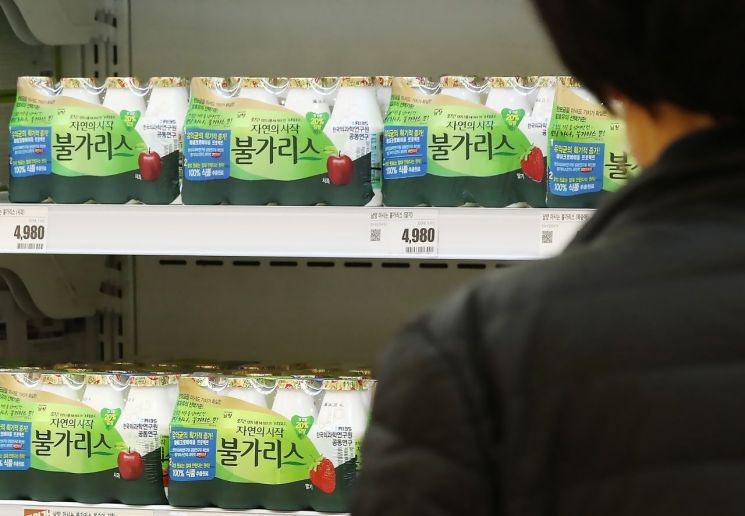 Namyang Dairy Products, Bulgari claims to suppress COVID-19 by 77.8% 'controversy'
 [Image source=Yonhap News]
As these false and exaggerated advertisements were revealed, some places received a two-month business suspension notice and even faced boycott movements.
On the 13th, Namyang Dairy Products announced at a symposium titled 'Development of Antiviral Foods in the COVID-19 Era,' attended by 29 media outlets and academics, that its Bulgari fermented milk product was confirmed domestically for the first time to have antiviral effects against COVID-19.
As a result, Bulgari products sold out at some convenience stores and supermarkets on the same day, causing a surge in sales, and Namyang Dairy Products’ stock price jumped more than 8%.
However, it was revealed that Namyang Dairy Products conducted COVID-19 antiviral cell tests on only one of the seven Bulgari products but falsely and exaggeratedly advertised that the entire product line had antiviral effects.
An official from the Ministry of Food and Drug Safety said, "(In Namyang Dairy Products’ case) expressions implying disease treatment fall squarely under Article 8, Paragraph 1, Item 1 of the Labeling and Advertising Act," adding, "Advertising content claiming disease treatment efficacy is punishable by up to 10 years imprisonment or a fine of up to 100 million won, and is considered a serious matter usually resulting in prosecution." The ministry’s accusation led to a police investigation.
However, there is a limit to the government’s ability to regulate the flood of false and exaggerated advertisements one by one. Experts emphasize the need for consumer vigilance and raising issues.
Professor Lee Eunhee of Inha University’s Department of Consumer Studies explained, "With increased health concerns due to COVID-19, many consumers are trying to boost immunity," adding, "(Such advertisements) tend to mislead consumers into thinking they are government-certified."
Regarding how consumers can avoid damage such as buying products deceived by false advertisements, she advised, "It is important to carefully check certification marks or phrases before purchasing."
Professor Lee also pointed out, "Consumers may mistakenly believe the products are good for their bodies due to psychological effects if there are no special side effects." She urged, "Above all, consumers need to have a sense of problem awareness and actively raise issues by informing other consumers and reporting suspicious cases."
© The Asia Business Daily(www.asiae.co.kr). All rights reserved.


















