Areas with High Potential for Price Increase Due to Reconstruction Expectations
"Speculative Demand Will Be Strictly Blocked, Housing Supply Will Proceed Without Delay"
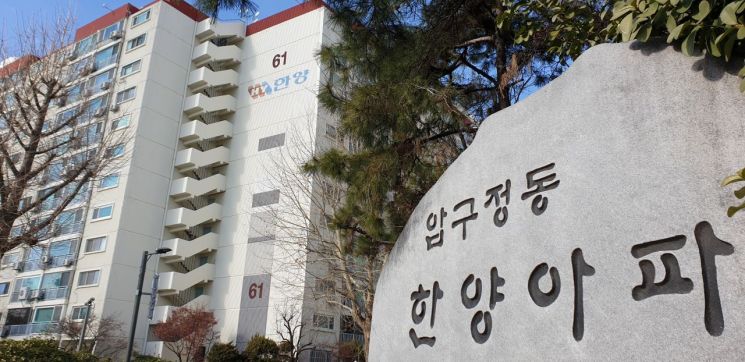
[Asia Economy Reporters Kim Hyemin and Lim Onyu] The areas of Apgujeong-dong, Yeouido-dong, Mok-dong, and Seongsu-dong in Seoul will be designated as land transaction permission zones starting from the 27th. These are all regions where housing prices have overheated due to expectations of reconstruction and redevelopment.
On the 21st, Seoul Mayor Oh Se-hoon held a briefing at Seoul City Hall and announced that four major large-scale reconstruction and redevelopment project areas will be designated as land transaction permission zones. Earlier, the Seoul Metropolitan Government held the 5th Urban Planning Committee meeting to review this agenda.
The designated target areas are ▲Apgujeong Apartment District (24 complexes) ▲Yeouido Apartment District and nearby complexes (16 complexes) ▲Mok-dong Land Development Project District (14 complexes) ▲Seongsu Strategic Maintenance District (4 districts). The total area is 4.57㎢ and will be announced on the 27th. The designation period is one year.
With this, the land transaction permission zones within Seoul have expanded to a total of 50.27㎢, including Jamsil-dong, Samseong-dong, Cheongdam-dong, and Daechi-dong, which were designated last year. In June of last year, the city designated four neighborhoods near the 'International Exchange Complex District' being developed around Jamsil to COEX as land transaction permission zones.
The Seoul Metropolitan Government explained the reason for this decision as follows: "Recently, abnormal transactions have been detected in some reconstruction complexes and redevelopment areas along the Han River, with concerns about speculative demand inflow due to rapid depletion of listings and soaring asking prices, prompting preemptive measures."
The four areas and 54 complexes designated as land transaction permission zones this time are reconstruction and redevelopment project promotion areas where there are concerns about speculative demand inflow and rising transaction prices.
In the Apgujeong Apartment District, all 24 complexes concentrated around Apgujeong Station were designated. In the Mok-dong district, all 14 complexes were designated, but commercial areas were excluded to minimize regulatory impact. In the Yeouido district, to prevent a balloon effect, nearby Sujeong, Gongjak, Seoul, Jinju, and Chowon Apartments were included in the land transaction permission zone. In the Seongsu Strategic Maintenance District, all types of housing and land within the maintenance district, including apartments, villas, and commercial buildings, are subject to land transaction permission.
When designated as a land transaction permission zone, transactions of housing, commercial buildings, and land above a certain size require permission from the district office head. If a land transaction contract is made without permission, the offender may face imprisonment of up to two years or a fine of up to 30% of the land price. In particular, residential land must be used only for actual residence for two years, and sale or lease is prohibited.
The city lowered the land area requiring permission to about 10% of the legal standard area. For residential areas, transactions exceeding 18㎡ and for commercial areas, transactions exceeding 20㎡ are subject to permission. Seoul will continuously monitor real estate market trends and consider additional designations. At the expiration of the designation period, the city plans to comprehensively review whether to extend the designation.
However, the designation of land transaction permission zones is explained as supporting rather than conflicting with Mayor Oh’s policy to expand housing supply. The Seoul Metropolitan Government stated, "In addition to proposing improvements to reconstruction safety diagnosis standards to the Ministry of Land, Infrastructure and Transport, cooperating with the city council, and implementing preemptive measures for normalizing redevelopment and reconstruction, we are activating measures to block speculative demand, which is an essential prerequisite for housing supply."
The city’s goal is to thoroughly block speculative demand under the principle of 'speedy but cautious' while steadily promoting housing supply to stabilize the real estate market.
Lee Jeong-hwa, Director of the Urban Planning Bureau, said, "Recently, media and investor interest in reconstruction and redevelopment has surged, increasing the possibility of real estate overheating in project complexes and surrounding areas. We will respond strictly to illegal speculative demand to stabilize the real estate market."
© The Asia Business Daily(www.asiae.co.kr). All rights reserved.

















