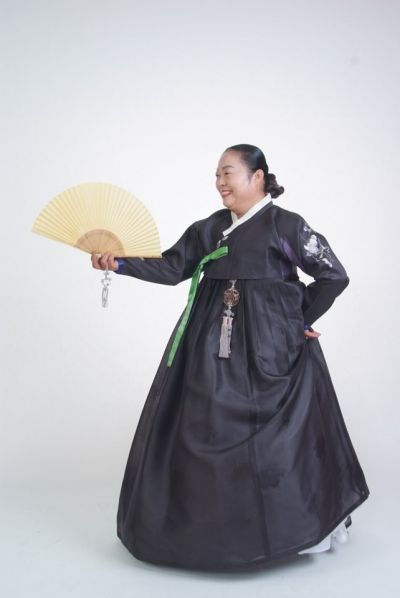
[Asia Economy Honam Reporting Headquarters Reporter Park Seon-gang] Gwangju Metropolitan City announced on the 20th that it has officially recognized Kim Seon-i (金先伊) as the holder of the Gwangju City Intangible Cultural Property Namdo Pansori (Dongchoje Heungboga).
Previously, Gwangju City conducted investigations with related scholars and experts and announced the recognition notice for the intangible cultural property holder (from October 28 to November 27, 2020). The Gwangju City Intangible Cultural Property Committee reviewed the results of the investigation and designation notice and decided to recognize Kim Seon-i as the holder of the Gwangju City Intangible Cultural Property Namdo Pansori (Dongchoje Heungboga).
Dongchoje (東超制) Pansori is a Pansori school completed by Kim Yeon-su (1907?1974), who was recognized as an Important Intangible Cultural Property holder in 1964. Dongchoje has preserved all five Pansori repertoires and scripts directly performed by Kim Yeon-su, which has been helpful for Pansori research.
Kim Seon-i, recognized as the holder of the Gwangju City Intangible Cultural Property for Dongchoje Heungboga, inherited the overall body of our region’s Pansori from Yeom Geum-hyang, Jo Tong-dal, Oh Jeong-suk, Kim Su-yeon, and others. With excellent vocal technique and sound control, she is expected to contribute to the preservation and transmission of Namdo Sori.
Including the newly recognized intangible cultural property this time, Gwangju City is actively implementing cultural heritage policies to preserve and revitalize cultural heritage by designating and registering two tangible cultural properties (Doeun Teacher’s Collection, Haegwang Collection Woodblocks) and two nationally registered cultural properties (Gwangju Old Mudeungsan Tourist Hotel, Chonnam National University Yongbong Hall).
Meanwhile, Gwangju City manages a total of 159 cultural properties, including 31 tangible cultural properties, 22 intangible cultural properties, 24 monuments, 9 folk cultural properties, 30 cultural heritage materials, as well as 25 nationally designated cultural properties and 18 nationally registered cultural properties.
© The Asia Business Daily(www.asiae.co.kr). All rights reserved.
![User Who Sold Erroneously Deposited Bitcoins to Repay Debt and Fund Entertainment... What Did the Supreme Court Decide in 2021? [Legal Issue Check]](https://cwcontent.asiae.co.kr/asiaresize/183/2026020910431234020_1770601391.png)
















