Rep. Park Yong-jin's Proposal for 'Gender-Equal Military Service' Sparks Online Controversy
Rep. Park: "Both Men and Women Serve 40-100 Days in Military and Take Reserve Roles"
"90% Male Conscription Rate... Efficient Troop Formation Through Female Conscription" Blue House Petition Also
Jin Joong-kwon Criticizes, "Is This the Lesson Taken from Sexual Harassment Election?"
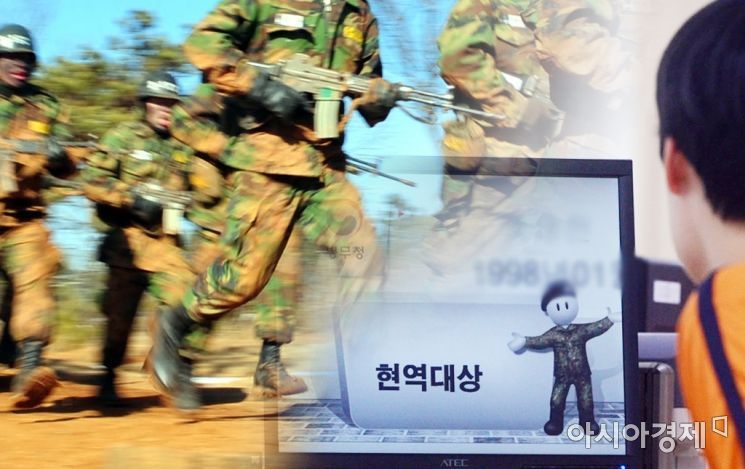 Controversy over female conscription is growing regarding the 'Gender Equality Military Service System' proposed by Park Yong-jin, a member of the Democratic Party of Korea.
[Asia Economy Reporter Lim Juhyung] Park Yongjin, a member of the Democratic Party of Korea who has announced his intention to run for the next presidential election, has sparked controversy over female conscription by proposing a 'gender-equal military service system.' A petition on the Blue House website requesting the inclusion of women in conscription has already received tens of thousands of preliminary endorsements. Supporters argue that female conscription would allow men and women to share the duty of national defense more fairly and help resolve manpower shortages caused by low birth rates. However, opponents counter that discussing female conscription before achieving a gender-equal society is premature.
In his book Park Yongjin's Political Revolution, published on the 19th, Park detailed the introduction of a volunteer military system and a gender-equal military service system. In an interview with CBS Radio's Kim Hyunjung's News Show on the same day, Park emphasized, "There are already cases where female officers in combat arms or frontline units of the Republic of Korea military serve as commanders," adding, "I do not think it is impossible just because they are women."
He continued, "Both men and women can serve in the military for about 40 to 100 days and sufficiently fulfill their roles as reservists," explaining, "This is a new military service system where a modernized elite force of about 150,000 to 200,000 is maintained, and in emergencies, up to 20 million people can be mobilized as soldiers, allowing all citizens to actively fulfill their national defense duties."
Regarding concerns that the proposal might fuel gender conflicts, he responded, "It is irresponsible not to propose something just because of fear of controversy."
Female conscription has become a 'hot potato' in online spaces such as the national petition board and social networking services (SNS). A petition titled "Please include women in conscription," posted on the 16th and gathering preliminary endorsements, surpassed 50,000 endorsements by 5 p.m. on the 19th.
The petitioner stated, "With the declining birth rate, our military is facing significant difficulties in replenishing personnel, and the male conscription rate is approaching 90%. Because of the high conscription rate compared to the past, even those unfit for military service are forcibly conscripted, raising concerns about the overall qualitative decline of the armed forces," and argued, "As a countermeasure, women should also be included in conscription to form a more efficient military force."
On the other hand, some pointed out that discussions on female conscription could escalate into gender conflicts. Kang Minjin, leader of the Youth Justice Party, said at the party leadership meeting on the 19th, "Park's proposal to emphasize mandatory military training for women as part of the volunteer military system makes it seem as if the volunteer system is a response to one side of the gender conflict," adding, "We should not solve this issue by fueling gender conflicts to reach social consensus."
Criticism also came from outside the political sphere. Former Dongyang University professor Jin Joongkwon wrote on Facebook on the 18th, criticizing Park's proposal by saying, "It is transparent," and "It is a somewhat progressive alternative that appropriately adjusts the dosage of anti-feminism. Is this the lesson you learned from an election marred by sexual harassment incidents?"
Public opinion on female conscription was sharply divided.
A 20-something office worker, Mr. A, said, "Due to issues like low birth rates, aging population, and population decline, the number of men eligible for military service will decrease, and the quality of the military force is also a concern," adding, "If women enlist and increase the manpower pool, this burden will definitely be reduced."
He added, "Of course, since gender equality is not yet fully established in Korea, more discussion is needed, but I believe gender-equal military service could help move society toward greater equality."
On the other hand, graduate student Ms. B (32) said, "In a society where wage gaps and glass ceilings still exist as discrimination against women, would military service under gender equality really be 'gender equality'?" She pointed out, "Even if serving under the same conditions, complaints such as women receiving preferential treatment will arise. Female conscription is premature in a society where equality has not been realized."
Office worker Mr. C (27) said, "All Korean citizens have the duty of national defense, but it is worrisome that military service is perceived as the only true duty," criticizing, "Arguments that women must enlist just because men do will not lead to social consensus."
Meanwhile, this is not the first time that imposing military service obligations on women has been discussed.
The government previously considered, in 2007, a plan to fulfill military obligations through 'social service' for women, prisoners, orphans, and others. At that time, a plan to allow women who wished to serve in social service form was approved as part of 'military service system improvement.'
Current military service law does not require women to fulfill military obligations. Therefore, the government planned to revise the law by the end of 2008 and implement it as early as 2009, but it was never realized.
© The Asia Business Daily(www.asiae.co.kr). All rights reserved.
!["The Woman Who Threw Herself into the Water Clutching a Stolen Dior Bag"...A Grotesque Success Story That Shakes the Korean Psyche [Slate]](https://cwcontent.asiae.co.kr/asiaresize/183/2026021902243444107_1771435474.jpg)

















