"The Government Will Continue the Response System Centered on the Central Disaster and Safety Countermeasure Headquarters"
[Asia Economy Reporter Kim Ji-hee] Regarding the appointment of Professor Ki Mo-ran of the National Cancer Center as the first COVID-19 Prevention Planning Officer at the Blue House, the government stated that it will continue to operate the COVID-19 response system centered on the Central Disaster and Safety Countermeasures Headquarters (CDSCH).
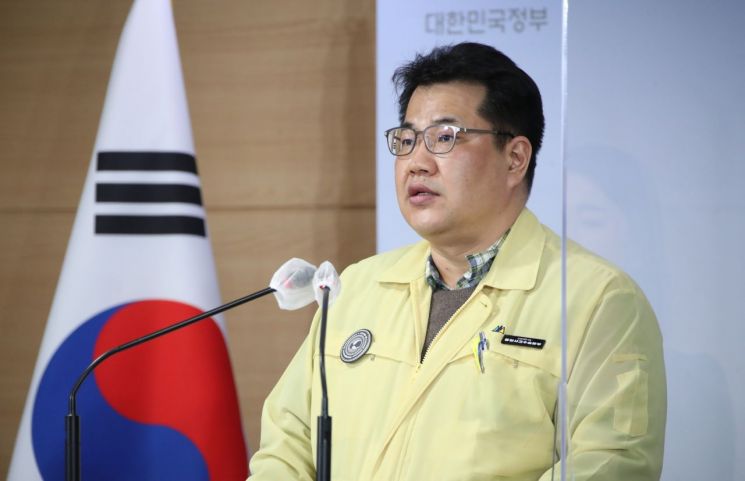
On the 19th, Son Young-rae, head of the Social Strategy Division at the Central Accident Response Headquarters (CARH), said at a COVID-19 back briefing, "The separation between the Blue House Prevention Planning Officer and the CDSCH means that the Blue House’s organizational restructuring is a Blue House matter, and the overall government COVID-19 response is carried out by the CDSCH," adding, "The establishment of a Prevention Planning Officer at the Blue House does not change the government’s COVID-19 response system."
He continued, "The government will continue to operate the COVID-19 response system centered on the CDSCH as it is now, and the Blue House will have some changes in its work system centered on the Prevention Planning Officer," adding, "Since the Blue House does not participate in CDSCH meetings, the Prevention Planning Officer will also not participate in CDSCH meetings."
Additionally, this personnel change has created a vacancy in the Living Quarantine Committee, where Officer Ki had been serving as a member. Regarding this, Officer Son said, "We are in the process of replacing with a new member."
Over the past weekend, the daily number of confirmed COVID-19 cases hovered around 600, continuing concerns about the fourth wave. Yoon Tae-ho, head of the COVID-19 Prevention Division at CARH, said, "Internally, it usually takes about 7 to 10 days to see the effects after measures are taken," adding, "Last week’s trend did not sharply increase and showed a slight rise compared to the previous week. We need to observe a bit more whether this week will maintain a slight increase or decrease." He also noted, "The situation is such that the infection reproduction number has not risen as much as predicted."
Officer Son also explained, "Currently, areas with high patient incidence include Seoul, Gyeonggi, Busan, Ulsan, and Gyeongnam, where the number exceeds 10 per 1 million people," adding, "The key will be how much the outbreak subsides in these regions."
Regarding the absence of a sharp increase in cases last week, Officer Yoon said, "Local governments have imposed bans on gatherings at entertainment facilities in the metropolitan area and implemented level 2 social distancing measures in some places. Strengthened distancing measures focused on regions with high case numbers are one factor," adding, "The central government and local governments have strengthened quarantine inspections, and the public’s voluntary participation is helping to prevent a fourth wave." He also explained that the first dose vaccination in high-risk facilities has contributed to a reduction in cluster infections in medical institutions and nursing homes.
Recently, global vaccine supply shortages have raised concerns about disruptions in vaccine imports through the COVAX Facility. There is analysis that the vaccine quantities scheduled for import by the Korean government in May and June may also be subject to change. Regarding this, Officer Son said, "With intensified global competition for vaccine supply and variables such as the U.S. export restrictions, we are carefully monitoring the international situation," adding, "However, since COVAX has not yet notified any changes to the vaccine supply schedule, it is expected to proceed as planned."
© The Asia Business Daily(www.asiae.co.kr). All rights reserved.
![Clutching a Stolen Dior Bag, Saying "I Hate Being Poor but Real"... The Grotesque Con of a "Human Knockoff" [Slate]](https://cwcontent.asiae.co.kr/asiaresize/183/2026021902243444107_1771435474.jpg)
















