Ministry of Oceans and Fisheries "Strongly Requests Responsible Action from Japanese Government"
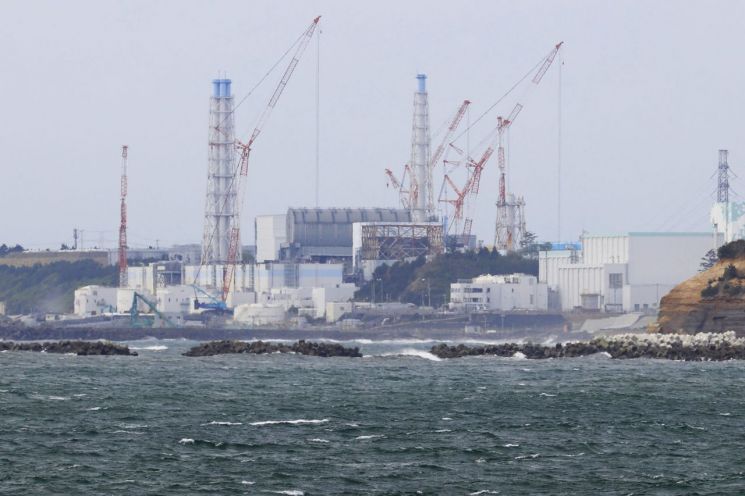
[Asia Economy Reporter Kim Suhwan] The Ministry of Oceans and Fisheries recently raised concerns about the Japanese government's decision to discharge contaminated water from the Fukushima nuclear power plant into the ocean at the London Convention and Protocol Scientific Group meeting.
On the 18th, the Ministry of Oceans and Fisheries announced that during the London Convention and Protocol Scientific Group meeting held via video conference from the 12th to the 16th, it raised issues regarding Japan's decision to release radioactive contaminated water from Fukushima into the ocean and strongly urged the Japanese government to take responsible measures.
The Scientific Group meeting, an expert body responsible for scientific and technical review within the London Convention and Protocol, had not previously addressed the issue of contaminated water from the Fukushima nuclear power plant.
On the 13th, the Ministry of Oceans and Fisheries brought up this issue at the Scientific Group meeting for the first time, following Japan's decision to discharge contaminated water from the nuclear power plant, thereby publicizing the Fukushima contaminated water issue.
At the Scientific Group meeting, the Ministry appealed that Japan's decision to discharge contaminated water from the Fukushima nuclear power plant into the ocean was a unilateral action taken without sufficient consultation or understanding with the closest neighboring country, South Korea. It further argued that this issue poses a serious threat to the safety of neighboring countries and the marine environment.
The Ministry strongly urged member countries and the Japanese side that the issue of discharging contaminated water from Fukushima into the ocean should be discussed in depth at the Scientific Group meeting.
Following South Korea's stance, the Ministry reported that "China and the international environmental organization Greenpeace also expressed concerns about the Japanese government's decision." In particular, Greenpeace reportedly emphasized the importance of information sharing and cooperation related to the ocean discharge.
The Ministry stated, "The Japanese side claimed that the contaminated water discharge issue involves releasing from onshore facilities into the ocean," and "repeated their previous argument that the contaminated water discharge issue is not subject to discussion under the London Convention and Protocol, which deals with 'marine dumping' from ships into the sea."
Yoon Hyunsoo, Director of Marine Environment Policy at the Ministry of Oceans and Fisheries, expressed regret over Japan's claims and said, "Going forward, we will continue to urge and respond by calling on the Japanese government to engage in sufficient discussions with neighboring countries and the international community, follow transparent verification procedures, and disclose information not only within the London Convention and Protocol forums but also at other international meetings."
Meanwhile, the London Convention is an international treaty aimed at preventing marine pollution by prohibiting the dumping of waste into the ocean, with 87 countries including South Korea participating.
The Ministry of Oceans and Fisheries proposed at the Contracting Parties' meetings, which involve government representatives from various countries, in the London Convention and Protocol meetings held the year before last and last year, to discuss the issue of handling contaminated water from the Fukushima nuclear power plant, gaining support from some countries including China.
© The Asia Business Daily(www.asiae.co.kr). All rights reserved.

















