Shared Kickboard Company Ssingssing, Data Analysis Over the Past Year
Average Usage Time 9.2 Minutes, Travel Distance 1.6 km, Increased Users During Commute Hours↑
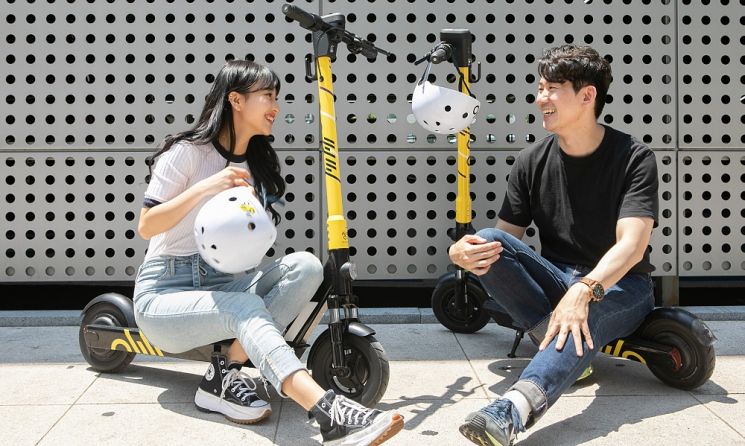 According to the domestic shared electric scooter company Ssingssing's data on the usage of shared scooters in Korea over the past year, users in their 30s and 40s (30s 21.4% · 40s 20.1%) accounted for more than 40% of the total. Photo by Ssingssing
[Asia Economy Reporter Kim Heeyoon] It has been revealed that 4 out of 10 shared kickboard users belong to the 30s and 40s age groups. The usage time is around 10 minutes, mainly traveling short distances between 1 to 2 km.
According to the domestic shared kickboard usage status based on one year of operational data released on the 18th by shared kickboard company Ssingssing, this is the case.
Although the largest user age group was people in their 20s (44.1%), the 30s and 40s age groups (21.4% in their 30s, 20.1% in their 40s) accounted for more than 40% of the total. The proportion of users in their 50s also increased by about 4% compared to last year. Ssingssing explained that electric kickboards, once considered exclusive to younger generations, are spreading as a major means of transportation across all age groups.
A Ssingssing official stated, “Shared kickboards are easier to rent and operate compared to other means of transportation, and have less price burden, making them highly accessible,” adding, “Along with transportation innovation, they seem to be gaining popularity across all generations as a representative eco-friendly mode of transportation.”
Among kickboard users, 6 out of 10 were confirmed to be male. Usage time was concentrated during commuting hours, with weekday evening rush hours (5 PM to 8 PM) accounting for 24.5% of daily usage. Following that, morning rush hours (7 AM to 10 AM) accounted for 12.5%, making up about 40% of total usage within 6 hours. Usage was slightly higher on weekdays than weekends. The average usage time per person was about 9.2 minutes, and the average travel distance was 1.6 km.
Previously, Ssingssing, together with Professor Choo Sangho of Hongik University’s Urban Planning Department and doctoral candidates Kim Sujae and Lee Kyungjae, analyzed about 1 million movement data points of Ssingssing users in Seoul from April to June last year and published a paper. According to the paper, the average travel distance was 1.5 km, and the usage time was 9.4 minutes. The average travel speed was 10.3 km/h, and places with high usage were near subway stations, universities, and complex shopping malls?facilities that induce traffic.
The research team suggested, “If kickboard docking facilities or parking spaces are provided near public transportation facilities or university areas where electric kickboard usage is high, problems such as obstruction of traffic or damage to urban aesthetics will be greatly improved,” adding, “On weekdays, as shared kickboards are used as a means of transportation linked to public transit, applying transfer discounts with other transportation modes and introducing discount policies for long-distance leisure use on weekends will help activate personal mobility (PM).”
© The Asia Business Daily(www.asiae.co.kr). All rights reserved.

















