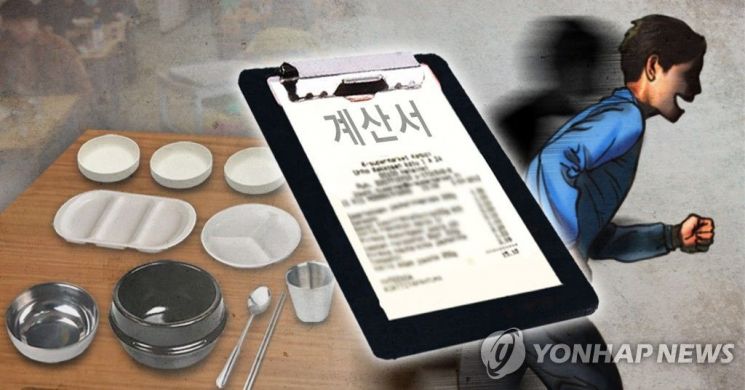
[Asia Economy Reporter Kim Daehyun] A man who was punished 25 times for offenses such as dine-and-dash was arrested by the police for repeating crimes just days after being released from prison. The prosecutor who took over the case applied habitual fraud charges and brought him to trial, and the first and second trials sentenced him to imprisonment. However, the Supreme Court overturned and remanded the lower court’s decision, calling it an 'improper prosecution.' What is the story behind this?
According to the legal community on the 17th, the Supreme Court’s First Division (Presiding Justice Lee Gitaek) recently overturned the lower court’s ruling that sentenced Mr. A to one year in prison on habitual fraud charges and sent the case back to the Busan District Court. The court ruled that even if the police cancel the previous administrative disposition under the Minor Offenses Act and refer the case to the prosecution on habitual fraud charges, the prosecutor cannot indict based on that. An administrative disposition refers to an administrative penalty where the administrative agency imposes a fine instead of criminal proceedings, and if paid within a certain period, the offender is exempt from punishment.
Earlier, Mr. A was indicted on February 23, about 10 days after his release last year, for allegedly not paying for drinks and verbally abusing employees and customers at Restaurant B in Busan in the early morning. About six hours later, he was also indicted for not paying or obstructing business at Restaurant C. Initially, the police issued an administrative disposition under the Minor Offenses Act for the incident at Restaurant B, but later, while arresting him on the spot at Restaurant C, they discovered his prior administrative disposition and similar offenses. Consequently, the police canceled the administrative disposition and formally charged him with habitual fraud. The prosecutor applied habitual fraud charges to all the criminal facts and brought him to trial.
The first trial found all charges guilty and sentenced him to one year in prison. The trial court stated, "The defendant habitually deceived victims without the intention or ability to pay for drinks and received property, and while intoxicated, obstructed the victims’ business operations, which is a serious offense." Furthermore, "He has a history of multiple punishments for similar crimes and committed the same offenses just days after completing his sentence, raising doubts about whether he sincerely reflects on his actions." Mr. A appealed, claiming the sentence was too harsh, but the second trial court also dismissed the appeal, stating, "Considering the defendant’s remorse, the scale of damage, the victims’ wishes not to punish, and taking into account his criminal record and the nature of the crime, the original sentencing does not appear unjust."
On the other hand, the Supreme Court stated, "Although the police prepared an investigation report canceling Mr. A’s administrative disposition, that alone is insufficient to consider a valid cancellation was made," and "Even if the cancellation was made, the administrative disposition cannot be arbitrarily canceled within the payment period to file a prosecution for the same offense." It added, "The prosecution in this case is invalid due to procedural violations of legal provisions," and pointed out, "The lower court misunderstood the legal principles regarding administrative dispositions, which affected the judgment."
© The Asia Business Daily(www.asiae.co.kr). All rights reserved.

















