FDA "No Impact on US Seafood"... NRC "Low Level of Radiation Leakage"
Experts "International Cooperation May Be Difficult"
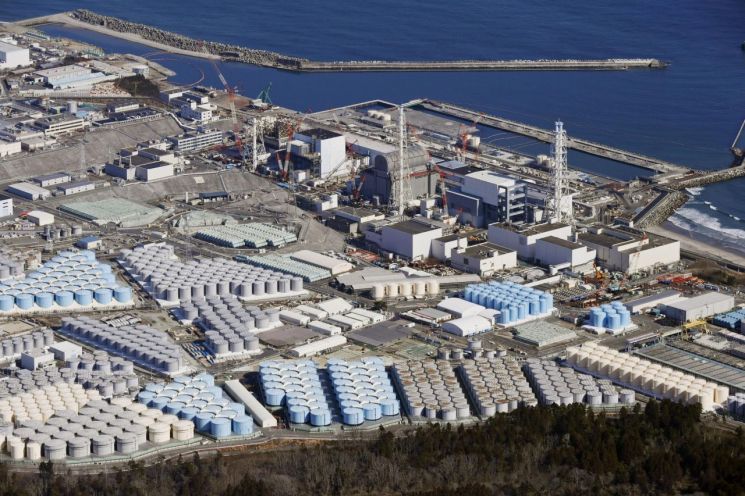
[Sejong=Asia Economy Reporters Haeyoung Kwon and Sunhee Son] Following our government's conclusion last year that Japan's Fukushima contaminated water discharge poses no scientific problems, it has been revealed that the United States issued a report seven years ago stating the low harmfulness of the water. This assessment was made three years after the 2011 Fukushima nuclear accident, evaluating contamination levels along the U.S. West Coast. Recently, the U.S. Department of State released a statement affirming that Japan's decision to discharge contaminated water complies with international safety standards, which is expected to intensify debates over the safety of nuclear plant wastewater. Concerns have also been raised that our government's international cooperation strategy may face setbacks.
According to related ministries on the 15th, the U.S. Food and Drug Administration (FDA) stated in a 2014 report that radioactive contamination from the Fukushima nuclear accident did not adversely affect U.S. seafood. The report specified that the only fish exceeding radiation standards was a single species of anchovy found exclusively off the coast of Japan, and even this level was below FDA limits. Furthermore, radioactive substances such as iodine-131 (I-131) were nearly absent in fish like tuna migrating from Japan to the U.S., and long-lived, most hazardous radioactive materials like cesium-137 (Cs-137) were not detected at all in imported Japanese fish.
The U.S. Nuclear Regulatory Commission (NRC) also stated in a 2015 report that "the NRC and federal and state governments concluded that radioactive leakage from the Fukushima nuclear accident was at a low level." The Cs-137 concentration near the Fukushima plant was below World Health Organization (WHO) standards as of 2014, three years after the accident. According to the Woods Hole Oceanographic Institution (WHOI), the largest marine research institute in the U.S., marine pollution from the Fukushima accident did not have harmful effects on health or the environment, as explained by the NRC.
These findings from U.S. research institutes reportedly had a significant influence on Japan's recent decision to discharge contaminated water. A government official stated, "It is understood that this was the basis for the U.S. not judging the situation as dangerous." Our government has previously described the recent U.S. Department of State commentary as "neutral."
The U.S. report is expected to place considerable pressure on our government's efforts to strengthen international cooperation by emphasizing the harmfulness of nuclear plant wastewater discharge. It has also come to light that the government prepared a confidential report last October stating that there were no issues with the performance of Japan's Advanced Liquid Processing System (ALPS) used to purify the Fukushima contaminated water.
Professor Hangyoo Joo of the Department of Nuclear Engineering at Seoul National University said, "Japan diluted the contaminated water to levels far below drinking water standards, making the harmfulness practically zero," adding, "The risk is scientifically exaggerated, so except for China, it will be difficult for our government to cooperate internationally."
© The Asia Business Daily(www.asiae.co.kr). All rights reserved.

















