Among 17 Cases Nationwide This Year, 6 Occurred Centered in Yeongcheon, Gyeongbuk
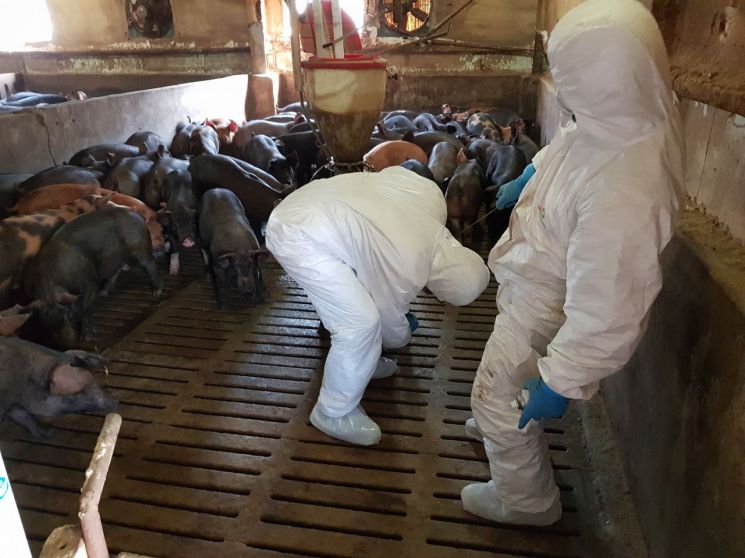
[Asia Economy Yeongnam Reporting Headquarters Reporter Choi Jae-ho] Gyeongsangbuk-do announced on the 15th that it is focusing on blocking and quarantine measures for pig farms in the province as the occurrence of Porcine Epidemic Diarrhea (PED) has recently increased.
This year, there have been 17 cases of Porcine Epidemic Diarrhea nationwide, of which 6 cases occurred in Gyeongbuk, mainly around Yeongcheon.
According to the Gyeongbuk Animal Hygiene Testing Laboratory, PED is caused by the PED virus belonging to the coronavirus family, and since it was first reported in Korea in 1992, it has spread nationwide. It is currently designated and managed as a Class 3 livestock infectious disease.
It mainly affects suckling piglets under one week old, causing vomiting and severe watery diarrhea leading to dehydration and death. It is a highly contagious disease that causes significant economic damage to pig farms. It is concentrated in the winter season (November to April) when maintaining hygiene in pigsties is difficult.
In particular, according to the 2020 winter PED epidemic preparedness sow antibody survey by the Animal and Plant Quarantine Agency, the antibody possession rate in the Gyeongbuk region was 20.8%, which is lower than the national average of 37.8%, indicating that special caution is required, according to Gyeongbuk Province.
Kim Young-hwan, director of the Gyeongsangbuk-do Animal Hygiene Testing Laboratory, said, "Since the end of February, the number of PED diagnosis cases has been increasing based on detailed inspections of suspected Porcine Epidemic Diarrhea reports," and added, "In preparation for regional outbreaks, please strengthen vaccination and thoroughly manage farm biosecurity, including controlling entry vehicles and incoming livestock, to prevent transmission between farms."
© The Asia Business Daily(www.asiae.co.kr). All rights reserved.

















