Toxicity of American Ginseng Root Resembling Bellflower and Deodeok Is Strong
[Asia Economy Reporter Lim Cheol-young] The Ministry of the Interior and Safety has urged special caution to prevent poisoning accidents caused by mistakenly consuming toxic plants as spring vegetables. In particular, newly sprouted shoots, whose leaf and flower shapes are not clearly identifiable, are difficult to distinguish from toxic plants and spring vegetables due to their similar appearance.
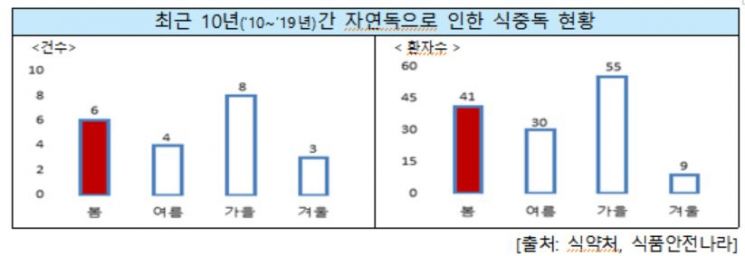
According to the Ministry on the 15th, there were a total of 21 food poisoning incidents caused by natural toxins over the past 10 years (2010?2019), resulting in 135 patients. However, it is estimated that there are more cases that have not been officially recorded.
Unlike general safety accidents, natural toxin incidents tend to affect multiple victims at once (an average of 6.4 patients per poisoning incident). These incidents mainly occur in spring and autumn, with 6 poisoning cases and 41 patients reported during spring (March to May). Commonly mistaken toxic plants in the vicinity include Amejikajigon (American pokeweed), Donguinamul, and Eunbangulkkot (Lily of the valley).
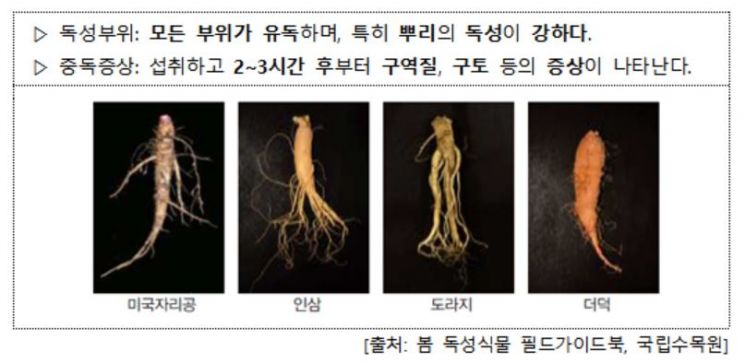
Amejikajigon is often mistaken for roots such as doraji (balloon flower root), deodeok, or yam root in early spring before its leaves sprout or flowers bloom. After the leaves begin to grow in late spring, most poisoning cases occur from eating the leaves. Amejikajigon grows evenly throughout the country and thrives almost anywhere, so special caution is necessary.
If toxic wild plants are mistakenly consumed, symptoms such as vomiting, diarrhea, stomachache, and dizziness can appear within 30 minutes to 5 hours. More than 50% of these symptoms occur within 30 minutes after ingestion, so if you feel unwell, you should immediately go to a hospital. Forcing vomiting by drinking salt water or other folk remedies can worsen symptoms and be more dangerous.
Kim Jong-han, Director of the Prevention and Safety Policy Division at the Ministry of the Interior and Safety, said, “During this season when new shoots sprout, it is easy to mistake toxic plants for spring vegetables and get sick. Especially when harvested plants are shared with family or acquaintances, it can lead to many casualties, making it very dangerous.” He emphasized, “Use spring vegetables available in the market and avoid eating wild plants collected from nature recklessly.”
© The Asia Business Daily(www.asiae.co.kr). All rights reserved.


















